Rice to Water Ratio Calculator
Rice to water ratio calculator
Use the ratio on your rice package for your cooking method. US measuring cups are 236.6 mL; a rice cooker's supplied cup can be smaller.
Water needed = dry rice volume × water per cup of rice. For example, 1½ cups of rice at a 1:2 ratio needs 3 cups of water. Choose the ratio for your rice and cooking method.
| Rice | Water per cup of dry rice | Approximate cooking time |
|---|---|---|
| Long-grain white | 2 cups | 15–18 minutes |
| Medium-grain white | 1½ cups | 15–18 minutes |
| Short-grain white | 1¼ cups | 15–18 minutes |
| Medium- or long-grain brown | 2¼ cups | 40–45 minutes |
| Wild rice | 3 cups | 40–50 minutes |
Use the ratio for your rice and your method
A rice-to-water ratio describes a relationship, not a universal recipe. One cup of dry rice with two cups of water is a 1:2 rice-to-water ratio. A package calling for one and a half cups of water per cup of rice uses 1:1.5. The calculator above scales either relationship without assuming every variety cooks the same way.
Start with the directions on your bag or your appliance's instructions. Match the rice type and cooking method before doing the multiplication. A stovetop absorption method, a rice cooker, and a pressure cooker do not lose water in the same way, so a ratio borrowed from one method may not suit another.
Reference points for a covered stovetop method
Start with the directions on your bag
When a package and a general table disagree, check whether they describe the same rice and cooking method. My starting point is the actual bag’s directions; the tool can then scale that ratio. Adding more water simply to be cautious does not resolve a mismatch between methods.
The table is a reference for choosing a starting point, not an instruction to override a particular brand. It also does not mean that all short-grain rice or all brown rice behaves identically. Age, processing, soaking, and the desired finished texture can change the directions that work best.
Two calculations you can check by hand
If your package calls for two cups of water per cup of rice and you want to cook one and a half cups of dry rice, multiply 1.5 by 2. You need three cups of water. Using a US cup of about 236.6 milliliters, that is approximately 710 milliliters.
If your package uses a 1:1.5 ratio and you have three-quarters of a cup of dry rice, multiply 0.75 by 1.5. The result is 1.125 cups of water: one cup plus two tablespoons, or about 266 milliliters. The calculator displays a rounded cup value alongside milliliters; use the more useful measurement for your equipment.
The ratio runs in a specific direction. “Two to one” is ambiguous unless you say which ingredient comes first. This page always writes rice first: 1:2 means one part dry rice and two parts water.
A rice cooker cup may not be a US cup
Use the measuring system intended by the directions. A small cup supplied with a rice cooker can differ from a US measuring cup. If you measure rice with one and water with the other, you change the ratio even though both containers say “cup.”
When using the cooker's fill lines, follow the manufacturer's sequence for measuring rice and adding water. Do not assume a numbered line means that many US cups of water. The markings can be calibrated for rice already present in the pot.
The calculator's milliliter output uses US cups. If you prefer another consistent container for a simple volume ratio, the multiplication still works in “parts,” but the displayed milliliters will not describe that container. Keep the unit choice visible in your kitchen notes.
Rinsing, draining, and soaking change the starting point
Read whether your chosen method expects rinsed rice, unwashed rice, or a soak. Wet rice carries water into the pot. A recipe developed around rinsing and draining may already account for that, so subtracting an arbitrary amount of water can create a second adjustment you did not need.
Use a repeatable routine. If you rinse, drain in the same way each time rather than pouring rice into the pot while it is still sitting in a bowl of water. If a package asks for soaking, follow its timing and draining instructions. The calculator cannot measure water absorbed before cooking.
Why a much bigger batch may need more thought
The tool scales a selected ratio linearly. Real cookware does not always scale that neatly. A very wide pan, a poorly fitting lid, and a long simmer can change evaporation. A much deeper batch also takes longer to heat through.
For ordinary recipe-sized adjustments, the arithmetic is useful. For a large gathering, use a method developed for the batch size or divide the rice into manageable batches. Stay within your appliance's fill limits, particularly with pressure cookers. A calculated water quantity is not permission to exceed capacity.
Separate a measuring mistake from a texture preference
Suppose your directions call for a 1:1.5 rice-to-water ratio and you cook two cups of dry rice. The calculation gives three cups of water. If you instead use two small rice-cooker cups for the rice and three US cups for the water, you have changed the ratio even though the cup counts look right. Resolve that unit mismatch before adjusting the recipe.
If the units were consistent but the rice was wetter than you wanted, write down the pot, lid, rinse routine, and cooking method. I would change one relevant factor in a future batch rather than reduce water and increase heat at the same time. The five preset categories are covered-stovetop references, not programs for a pressure cooker. For leftover handling, use the cooked-rice guide after the texture question is settled.
What this calculator covers
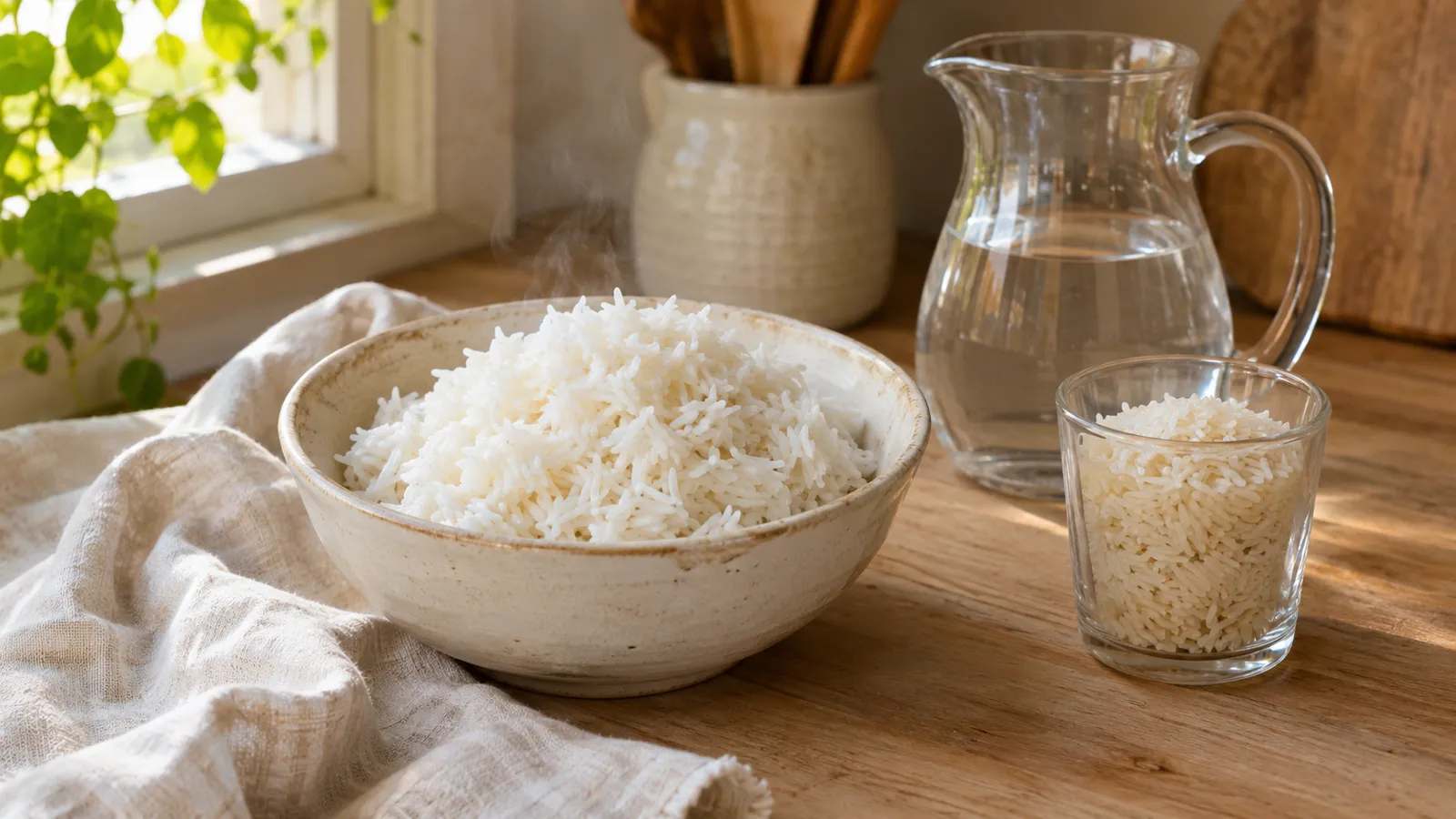
It multiplies a known water ratio and converts the result to milliliters. It does not choose a pressure-release method, calculate cooking time from grain weight, or assess leftover safety. Treat those as separate questions. The image is an illustration of rice and measuring equipment, not a photographed test of every ratio in the table.
FAQ
Does 1:2 mean one cup of rice and two cups of water?
Yes. This page always writes rice first and water second. At 1:2, each cup of dry rice is paired with two cups of water. Keep the measuring unit consistent for both ingredients and follow the cooking method that supplied the ratio.
Can I use my rice cooker’s measuring cup?
You can use a consistent cup for a volume ratio, but this tool’s milliliter conversion assumes a US cup. A supplied rice-cooker cup may be smaller. When using the cooker’s numbered fill lines, follow its own measuring instructions rather than mixing those markings with US cup calculations.
Should all jasmine rice use the same ratio?
No single ratio covers every brand and method. Follow the package or a method developed for that rice. Rinsing, soaking, cookware, and desired texture also matter. Use the calculator to scale the ratio you have chosen rather than treating the rice name as a complete cooking instruction.
Does twice as much rice need twice the cooking time?
Do not double cooking time automatically. The calculator scales water volume, not heating behavior. A larger batch may take longer to come to temperature, while the grain still needs the appropriate cooking and resting method. Stay within appliance capacity and use batch-size guidance from your recipe.
Can I use this for a pressure cooker?
You can scale a ratio from pressure-cooker instructions, but this tool does not select pressure time, release method, or minimum liquid. Those details are appliance-specific. Follow a compatible tested recipe and the manufacturer’s limits instead of transferring a stovetop ratio unchanged.