How Long Does Cooked Rice Last?
Under US leftover guidance, use properly chilled cooked rice within 3–4 days at 40°F (4°C) or below. Cool it promptly; reheating cannot reliably rescue rice left warm too long.
| Situation | Action | Why it matters |
|---|---|---|
| Just cooked | Divide and refrigerate promptly | Do not leave a deep pot cooling all evening |
| Safely chilled leftovers | Use within 3–4 days | Count from cooking |
| Left warm too long | Discard | Reheating is not a reliable rescue |
| Future meal | Freeze safe portions early | Avoid the last-day scramble |
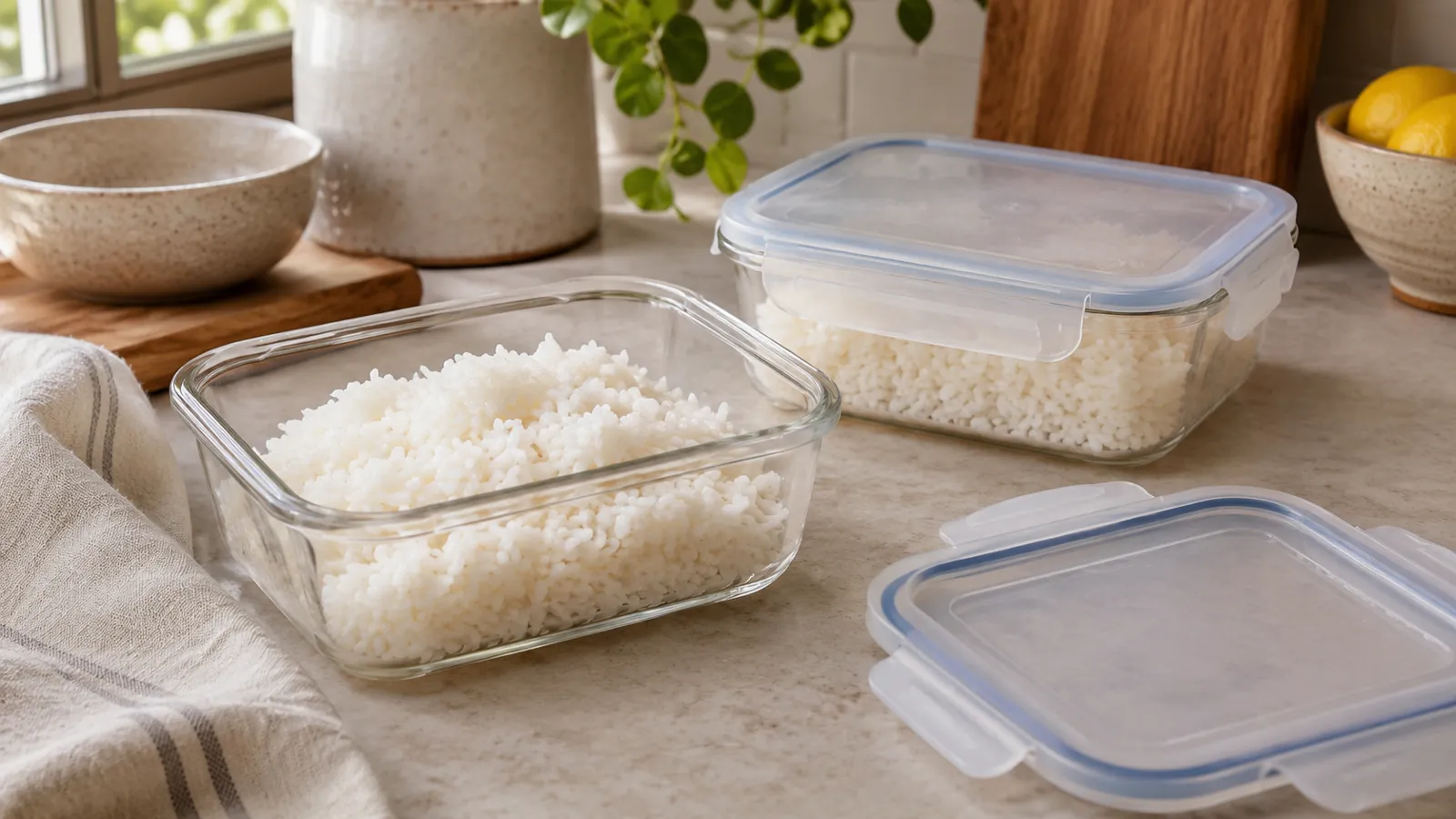
Refrigerate within two hours of cooking or removal from safe hot holding, or within one hour when the surrounding temperature is above 90°F (32°C). Those are maximum limits, not a cooling plan: divide food into shallow portions and chill promptly. Discard perishable food left out beyond the applicable limit.
Plan cooling before the next rice dish
My priority is the interval between dinner and refrigeration. Set out shallow containers before cooking a batch intended for leftovers, then portion and refrigerate it promptly. Tomorrow’s fried rice cannot repair unsafe time spent warm today. Keep only the near-term meals refrigerated and plan the rest for the freezer.
Cooling is part of cooking the rice
Rice can contain spores of Bacillus cereus, and poor handling after cooking can allow the organism to grow. Some toxins are not reliably removed by ordinary reheating. The useful response is to control cooling and storage, not to plan a particularly fierce microwave session later.
Prepare shallow containers before cooking a large pot. Portion the rice promptly and refrigerate rather than leaving the whole pot on the stove until bedtime. The outer surface of a deep batch can feel cooler while the center retains heat.
What the three-to-four-day window assumes
The US leftover window assumes prompt chilling and continued refrigeration. It does not apply retrospectively to rice that spent the night on the counter. Neither a pleasant smell nor normal-looking grains can establish that an unknown storage history was safe.
Some national authorities recommend shorter storage for rice. This page uses US home-leftover guidance for its US audience; follow a shorter applicable product or local instruction where relevant. Do not combine the longest time from one source with the least demanding cooling method from another.
A meal-prep example
If you cook rice on Sunday, label every container Sunday rather than the day you later open it. Set aside the portions for the next few meals and freeze the rest early. Friday's portion should not sit in the refrigerator all week simply because it has its own lid.
Labeling single servings also prevents an unhelpful cycle: removing a large box, warming some of it, and returning an uncertain amount to storage. Reheat only what you intend to eat, using clean utensils to portion the cold remainder.
Freezing without making one solid brick
Choose freezer-safe containers or bags sized for an actual meal. A flat portion is easier to stack and identify than a large deep block. Remove excess air where the packaging allows it, seal it, and mark the amount and cooking or freezing date.
Freezing preserves a safely handled portion; it does not repair a batch that was already temperature-abused. Keep the preparation history clear when you move a portion from fridge to freezer. A new bag is not a new cooking date.
Reheating should be even, not merely hot at one edge
Reheat leftovers to 165°F (74°C), checking with a suitable food thermometer. With a microwave, stir or redistribute where appropriate and follow standing instructions so cold spots are less likely. A little added water can help texture, but it is not a safety treatment.
Do not put your face over the container when opening it; steam can be hot even while some food remains unevenly heated. Use the same care with the lid and utensil that you would with any hot leftover.
Three rice situations that look similar but are not
Freshly cooked rice promptly divided and refrigerated has a known starting point. Takeout rice that accompanied you through several errands has a different timeline: delivery, travel, and time on the table all matter. Rice still sitting in a switched-off cooker is not automatically under safe hot holding just because the lid is closed.
I would first ask when each batch stopped being held safely hot or cold, not whether all three feel warm now. A functioning keep-warm setting needs to be used according to the appliance instructions; it is not interchangeable with turning the cooker off. When the time history is unknown, I would not promise that a hot wok will fix it. For future batches, the rice calculator can help make an amount you can actually use.
FAQ
Can I eat rice left out overnight?
Do not use reheating as a rescue for rice left at room temperature overnight. The normal refrigerated leftover window assumes prompt cooling and cold storage. Appearance and smell cannot establish whether bacterial growth or toxin formation occurred during the time the rice was warm.
Does frying old rice make it safe?
Frying is not a substitute for safe storage. Use rice that was cooled promptly and kept within the appropriate storage window. The fact that fried rice benefits from a particular texture does not justify using a batch with an unsafe or unknown handling history.
Can I put warm rice in the fridge?
Portion it into shallow containers and refrigerate promptly instead of waiting for a large pot to become cold on the counter. The goal is effective cooling, not an arbitrary room-temperature wait. Arrange containers sensibly so the refrigerator can cool them without an overloaded pile.
Do brown and white rice use different safety clocks?
Do not assume brown rice earns extra leftover days. Use appropriate cooling and refrigerated leftover guidance for either type. Grain variety affects cooking and texture, but it does not remove the need to manage the cooked food’s time and temperature after preparation.
Does adding water during reheating remove toxins?
No. Water can improve moisture and help heating, but it does not establish that temperature-abused rice is safe. Start with a properly stored portion, heat it evenly, and verify the relevant reheating temperature. A cooking technique cannot supply a missing safe storage history.