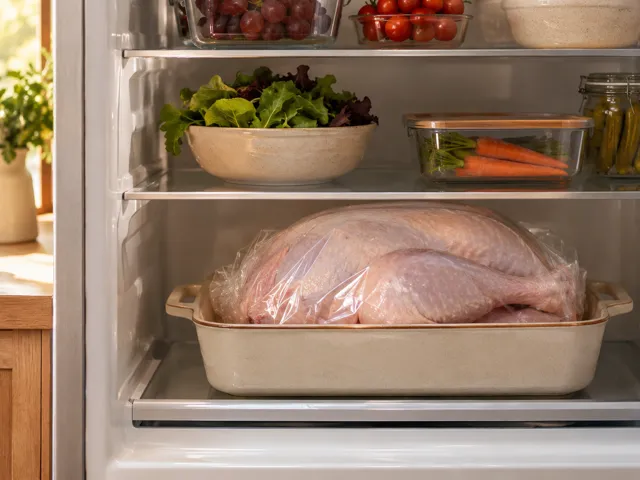
How Long Does Cooked Chicken Last?
Properly chilled cooked chicken keeps 3–4 days at 40°F (4°C) or below. Count from cooking, refrigerate promptly, and freeze portions you will not use in time.
| Chicken | Fridge window | Useful action |
|---|---|---|
| Home-cooked | 3–4 days | Label the cooking date |
| Hot rotisserie chicken | 3–4 days with proper handling | Include transport and serving time |
| Frozen cooked portions | Quality varies | Label contents and date |
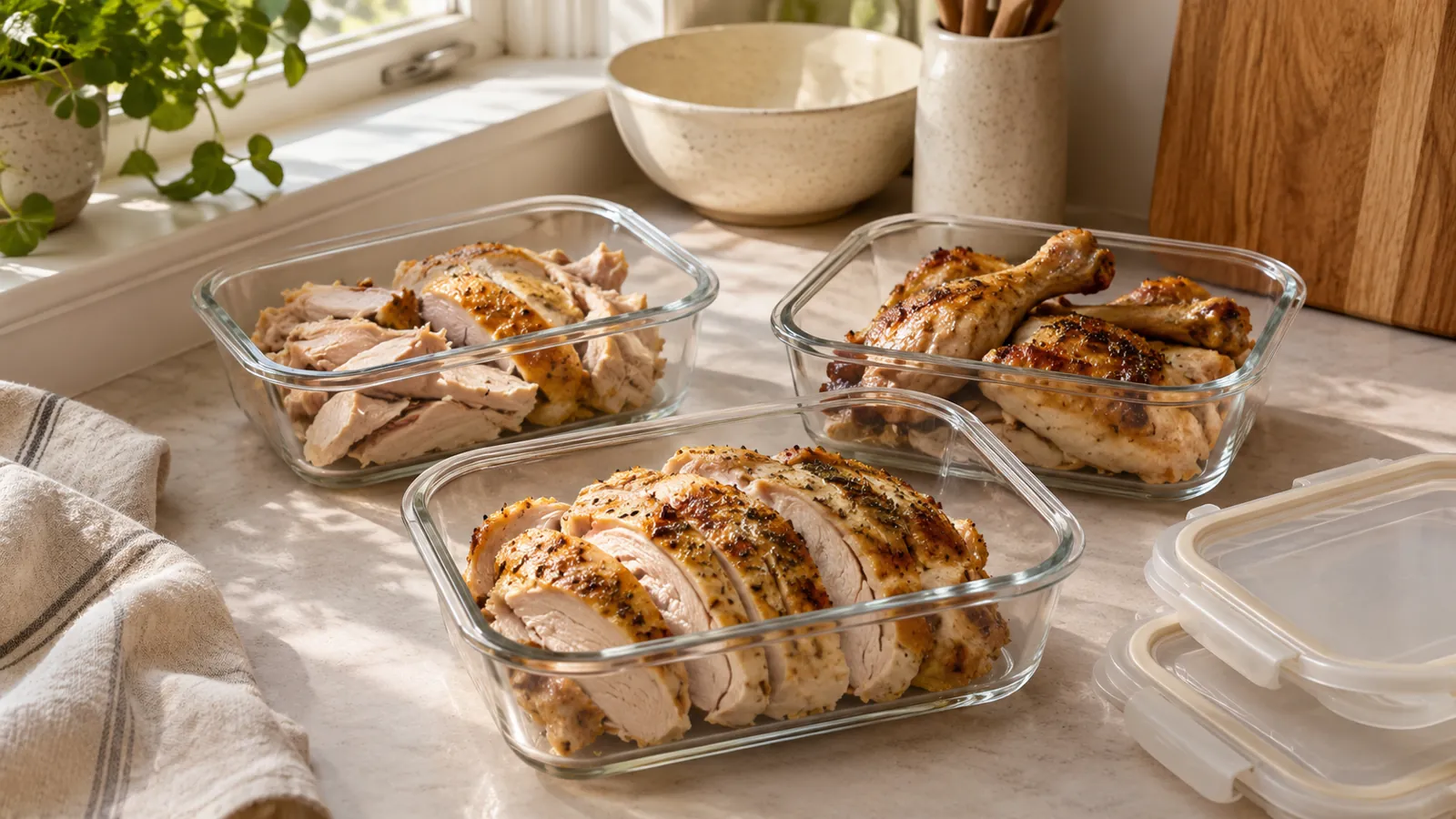
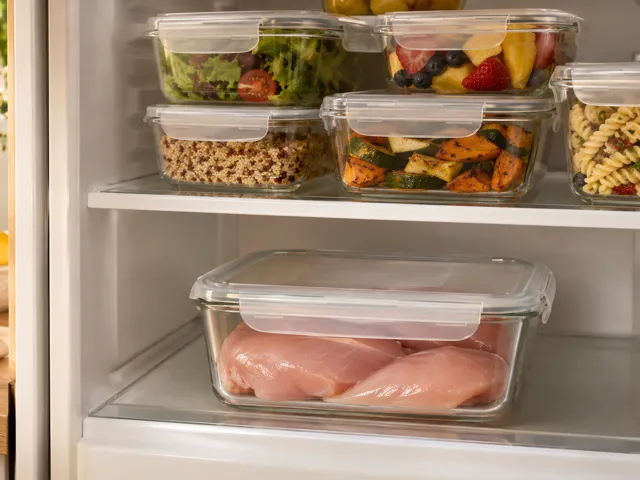
Refrigerate within two hours of cooking or removal from safe hot holding, or within one hour when the surrounding temperature is above 90°F (32°C). Those are maximum limits, not a cooling plan: divide food into shallow portions and chill promptly. Discard perishable food left out beyond the applicable limit.
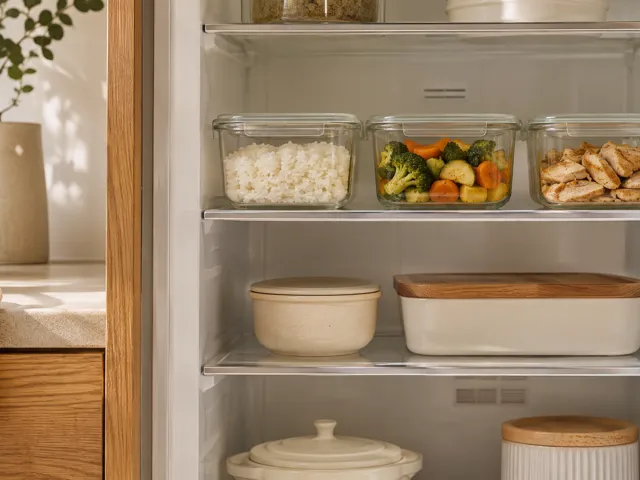
Divide meal prep between fridge and freezer
Keep the portions you realistically expect to eat within the refrigerator window and freeze the later meals promptly. That is my preferred meal-prep plan because it does not depend on reaching the last allowable day. A Sunday batch can serve the working week, but the freezer needs to be part of that plan from the start.
The date belongs to the cooking, not the container
Moving chicken into a fresh box does not restart its storage window. Neither does shredding it for a salad or adding it to a new sauce. Keep the original cooking date visible when combining leftovers with other ingredients.
Handle a whole bird as several smaller portions
A whole roast holds heat differently from shallow portions. Remove meat using clean utensils and divide a large quantity into suitable shallow containers. You do not need to wait for the whole bird to reach room temperature on the counter before refrigerating the leftovers.
Separate the meal you are serving from the portions you intend to save. Repeatedly passing the entire bird around the table prolongs handling and makes it harder to track what has been sitting out. Set out storage containers before serving so clearing up has a clear next step.
Rotisserie chicken includes the journey home
A hot supermarket chicken does not arrive with an unlimited holding period. Include shopping, transport, and the time before dinner in your handling plan. If you are not eating it promptly, follow appropriate cooling and refrigeration guidance rather than leaving the closed bag on the counter.
Use the product's instructions where supplied. Packaging that retains heat is not proof that the chicken stayed at a verified hot-holding temperature. A warm bag and a food thermometer answer different questions.
Freeze according to the next meal
Shredded portions suit some future dishes; intact slices suit others. Choose the portion shape before freezing, package it to limit air exposure, and identify whether the meat is seasoned or mixed with sauce. An unmarked bag of pale pieces is difficult to use confidently.
Thaw safely and keep track of the original handling history. Freezing is useful for preserving food still within its safe window. It is not a way to postpone a discard decision for chicken already left warm too long.
Reheat the center as well as the edges
Use 165°F (74°C) as the leftover reheating target, measured with a suitable thermometer. Arrange portions so they can heat evenly. In a microwave, redistribute or turn food where appropriate and follow standing instructions rather than trusting the first visibly steaming edge.
Moisture can help texture, but added broth does not make an unsafe leftover safe. Start with properly stored chicken. Reheat the portion you need instead of repeatedly warming a large container and returning the rest to the refrigerator.
Sunday chicken does not automatically cover Friday lunch
If chicken is cooked on Sunday and promptly refrigerated, a Friday lunch is beyond the usual three-to-four-day refrigerator window. I would freeze that portion early rather than wait until Thursday to decide whether it still seems acceptable. Label it with both the cooking and freezing dates so the sequence remains clear.
For chicken intended for sandwiches, freeze a portion suitable for that later meal; for a casserole, a separate container may be more practical. Whatever the format, thaw and handle it safely. A pleasant smell cannot confirm its storage history, and reheating does not erase earlier mishandling. Use the temperature guide for measurement technique, keeping initial cooking and leftover reheating distinct.
FAQ
Can I keep it for five days if it smells normal?
Do not extend the recommended window using smell. Harmful contamination is not reliably detected that way. Plan to eat or freeze properly handled cooked chicken within the normal refrigerated guidance, and discard food with an unsafe or unknown history.
Does making chicken salad restart the clock?
No. A new dish or container does not make the chicken freshly cooked. Keep the older ingredient’s history in view and consider the other ingredients too. Combining leftovers should simplify a meal, not erase the information needed to judge storage.
Can I freeze a rotisserie chicken?
Yes, when it has been handled safely. Divide it into useful portions, package them appropriately, and label the date. Do not freeze the entire bag after a long unrefrigerated evening and assume the freezer has corrected that earlier handling.
Should I cool the whole bird overnight?
No. Divide leftovers and refrigerate promptly using suitable shallow containers. A large bird left on the counter is not an appropriate cooling plan. Set up the containers before dinner so the remaining chicken can be stored without a long delay.
Can I reheat only one serving?
Yes, portioning makes that easier. Use clean utensils to remove what you need and keep the remainder refrigerated. Heat the selected portion evenly to the appropriate leftover temperature; warming the entire container repeatedly creates unnecessary handling and quality problems.