Chicken Internal Temperature: Where to Check
Cook chicken to 165°F (74°C), measured with a food thermometer. Check the thickest part of pieces; for a whole bird, check the breast, inner thigh, and inner wing area without touching bone. Color and cooking time are not reliable safety checks.
| Chicken | Minimum internal temperature | Where to check |
|---|---|---|
| Breast or pieces | 165°F / 74°C | Thickest part, away from bone |
| Whole bird | 165°F / 74°C | Breast, inner thigh, inner wing |
| Ground chicken | 165°F / 74°C | Center of thickest portion |
| Reheated leftovers | 165°F / 74°C | Several spots, especially cold areas |
Make the thermometer part of the finish
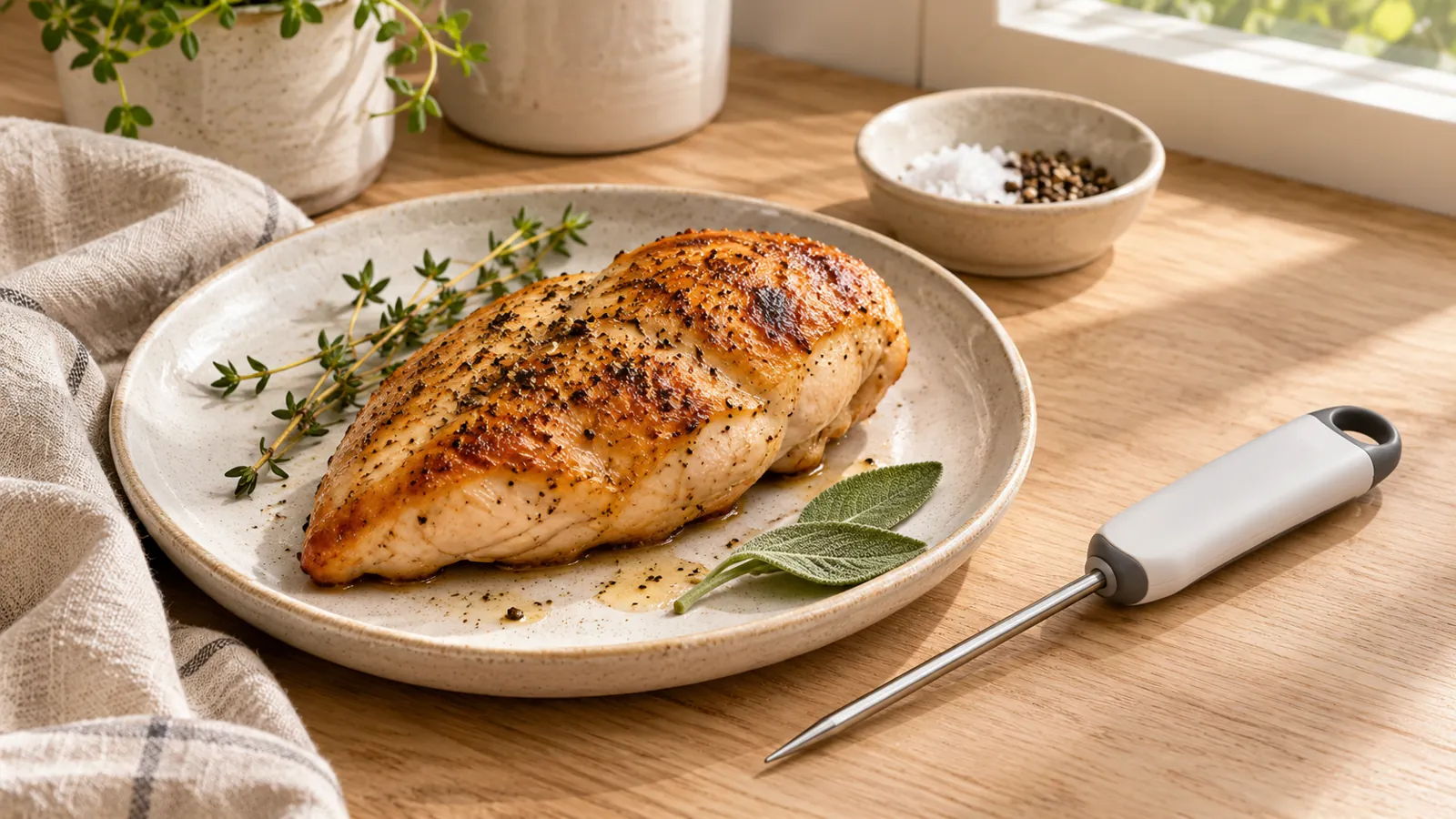
A browned breast can still have a cooler center. My recommendation is to use the thermometer routinely near the end of cooking, not only when the meat looks suspicious. Checking the target above gives you a reason to stop cooking or continue; color alone leaves both decisions uncertain.
Measure the food, not the oven
An oven set to 375°F does not mean the center of a chicken breast is at that temperature. The outside receives heat first, while the center warms more slowly. A timer can tell you when to begin checking; it cannot tell you what happened inside each piece.
Use a food thermometer appropriate for the task. An instant-read probe is useful for checking near the end of cooking. Do not leave a thermometer in the oven unless its instructions say it is designed for continuous oven use.
Find the thickest part without touching bone
For a breast, aim for the center of the thickest area. If the piece is thin, entering from the side can help position the sensing area inside the meat. Read the thermometer instructions to understand how much of the probe must be inserted.
Avoid resting the tip against bone, the pan, or a pocket that does not represent the meat. Wait for the reading to stabilize. If a small movement changes the reading substantially, check another nearby spot rather than accepting the highest number.
A whole bird needs several checks
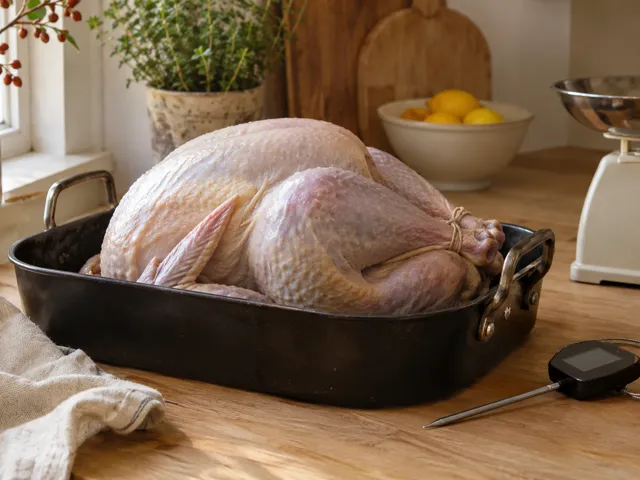
A whole chicken has parts of different thicknesses and shapes. Check the thickest breast area and the inner thigh and wing areas. One reading in an easy-to-reach spot does not establish that all the important locations have reached the target.
If you are cooking separate pieces, check the largest and any that look less advanced. Pieces can finish at different times. Move finished pieces to a clean plate and continue cooking those that remain below the target, using clean utensils for cooked food.
Color is information about appearance, not a verdict
Pinkness, clear juices, browning, and grill marks are not substitutes for a thermometer reading. The surface can brown well before the center is ready. Conversely, appearance can vary even after the recommended temperature is reached.
Do not repeatedly cut into every piece looking for a particular shade. Measure deliberately instead. If the thermometer is unreliable or used incorrectly, resolve that problem rather than treating visual cues as an equivalent check.
Two breasts on the same tray can finish at different times
Suppose one breast is much thicker than the other. The oven setting and elapsed time are shared, but their centers do not necessarily reach the target together. Check both in the thickest area. If one has reached 165°F and the other has not, move the finished piece to a clean plate and continue cooking the other.
I would not average the two readings or use the hotter piece to declare the tray finished. For a very thin breast, entering from the side may help keep the sensing area inside the meat. If repeated readings jump sharply, check probe placement and the thermometer's required insertion depth before deciding. The useful result is a stable measurement from the relevant part of each piece, not the highest number you can find.
Handle the finished chicken cleanly
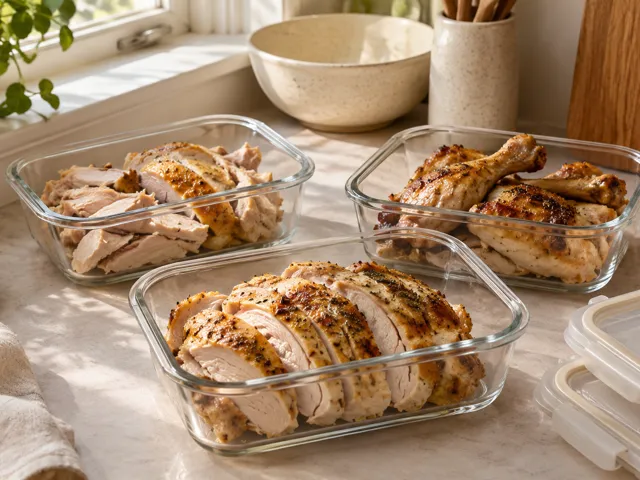
Use a clean board and utensils for carving. A plate that held raw chicken needs washing before it holds cooked chicken. Clean the thermometer according to its instructions, particularly after a reading in undercooked meat.
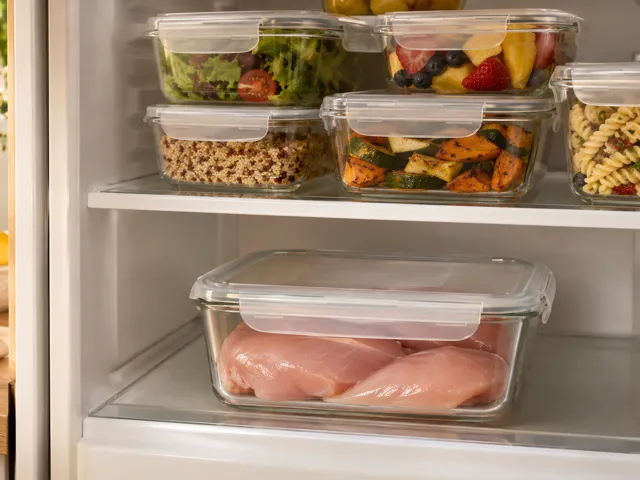
Plan storage before serving a large batch. Divide leftovers into smaller containers and refrigerate promptly; the linked cooked-chicken guide explains the storage window. A correct cooking temperature does not cancel out contamination or poor handling afterward.
FAQ
Is 165°F the target for both breast and thigh?
Yes, the consumer minimum applies to all chicken parts, including ground chicken. Some recipes cook thighs further for texture, but that is a culinary choice beyond the minimum. Check the meat itself rather than relying on the appliance setting.
Can chicken be pink after cooking?
Appearance can vary, so pinkness alone is not a dependable safety decision. Use a correctly placed food thermometer and confirm the recommended internal temperature in the relevant areas. Do not substitute clear juices or white meat color for measurement.
Can I remove it at 160°F and let it rest?
This guide does not recommend relying on an assumed temperature rise. Confirm 165°F before removing chicken from the heat. Carryover varies with the size, method, and surroundings, so a fixed prediction is not a dependable replacement for checking.
Does an air fryer change the safe temperature?
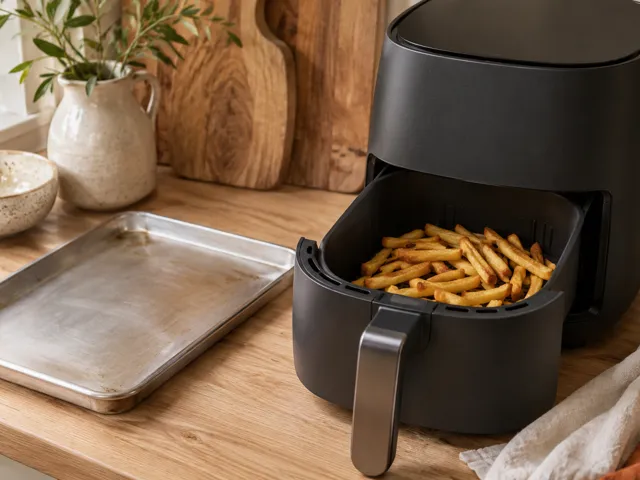
No. The appliance can change cooking speed and browning, but the chicken still needs the same internal temperature. Check the thickest parts and avoid treating a converted oven time as proof that the food is fully cooked.
Where should I put the probe in a thin breast?
Entering from the side can help keep the sensing area within the center of the meat. Check your thermometer instructions for insertion depth. Avoid letting the tip touch the pan, and wait for a stable reading before deciding.