How Many Tablespoons in a Quarter Cup?
How Many Tablespoons in a Quarter Cup?
4 tablespoons equal ¼ US cup, which is also 2 fluid ounces and half a stick of butter. Scale a card and that line changes: 1½ batches makes 6 tablespoons and ¾ of a batch makes 3.
| Batch size | Tablespoons | Simple route | Fluid ounces |
|---|---|---|---|
| ⅓× | 1⅓ | 1 tbsp + 1 tsp | ⅔ |
| ½× | 2 | 2 tbsp | 1 |
| ⅔× | 2⅔ | 2 tbsp + 2 tsp | 1⅓ |
| ¾× | 3 | 3 tbsp | 1½ |
| 1× | 4 | ¼ cup | 2 |
| 1¼× | 5 | ¼ cup + 1 tbsp | 2½ |
| 1½× | 6 | ¼ cup + 2 tbsp | 3 |
| 2× | 8 | ½ cup | 4 |
| 2½× | 10 | ½ cup + 2 tbsp | 5 |
| 3× | 12 | ¾ cup | 6 |
| 4× | 16 | 1 cup | 8 |
Scale the card before you touch a measure
Quarter-cup lines are where sauces, glazes and marinades live, and they're the lines that turn awkward first when the batch changes, because 4 tablespoons splits evenly by 2 and by 4 and by nothing else. A glaze card written for four might read ¼ cup soy sauce, ¼ cup oil and 2 tablespoons vinegar. Feeding six is 1½ times the card: 6 tablespoons, 6 tablespoons and 3 tablespoons. Feeding three is ¾ of it: 3, 3 and 1½.
The table runs a single ¼ cup line through the batch sizes you're likely to want. Each row gives an easy route with a standard set, and that's the reason to pick a multiplier from the table when you can. A 1½ batch is ¼ cup plus 2 tablespoons, three quick scoops, while a ⅔ batch needs 2 tablespoons plus 2 teaspoons, four scoops for a smaller amount. For a multiplier that isn't listed, multiply the cups by 16 or hand the number to the kitchen conversion calculator, which takes 3/8 or 1 1/2 as typed and gives you the tablespoons and a scooping plan from the measures you own.
Pour the lines on top of each other
If everything on the card is going into the same bowl, it doesn't need three separate measures. Take the six-person glaze: soy sauce to the 3 fl oz line of a glass measure, oil on top until it reaches 6, vinegar until it reaches 7½. One cup to wash and no spoons at all, which is worth a good deal when the lines are sticky.
The catch is that the first pour is the only one you can still take back. Once the second ingredient is in, an overshoot stays in. So I'd pour first whichever ingredient would hurt most to overdo, usually the saltiest or the sharpest, and let the mild ones go on top. A wide 4-cup measure is the wrong vessel for this, since 2 fl oz barely covers its floor. Use the smallest marked measure that holds the total.
Oil is a pour, and thick sauces aren't
For oil, I'd take a single 2 oz pour over four spoonfuls, and my reasons are mostly about mess. A brimming spoon drips between the bottle and the bowl, and a tablespoon of oil is hard to fill level without some of it ending up on the counter. Spoons win in one situation: when a sauce lives in a wide jar and you can dip straight in, four quick dips beat dirtying a measure.
Thick sauces go the other way. Hoisin or ketchup clings to a spoon, and the half-cup page works out what clinging costs you; a single dry ¼ cup you can scrape in one pass loses less than four spoons you'd have to scrape four times. Choose the measure by how the ingredient lets go of it.
Melted butter starts as half a stick
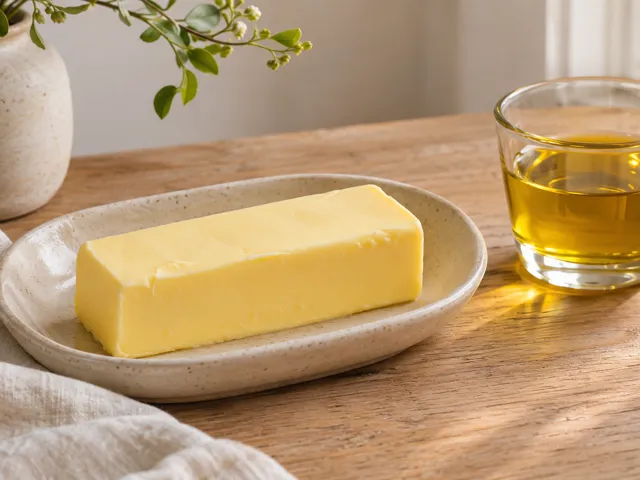
One US stick of butter holds 8 tablespoons, so ¼ cup is 4 of them, about 57 grams, and the marks on the wrapper show you where to cut. When a recipe says ¼ cup melted, I'd cut the half stick first and melt it in the pan or bowl it's headed for anyway. A measuring cup coated in melted butter is one more thing to scrape and wash, for no gain in accuracy. Three-quarters of a cup is a stick and a half, and the table keeps going from there.
One spoon off is a quarter of the line
A slip here is bigger than it sounds. One tablespoon too many or too few is a full quarter of a ¼ cup line, a 25% change, and a dressing where oil and vinegar hold a particular ratio will show it. Thirds are the fussiest cut, since a third of a ¼ cup is 1 tablespoon plus 1 teaspoon; the third-cup page explains why that remainder keeps turning up. When a line has to stay in proportion to the one beside it, I'd count the four tablespoons deliberately rather than trust a pour that stops somewhere near the mark.
FAQ
Is ¼ cup the same as 2 ounces?
It is 2 fluid ounces, a measure of volume. For the weight, you need the ingredient: ¼ cup of vegetable oil is about 50 grams, and ¼ cup of butter is about 57 grams.
How many teaspoons are in ¼ cup?
12 teaspoons, since each of the 4 tablespoons holds 3. Nobody should scoop twelve of anything if a tablespoon is within reach.
What is half of ¼ cup?
Two tablespoons, which is also ⅛ cup and 1 fluid ounce. A third of ¼ cup is 1 tablespoon plus 1 teaspoon.
How much is ¼ cup in milliliters?
59.15 mL. A US nutrition label would count it as 60 mL, and the difference won't show up in a marinade.
What if I don't have a ¼ cup measure?
Four level tablespoons do it exactly. Filling a ½ cup measure halfway is a guess, so count the spoons instead.