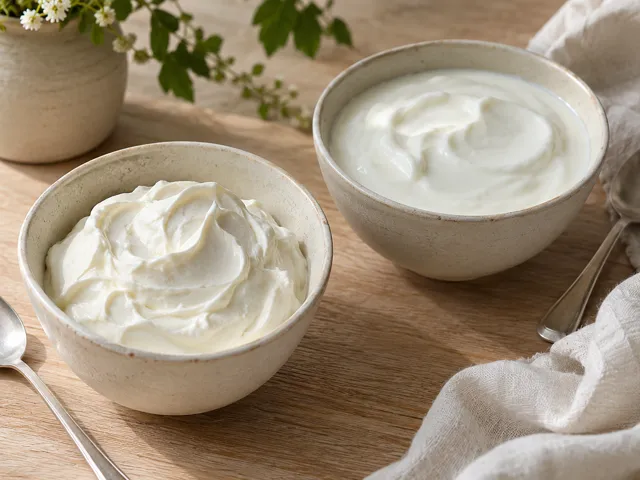
Heavy Cream Substitute: Cooking vs. Whipping
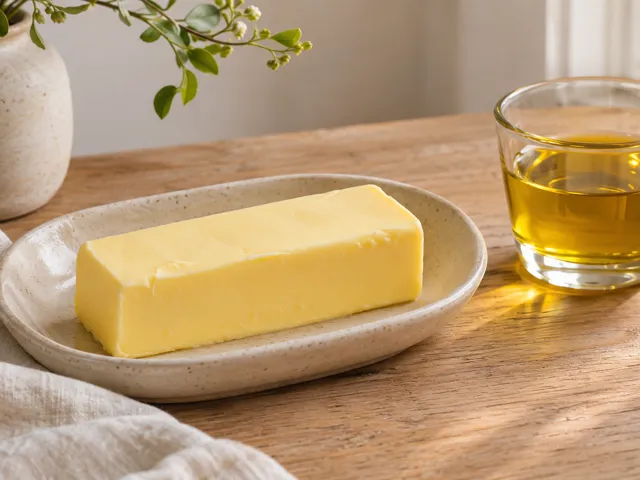
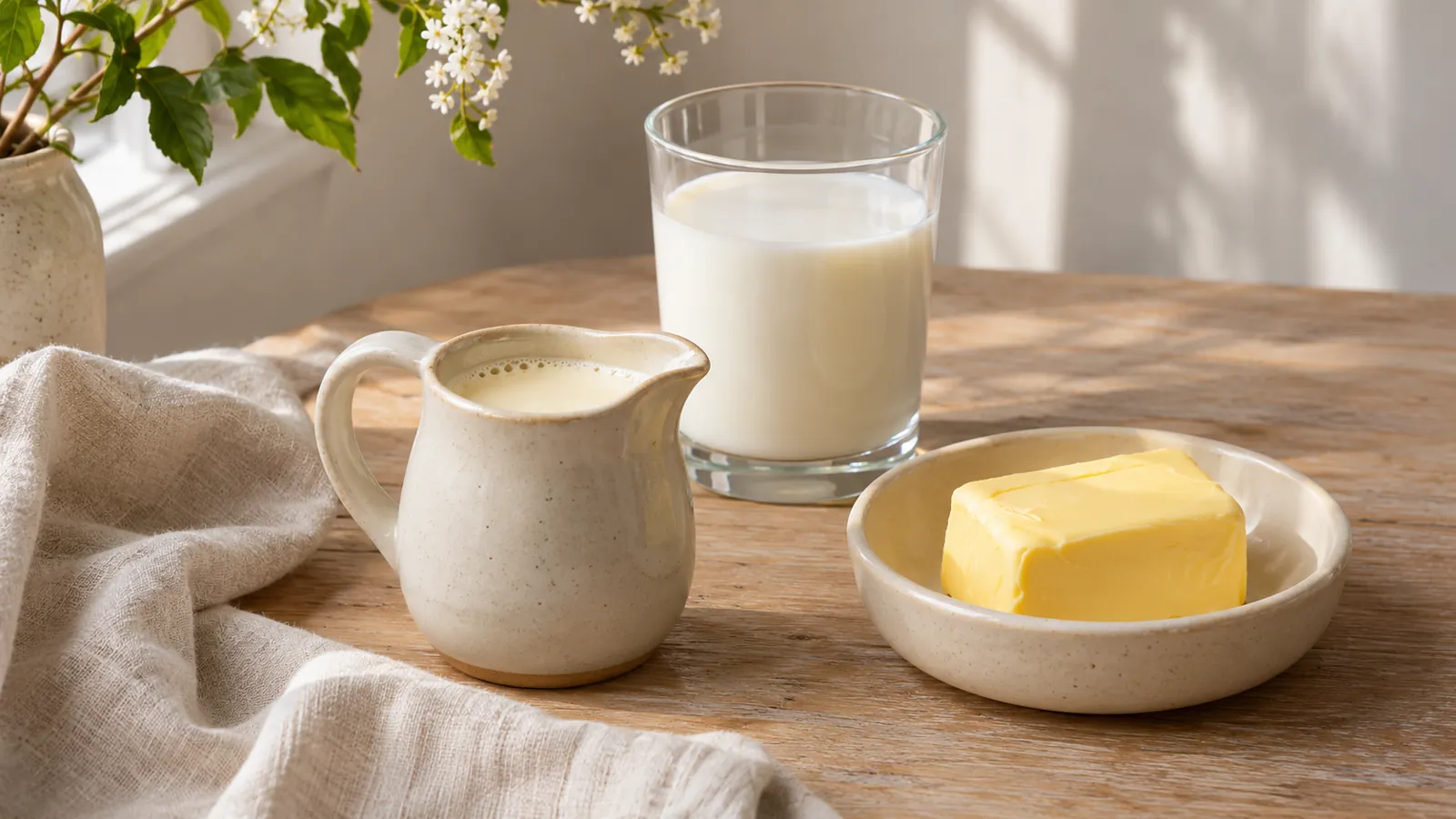
For baking, Illinois Extension lists ¾ cup milk plus ⅓ cup butter for each cup of heavy cream. It will not whip. For whipped toppings or mousse, use an ingredient specifically suitable for whipping.
| Cream’s job | Possible approach | Limit |
|---|---|---|
| Richness in baking | Milk and butter formula | Not identical to cream |
| Sauce or soup | Recipe-specific dairy alternative | Thickness and heat behavior vary |
| Whipped topping or mousse | Whipping-suitable product | Milk plus butter will not hold peaks |
Draw the line at whipping
For a compatible baked mixture, milk and butter can be useful. For a whipped topping, my recommendation is to keep whipping cream or choose a different topping. A sauce may tolerate a change in richness; a mousse or set filling depends more closely on the original formula. Decide which result you need before making the blend.
Read the verb before choosing a substitute
The instruction matters as much as the ingredient name. Pouring cream into a sauce, stirring it into a batter, and whipping it to peaks are different tasks. A replacement that adds richness can still fail when the recipe needs a stable foam.
Read the whole method before melting butter or opening another dairy product. If the cream will be whipped later, solving the liquid-fat part of the formula is not enough. This quick check can save the rest of the ingredients from being committed to an unsuitable plan.
Use one complete published formula
The extension option in the answer is intended for baking and explicitly will not whip. Its component measures describe that substitution; do not treat their sum as a general rule for recreating commercial cream by volume.
Other published approaches use different proportions and preparation techniques. King Arthur, for example, describes an emulsified milk-and-butter mixture with its own instructions and amount adjustments. Do not combine one source's ratio with another source's final substitution quantity and expect the original result.
Why extra whisking does not solve whipping
Heavy cream has properties that let it trap and hold air when whipped. Adding melted butter to milk does not automatically recreate that behavior. A frothy mixture in a blender is not the same as stable whipped cream that can support a mousse or topping.
If the recipe depends on peaks, obtain suitable cream or use a complete alternative dessert method. A product marketed for dairy-free whipping should be used according to its directions; ordinary coconut milk or a plant-based drink is not interchangeable simply because it looks creamy.
Sauces offer room to adjust, but still need care
In a savory sauce, the desired endpoint may be coating consistency rather than a precise foam structure. A recipe-specific substitution can be practical, particularly when cream is a small contributor. Account for flavor, salt, acidity, and the heat the mixture will encounter.
Yogurt or sour cream introduces a different taste and can behave differently under heat. Evaporated milk is another distinct product. Choose a method that expects the alternative rather than pouring any white dairy liquid into a boiling sauce and hoping for the same finish.
Ganache and set fillings deserve precision
A chocolate filling may need to slice, spread, pour, or hold a truffle shape. Those uses depend on its balance. A generic cup-for-cup substitution can change the texture enough to miss the intended purpose even when the flavor is pleasant.
Follow a tested formula designed around the alternative. Record ingredient weights and the intended consistency. Do not compensate by adding random starch unless the method specifically calls for it; solving one texture problem can create another.
The half-batch calculation—and why it is not a measuring-cup recipe
Half of the cited baking replacement is ⅜ cup milk plus ⅙ cup butter. In tablespoons, that is six tablespoons milk plus two tablespoons and two teaspoons butter. These are the ingredients of the scaled replacement for half a cup of cream; their volumes do not add up to half a cup.
That awkwardness is why I would not describe this formula as homemade heavy cream. It is a published baking substitution with a limited purpose. If your recipe specifies the cream by weight, do not silently convert this volume formula using a guessed density. For a delicate cake, ganache, or whipped dessert, a recipe that explicitly supports your alternative is more predictable than trying to force this blend into every cream measurement.
FAQ
Will milk and butter whip?
No, the baking substitute described here is not suitable for stable whipped peaks. Blending can make it frothy without creating the structure needed for a topping or mousse. Choose a whipping-suitable product or a complete alternative preparation instead of extending the whisking time.
Can I use half-and-half in every cream recipe?
No. Its composition differs from heavy cream, and the effect depends on the recipe’s purpose. A small addition to a flexible sauce is different from a whipped topping or set filling. Use a recipe-specific alternative rather than a universal cup-for-cup claim.
Can I use coconut milk for whipped cream?
Do not assume any coconut milk will whip. Products differ, and methods designed for coconut-based toppings rely on particular ingredients and handling. Follow one of those complete methods or use a product explicitly intended for whipping, while accounting for flavor and dietary requirements.
Why do milk-and-butter ratios differ online?
Sources may be targeting different uses and using different mixing techniques or final amounts. Keep the selected formula and its instructions together. Averaging ratios or taking a final volume from another method produces a new mixture that neither source actually described.
Should I add cornstarch to make it identical?
Not by guesswork. Thickness alone does not reproduce whipping behavior or every property of cream. A starch can change the texture and cooking requirements. Use it only within a method that accounts for it, rather than treating thick appearance as proof of equivalence.