Heavy Cream vs. Whipping Cream: The Difference
In the US, heavy cream and heavy whipping cream contain at least 36% milkfat. Whipping cream, also called light whipping cream, contains at least 30% but less than 36%; the extra fat matters most when you need a firm whipped finish.
| US label | Milkfat standard | Useful distinction |
|---|---|---|
| Heavy cream | At least 36% | Rich whipped toppings, fillings, and sauces |
| Heavy whipping cream | At least 36% | Same uses as heavy cream; either label works |
| Whipping or light whipping cream | 30% to under 36% | Lighter whipped topping; generally less firm |
Read the whole name
Heavy whipping cream and heavy cream are two permitted names for the same US category. The confusing comparison is heavy cream versus a carton labeled simply whipping cream. The heavy cream standard and light whipping cream standard define that difference by milkfat.
My recommendation is to look at the actual product name and ingredient list rather than the picture of whipped cream on the carton. A photograph of a piped swirl does not tell you which category you are buying or whether the product includes sweeteners or flavorings.
Choose heavy cream when structure matters
For a whipped finish that needs to hold its shape, I would choose heavy cream unless the preparation specifies otherwise. The higher-fat option gives you a more suitable starting point for a rich, structured topping. Keep the cream cold and follow the method’s stopping point rather than treating more beating as always better.
Whipping cream can still whip, but a lighter finish may not match the role assigned to heavy cream in a mousse or frosting. If the dessert depends on its exact structure, keep the specified product. The category difference is small on a shopping list and more consequential inside a delicate preparation.
Stop whipping at the shape you need
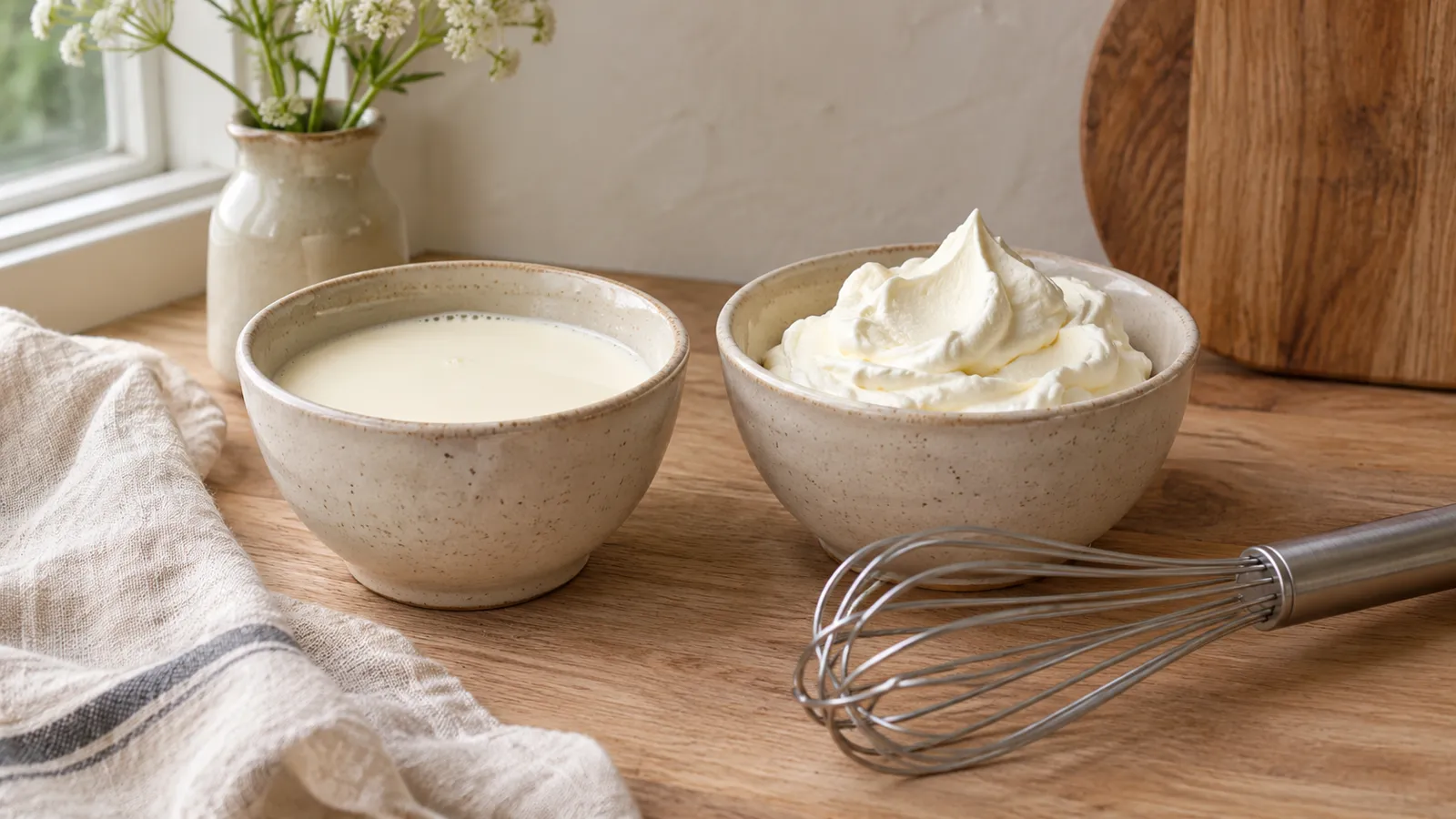
Soft peaks curl over when the whisk is lifted; firmer peaks stand more upright. A spoonful for a slice of pie can stay soft, while a piped border needs more support. Stop the mixer to check instead of letting it run while you organize the dessert. Once cream becomes grainy, more beating moves it farther from a smooth topping.
Fat content helps explain the difference: whipping incorporates air, and partially joined fat droplets help hold the bubbles. Heavy cream supplies more fat for that structure. It is still possible to overwhip it, and the word heavy does not make a warm carton or an overworked bowl behave well. Chill the cream and use a clean bowl with room for expansion.
For a hot sauce, the shopping decision is simpler. If richness is the only role, either whipping category may be usable; taste the sauce with the food it accompanies before adding more. For a mousse that relies on folding whipped cream into another mixture, choose the specified category because the foam is part of the dessert's structure. That is where I would spend the extra attention at the dairy case.
Sauces allow more flexibility
A flexible soup or pan sauce can often tolerate a change between these creams better than a whipped filling. Use the same measured amount as a starting point when the dish permits, expecting a difference in richness and body. Do not assume a thinner sauce needs an immediate spoonful of starch.
I would finish the sauce and assess it with the rest of the dish before correcting it. A creamier mouthfeel is not automatically an improvement if the original sauce was meant to be light. If you need a different ingredient entirely, see heavy cream substitutes.
Milk plus butter is a different question
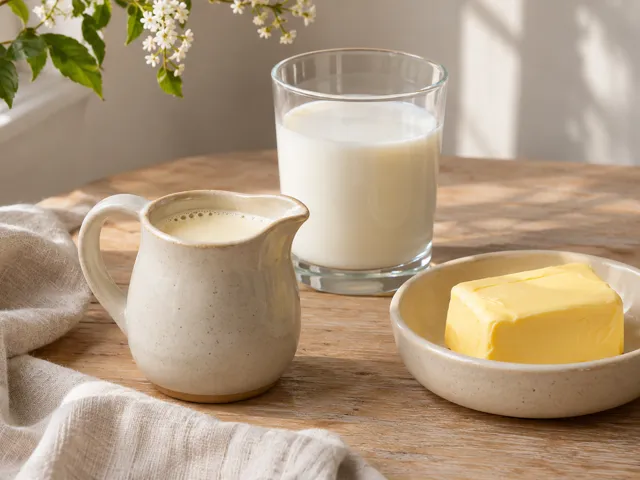
Adding butter to milk may produce a useful baking substitution within a specified method, but it does not create a carton of whipping cream. A mixture that supplies fat and liquid may still fail to hold air. Do not spend longer beating it in the hope that the label distinction is merely marketing.
For another concentrated dairy choice, see the evaporated milk guide. Keep each ingredient’s function in view: concentration, fat, acidity, and whipping are related kitchen topics, but they are not the same property. This comparison uses US naming rules; imported cream labels can describe different categories.
FAQ
Are heavy cream and heavy whipping cream identical?
They are alternative names for the same US standardized category, with at least thirty-six percent milkfat. Individual products may still differ in processing or optional ingredients. Read the full label if sweetness, flavoring, or a particular ingredient matters to the preparation you are making.
Can whipping cream replace heavy cream in soup?
For a flexible soup, an equal measured amount can be a practical starting point, with a less rich result. Judge the finished dish before adding thickener. If the recipe is a precise formulation or the cream determines its structure, keep the specified ingredient or use a supported variation.
Which should I buy for whipped cream?
I would choose heavy cream when a firmer, richer topping is the goal. A carton labeled whipping cream can still be appropriate for a lighter finish. Use a method suited to the product and stop at the intended texture rather than assuming more beating always creates more stability.
Can I add butter to whipping cream to make heavy cream?
Do not assume adding butter creates a product that behaves exactly like commercial heavy cream. Matching a fat calculation does not guarantee the same whipping behavior. For a delicate dessert, buy the specified cream or use a complete alternative method instead of improvising a fat adjustment.
Does double cream mean the same thing?
Cream names differ between countries, so do not translate a foreign label by name alone. Check its milkfat and the recipe’s intended product. This guide describes US heavy cream and whipping cream categories; an imported double cream may be substantially richer and behave differently.