Can You Freeze Mashed Potatoes? Texture Matters
Yes, you can freeze mashed potatoes, but thawed texture depends on the preparation. Refrigerate cooked mash promptly and use it within 3–4 days, or freeze it earlier; freezing does not rescue potatoes that were held unsafely.
| Storage choice | Practical rule | Limit |
|---|---|---|
| Refrigerator, 40°F (4°C) or below | Use within 3–4 days | Only after prompt chilling |
| Freezer, 0°F (-18°C) or below | Mashed potato patties: up to 1 month for quality | Texture can change |
| Reheating | 165°F (74°C) through the center | Stir and check dense areas |
Freeze for a purpose
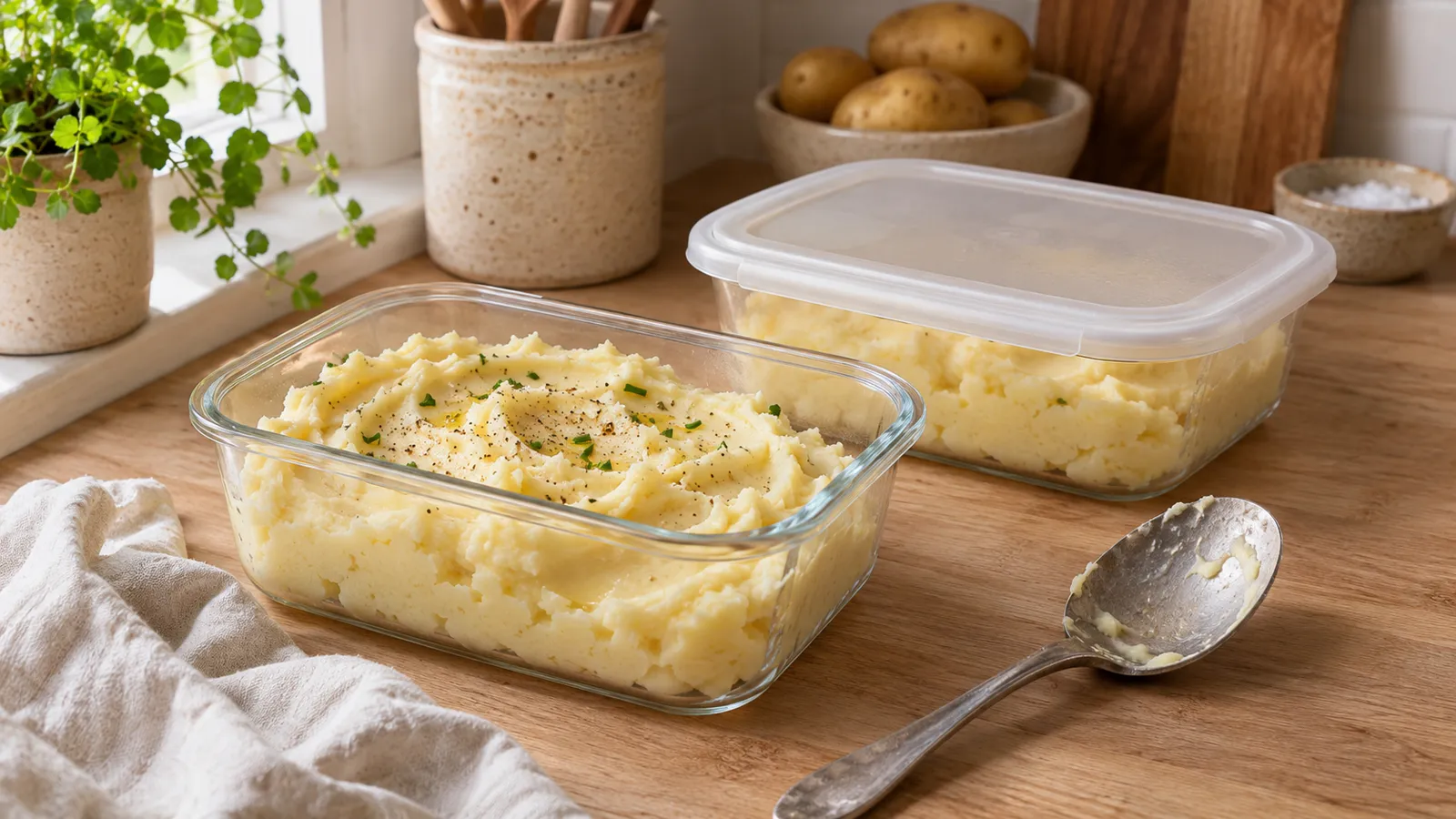
I would freeze mashed potatoes in portions that match a future meal rather than one large container. A small portion is easier to fit around the rest of dinner, and you do not have to heat the entire batch to get one serving. Write the preparation and freezing dates on the container while you still remember them.
Think about the eventual use. Mash that becomes slightly less smooth may still suit a casserole topping, while a bowl meant to be the centerpiece of a holiday meal gives you less room for texture changes. A casserole topping can tolerate a coarser texture than a smooth side dish.
How long should the portions stay frozen?
University of Missouri Extension recommends a maximum one-month freezer hold at 0°F (-18°C) for mashed potato patties and baked stuffed potatoes. That is a useful make-ahead option with a defined form and storage target. It is not a measured shelf life for every loose mash, dairy-free puree, or deep casserole. I would choose patties when planning ahead and mark their intended meal on the label.
Cool without leaving a deep pot out
USDA’s leftover guidance gives a 3–4-day refrigerated window. Move cooked mash into shallow containers for prompt refrigeration. Do not wait for a large, dense pot to become completely cold on the counter. The leftover guide explains the two-hour limit, shortened to one hour above 90°F (32°C), and the importance of chilled storage.
A freezer is not a reset button for a questionable serving bowl. If the potatoes have spent too long out or their history is unknown, do not freeze them for later.
Protect the portions from air
Use freezer-suitable containers or bags, leaving appropriate room for expansion in a rigid container. Flatten a bag enough to make a manageable package, without forcing mash into the closure. Keep the outside clean so stacked portions are easy to separate later.
If this is a new preparation, freeze a small portion before committing a large batch. Keep a note of the dairy and fat used so you can repeat a batch whose reheated texture suits you.
Thaw and reheat gently, then measure
Thaw in the refrigerator, or use a suitable direct-from-frozen reheating method. NCHFP advises heating leftovers to at least 165°F in the center. Dense mash can be hot around the edge and cool in the middle, so stir when possible and check more than one area.
If the safely reheated mash is too stiff, adjust its consistency gradually with an ingredient appropriate to the original dish. I would avoid aggressive blending to chase smoothness; the result can become gluey. The cream substitution guide helps distinguish richness from thickness when deciding what to add.
Fix the consistency after the center is hot
For loose mash, choose a covered microwave-safe dish or a saucepan that lets you stir the whole portion. Break up a partially thawed block as it loosens, fold the warm edges into the cooler center, and measure again after mixing. A dry edge needs attention before it becomes a crust, but do not pour in a large amount of milk while the middle is still frozen.
Once the mash is hot throughout, assess it. Fold a little of the original liquid into stiff mash; let excess visible moisture disperse with gentle stirring if it is loose. Stop when the texture is acceptable. A spoon or hand masher gives more control than a blender. If the result remains coarse, a casserole topping is a more forgiving use than a smooth plated puree.
FAQ
Will frozen mashed potatoes become watery?
They can separate or change texture after thawing, and the effect depends on the potato and added ingredients. Reheat safely before making small consistency adjustments. If presentation matters, try a small portion of your particular preparation first rather than assuming every mashed potato formula will thaw identically.
Can I freeze mash made with milk?
The presence of milk does not by itself prevent freezing, but dairy mixtures can change texture. Treat the mash as a cooked leftover requiring prompt chilled handling. Decide whether a slightly different texture will suit its later use before freezing a large amount for an important meal.
Should I freeze a full casserole dish?
You can choose a freezer-suitable dish, but a deep, heavy block is slower and less convenient to reheat evenly. I would portion ordinary leftovers more modestly. Check the dish manufacturer’s temperature-change instructions; not every glass dish can safely move directly from a freezer into a hot oven.
Can I thaw mashed potatoes on the counter?
Use refrigerator thawing rather than leaving a dense dairy-containing food out while the center stays frozen. You can also use an appropriate direct reheating method. The important point is to control the temperature of the whole portion, not merely wait until it is soft enough to stir.
How long can I freeze mashed potato patties?
Missouri Extension recommends up to one month at 0°F for mashed potato patties. Cool them promptly, wrap against freezer air, and label the package. Treat that as a quality guideline for this preparation, rather than a universal deadline for every mash or a reason to freeze leftovers that were handled unsafely.