Pork Internal Temperature: Whole Cuts vs. Ground
Cook whole pork chops, steaks, and roasts to 145°F (63°C), followed by a 3-minute rest. Ground pork and pork sausage need 160°F (71°C). Identify the product before choosing the target.
| Pork product | Minimum temperature | Required rest in this guidance |
|---|---|---|
| Chops, steaks, roasts | 145°F / 63°C | 3 minutes |
| Ground pork and sausage | 160°F / 71°C | No separate rest specified |
| Leftovers being reheated | 165°F / 74°C | Check throughout |
| Packaged ham | Check product category and label | Requirements differ |
Put the cut beside the temperature
Pork has two cooking numbers worth memorizing, and the trouble starts when they get separated from what they belong to. So I'd write them down as pairs: whole cuts, 145°F plus a three-minute rest; ground pork, 160°F. Said that way, a rule for chops can't wander over to sausage or burgers. Shoulder gets one more note: keep the recipe's tenderness check as its own step, because a safe minimum and a desired texture answer different questions.
Identify the cut before using a chart
Start with the package description, since a pork chop and a ground-pork patty have different consumer temperature targets. Mixtures, stuffed items, and prepared meals are their own cases: follow their specific directions and the applicable guidance for the other ingredients. "Basically pork" is a description I'd retire on the spot.
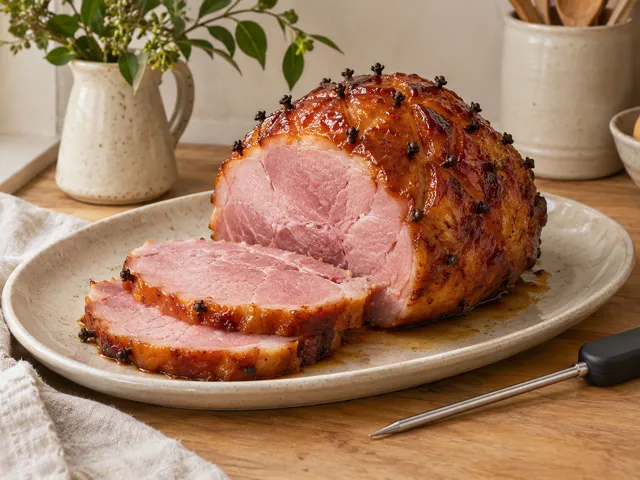
Ham also needs its own product check. Raw, fully cooked, and repackaged products are separate categories, so the fresh-chop answer stays with fresh chops, however many foods have pork on the label.
Keep the rest attached to the number
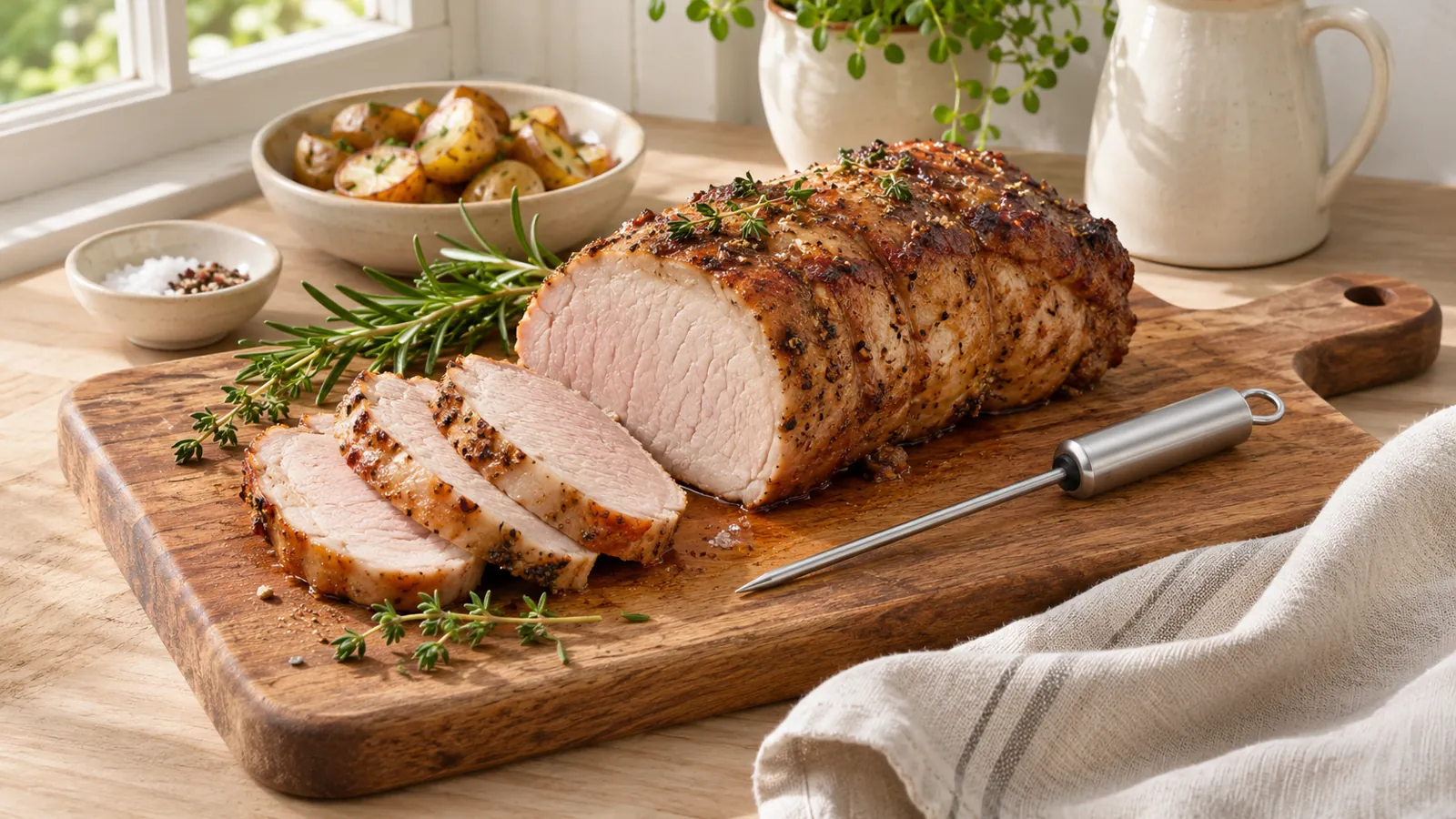
For whole cuts, the recommendation pairs 145°F with a three-minute rest, and I think of those as one instruction with two parts. A number quoted without its rest is half an answer. Set a timer after removing the meat from the heat and wait before cutting or eating.
The rest is no reason to remove a chop early and assume it will reach 145°F later. Measure before removal. The amount of temperature change afterward varies, so a guessed carryover number should never replace the measured endpoint.
Place the probe in the center of the thickest area
For a chop, insert the probe so its sensing area reaches the center, away from bone and the pan. On a thin piece, I'd come in from the side, which is easier than aiming straight down into something with very little depth to offer. For a roast, check several locations around the thickest part.
Allow the reading to stabilize and follow the thermometer's insertion-depth instructions. A probe tip sitting in a fat pocket or against bone may misrepresent the meat you need to evaluate, so reposition carefully when a reading seems inconsistent.
Pink pork is not a complete safety test
Demanding a particular shade of white, or banning every trace of pink, makes a poor decision rule. Appearance varies with the product and cooking conditions, so neither pink nor white settles the safety question. A browned exterior is equally limited as evidence about the center.
Use the thermometer result and the rest requirement together. I'd take one good reading over cutting repeatedly into a chop, which loses juices and still leaves you uncertain whether the relevant temperature was reached. You end up with a drier dinner and no more information than you started with.
Pulled pork has a second endpoint: tenderness
A shoulder can meet the minimum temperature for a whole cut before it is tender enough to pull apart. Long-cooking recipes continue for texture, and that later endpoint serves a different purpose from the minimum safety target. On a shoulder, then, the thermometer answers one question and a fork answers the other.
Follow a complete shoulder recipe for tenderness checks and timing. That longer cooking target stays with the shoulder; a lean loin or chop has a different texture goal, and treating one like pulled pork strikes me as a sad use of a good chop. Choosing the right cut and recipe matters as much as knowing the minimum number.
A chop at 145°F and a sausage at 145°F need different next steps
For the whole chop, a correctly measured 145°F is followed by the three-minute rest before cutting or eating. For ground-pork sausage at the same reading, cooking must continue to the ground-pork target of 160°F. Identical number on the screen, different decision, because the products differ. Beef and poultry have their own targets, set out in the steak temperature chart and the chicken temperature guide.
Start the rest timer only after the whole cut reaches its target and leaves the heat. I'd tie that timer to the reading and to nothing else, since resting is never permission to remove the meat at a lower temperature on a guessed carryover allowance. Have a clean plate ready, and do not reuse the raw-meat plate unwashed. If the product contains another ingredient with a different requirement, use the instructions for that complete product, because this simple comparison only covers plain pork.
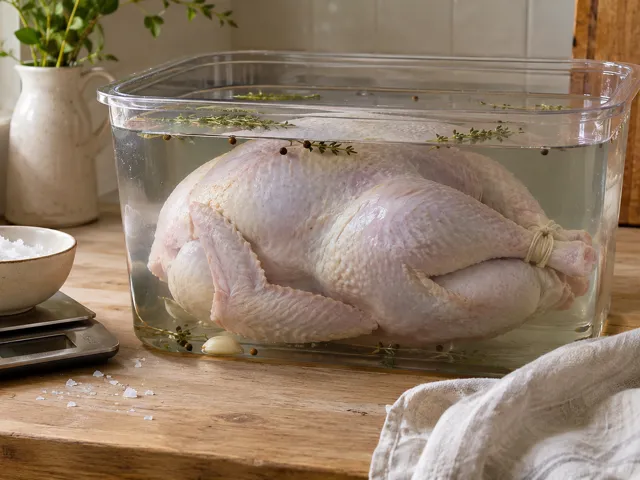
Brining pork does not change the target either. If you brine, the brine calculator works out the salt by weight and in cups for your water; I would still judge doneness with the thermometer.
FAQ
Can I eat a pork chop at 145°F?
The consumer recommendation is 145°F followed by a three-minute rest before cutting or eating. Measure in the thickest part without touching bone. Keep the rest requirement with the temperature rather than treating the number as the whole instruction.
Does ground pork use the same target?
No. Ground pork and pork sausage use 160°F in the cited consumer chart. Identify the product first, and follow package instructions for prepared mixtures. A whole-cut recommendation should not be applied to a ground-meat product.
Should pulled pork stop at 145°F?
That minimum does not guarantee a shoulder is tender enough to shred. A pulled-pork recipe usually continues cooking for texture. Use the recipe’s tenderness method while keeping the minimum temperature concept separate from the desired final texture.
Does a pink center mean pork is unsafe?
Color alone cannot answer that reliably. Measure the internal temperature correctly and follow the rest requirement for whole cuts. Browning, whiteness, or pinkness should not replace the thermometer and the product-specific guidance.
Can I use this chart for ham?
Check the ham label and category first. Raw and precooked ham have different instructions, and packaging history matters to reheating guidance. Use the linked official chart and the manufacturer’s directions rather than applying the fresh-pork answer indiscriminately.