How Long to Cook a Ham: Read the Label First
A cooked spiral-cut ham typically needs 10–18 minutes per pound at 325°F (163°C) if reheated. Raw ham needs 145°F (63°C) plus a 3-minute rest; reheating targets differ for plant-packaged cooked ham and leftovers.
| Ham type | Planning time at 325°F | Required temperature |
|---|---|---|
| Cooked spiral cut, 7–9 lb | 10–18 min/lb | 140°F if USDA plant-packaged; otherwise 165°F |
| Cook-before-eating half, bone-in, 5–7 lb | 22–25 min/lb | 145°F plus 3-minute rest |
| Fresh whole leg, bone-in, 12–16 lb | 22–26 min/lb | 145°F plus 3-minute rest |
The package matters more than the glaze
Before anyone opens a jar of glaze, I want you holding the wrapper. A pink color, a smoky smell, and a neat spiral of slices are all poor stand-ins for the label, and the one question that sets your whole afternoon is whether this ham is ready to eat or requires cooking. I'd leave the package beside the cutting board until its instructions and the applicable temperature are written down.
The FoodSafety.gov roasting chart separates types and weights for a reason. A fresh leg is a cooking project; a fully cooked ham is already cooked, so if you warm it, the job is simply not to ruin it. Lumping them together as one generic holiday roast throws away the most useful thing you know about your dinner.
Turn minutes per pound into a planning range
For an eight-pound cooked spiral-cut ham, the table gives roughly eighty to one hundred forty-four minutes. I think the width is the honest part: anyone promising an exact dinner bell is guessing. Start checking early enough to avoid overshooting, and build the meal so a slower finish ruins nothing. If guests are coming, I'd give them a time based on the long end, because side dishes can wait on a ham more gracefully than a hungry table can.
Use the range for the correct type and weight of ham. The shortest number from one row has no business being attached to a much larger uncooked product. And when the manufacturer gives directions, I trust those over a general chart, since they were written for the ham in your hands.
Why reheating has two targets
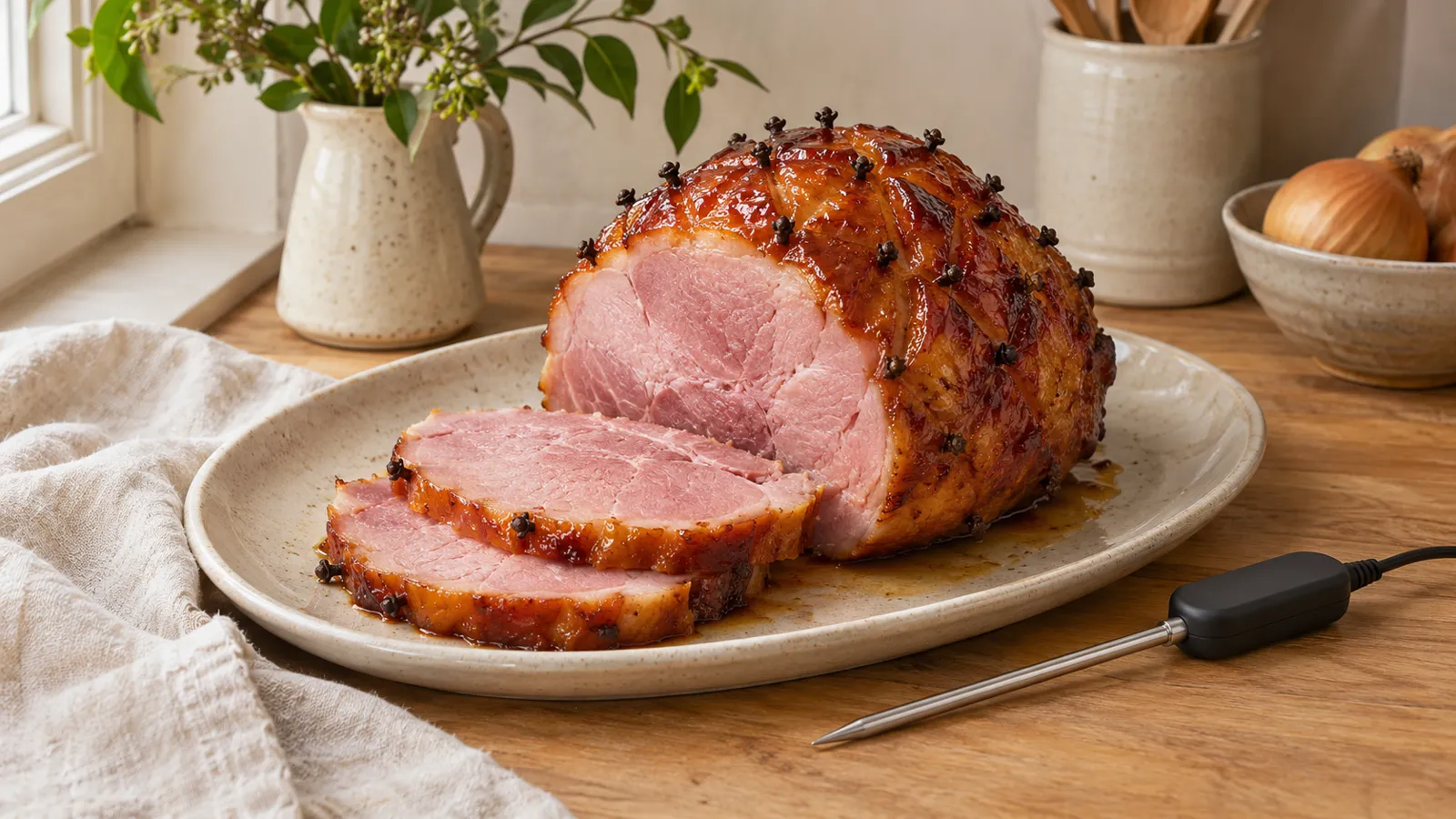
USDA distinguishes cooked hams packaged in inspected plants from cooked hams repackaged elsewhere and leftover ham. The former can be reheated to 140°F (60°C); the latter should reach 165°F (74°C). This distinction is documented in the USDA ready-to-eat ham guidance. So before you set a thermometer alarm, ask where this ham has been. If you can't tell which group yours belongs to, I'd go with 165°F: a wrong guess about an unlabeled ham isn't worth the risk.
Check the thickest meat, keeping the probe off the bone and out of the gaps between spiral slices. A hot edge or a bubbling glaze tells you little about that central area. If a reading seems inconsistent, reposition the probe and take it again.
Avoid drying out a sliced ham
A spiral ham is a stack of thin slices that would all like to dry out at once, so I'd follow the package's covered-heating instructions and save any uncovered glaze finish for the very end. Exposed slices lose moisture readily. A browned exterior is a poor reason to keep heating a ham that has already reached its applicable target.
A fully cooked product labeled ready to eat can also be served cold according to its directions. If oven space is the real problem, that's the option I'd take: you give up the warm centerpiece and get an oven back for everything else. For fresh pork terminology, see pork internal temperatures; for the portions remaining after dinner, see leftover handling.
FAQ
How long does a ten-pound ham take?
First identify the type of ham and read its package. A single ten-pound estimate cannot cover fresh, cook-before-eating, and fully cooked products. Multiply the applicable minutes-per-pound range by ten only when that chart row fits, then use a thermometer to determine the actual finish.
Is all spiral ham fully cooked?
Do not assume so from the slicing pattern. Look for wording such as fully cooked or ready to eat, and read the handling directions. Spiral cutting describes how the ham is cut; the label tells you whether you are warming a cooked product or need to cook it safely.
Can I use the raw pork target for leftover ham?
No. The raw-ham target with its required rest and the leftover reheating target answer different questions. Leftover cooked ham should reach 165°F when reheated. Keep track of whether you are cooking fresh meat, warming an original plant-packaged product, or using meat saved from an earlier meal.
Does glazing make a ham ready to serve?
No. Glaze can darken before the center is hot, particularly when it contains sugar. Follow the timing and placement instructions for the glaze, but check the ham itself with a thermometer. If the surface is getting too dark, protect it while the center finishes heating.
Should I rest a fresh ham?
Yes: raw fresh or cook-before-eating ham needs at least a three-minute rest after reaching 145°F before carving or eating. Keep this required rest in the meal plan. It does not authorize removing the ham below the target and hoping the temperature will rise enough afterward.