Brown Sugar Substitute: White Sugar and Molasses
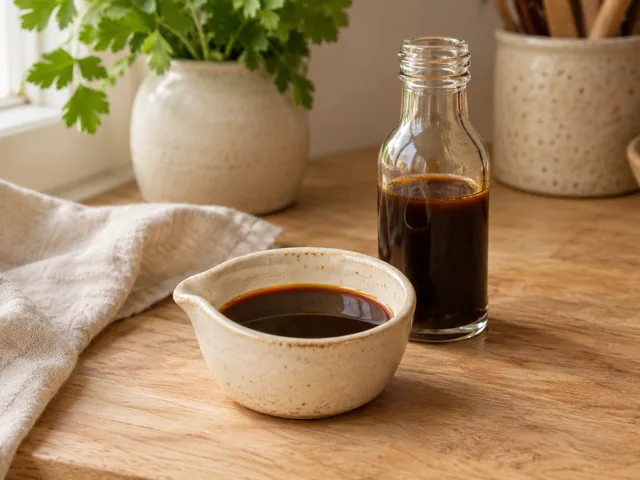
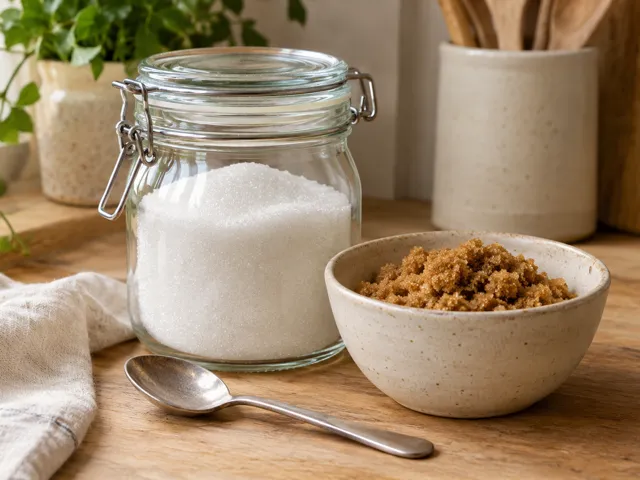
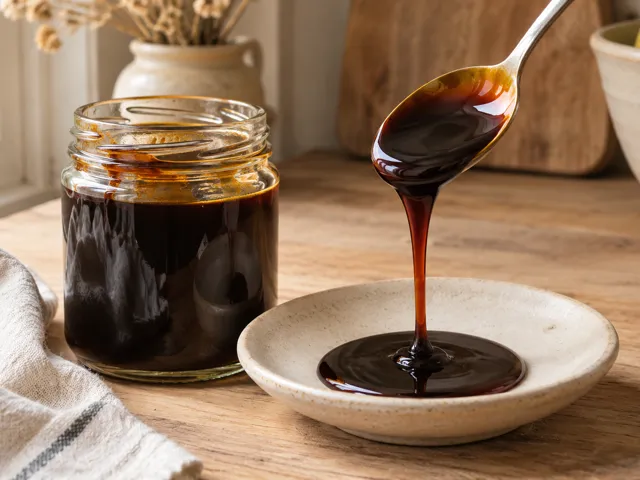
For each cup of light brown sugar, King Arthur suggests 1 cup (198 g) white sugar plus 2 teaspoons (14 g) molasses; for dark, use 1 tablespoon (21 g) molasses. Use the whole blend for that replacement.
| For a cup of brown sugar | White sugar | Molasses |
|---|---|---|
| Light style | 1 cup (198 g in cited formula) | 2 tsp (14 g) |
| Dark style | 1 cup (198 g in cited formula) | 1 tbsp (21 g) |
| No molasses available | Consider recipe-specific white sugar swap | Expect changed flavor and texture |
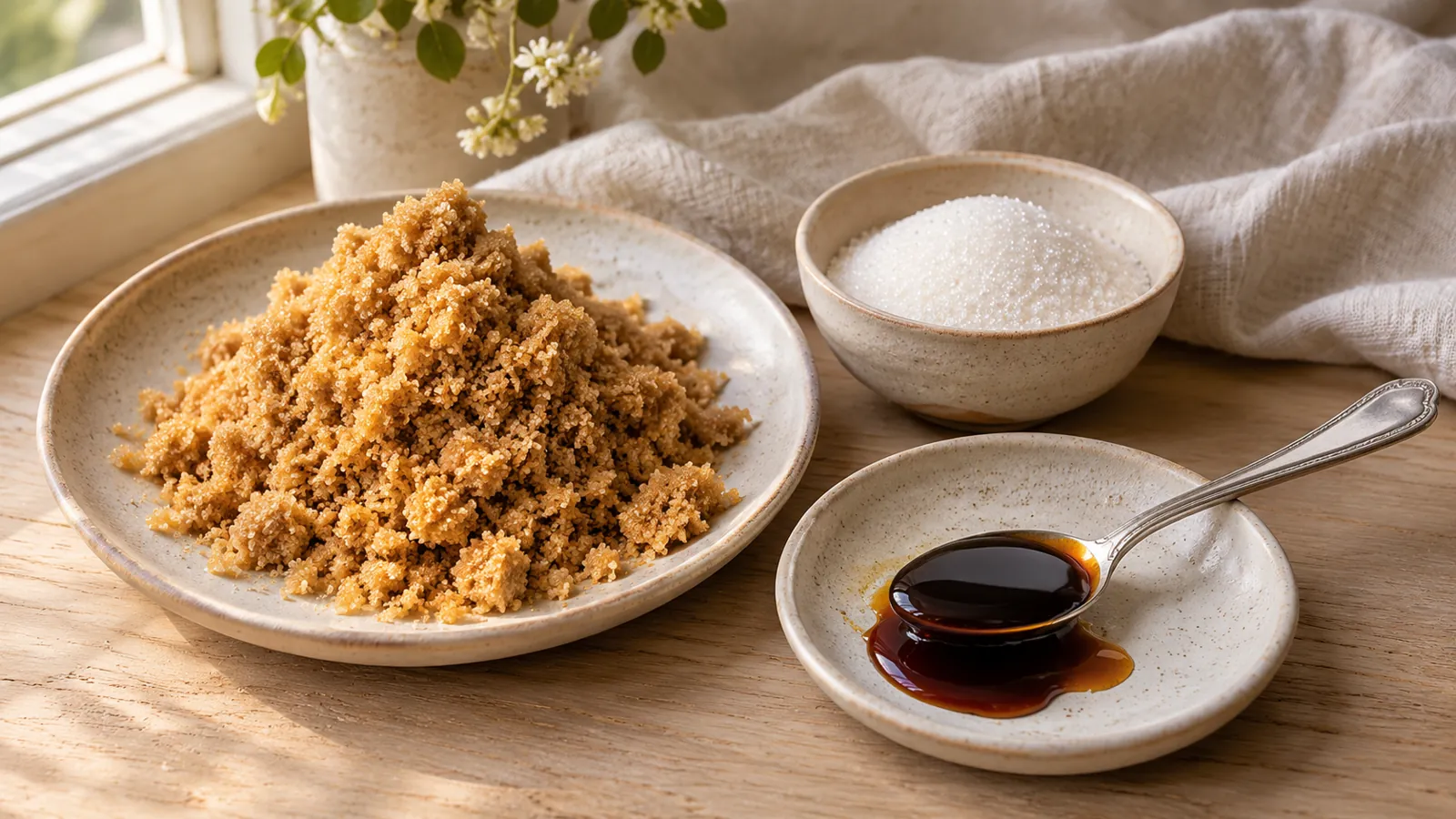
When the molasses makes a difference
If the cookie is built around brown sugar, make the sugar-and-molasses blend and leave plain white sugar in the canister. Molasses is part of the flavor the recipe is after, more than a way to darken the ingredient. A small sprinkle over an already strongly flavored dish is another matter, and I wouldn't get out a second measuring spoon for it. Match the effort to how much the sugar is actually doing.
Choose light or dark before measuring
Brown sugar combines sugar with molasses, and the amount of molasses helps distinguish light and dark styles. I'd stick with the version your recipe names whenever you can, since a stronger molasses flavor may be welcome in one cookie and distracting in a delicately flavored cake.
The ratios above are one clearly identified published formula, and other sources may use different proportions. Pick one source and stay with it. Taking one chart's cup amount and another's gram weight as though they were interchangeable is a small way to make a real muddle.
Mix evenly so one spoonful is not mostly molasses
Work the ingredients together until the color is distributed and the dark streaks are gone. A fork or suitable mixing tool can help break up clumps, and I'd spend the extra few seconds here. Then carry on with the recipe's mixing sequence exactly as written, since this blend changes an ingredient and leaves the method alone.
The cited formula replaces each cup of brown sugar with the full quantity of white sugar and molasses listed above. Use the whole blend for that replacement; do not pack it into a cup and discard the excess. If your recipe gives only a weight of brown sugar, I'd check its own cup equivalence before scaling this cup-based substitute.
What happens if you use only white sugar?
Some formulas can tolerate a white-sugar substitution, but flavor, moisture-related behavior, browning, and spread may change. You might well get an enjoyable cookie that simply isn't the same cookie. If the batch is for you and a glass of milk, I'd take that deal. If someone is expecting the recipe they remember, I'd make the blend.
See whether the recipe uses baking soda and relies on acidic ingredients, because a sugar change can interact with the leavener. Do not compensate by adding a random amount of acid unless a complete reformulation supports it.
Honey and maple syrup are different substitutions
Liquid sweeteners add liquid as well as sweetness and their own flavor. A cup of syrup isn't a cup of brown sugar in a more convenient form, and replacing one with the other can require adjustments to the rest of the formula.
I'd look for a recipe developed for that sweetener or use the author's specified alternative. Changing the syrup, the flour, and the eggs in one go makes the result much harder to predict, and much harder to learn from when it comes out strange.
Hard brown sugar may be a storage problem, not a missing ingredient
Before you replace a bag merely because it has hardened, check appropriate softening guidance and look at its condition. A rock-hard bag may only need softening, because hardness alone and spoilage are different questions. That said, do not use a storage trick as permission to use contaminated ingredients.
For the future, keep brown sugar properly sealed so measuring it stays straightforward. I think a good container is the best substitution you can make, since it prevents the unnecessary ones. Label any homemade blend, too, so it doesn't get confused with a different sugar in the pantry.
Half a cup: light and dark are two different blends
To replace half a cup of brown sugar, use half a cup (99 g) of white sugar with one teaspoon (7 g) of molasses for light brown sugar, or 1½ teaspoons (10.5 g) for dark. Use the entire scaled blend, and mix until no dark sticky pockets remain so the molasses is evenly distributed.
Here, half a cup describes the brown sugar being replaced, so there's no second measuring step for the finished blend. Keep that distinction when doubling or halving the formula. I'd also pick light or dark on purpose and stay there, because adding more molasses simply to deepen the color also changes the substitution.
FAQ
Can I make light brown sugar darker?
Use a complete published method that accounts for the molasses already present. Do not assume the full white-sugar blend quantity should be added to an existing brown sugar. The goal is the intended balance, not simply the darkest color you can achieve.
Can white sugar replace brown sugar directly?
Sometimes the result is acceptable, but it can differ in flavor, texture, and spread. Check the recipe author’s guidance and the leavener context. If you need a predictable match, use the specified brown sugar or a measured molasses blend rather than assuming identity.
Is maple syrup a cup-for-cup replacement?
Not generally. Syrup adds liquid and a different flavor, so the rest of the formula may need adjustment. Use a recipe written for syrup or a complete tested substitution. A matching volume of sweetness is not the same as matching the ingredient’s behavior.
Why do gram weights differ between cup charts?
Cup weights depend on the ingredient and measuring convention. This King Arthur formula uses 198 g white sugar plus the listed molasses to replace one cup of brown sugar. Use the full blend rather than remeasuring a packed cup. For a weight-only recipe, establish its cup equivalence before scaling.
Can light and dark brown sugar replace each other?
Generally, yes, in the same amount. Dark brown sugar brings more molasses flavor and a deeper color. For a delicate cake or a recipe where brown sugar supplies a defining flavor, use the specified style when a close match matters.