Baking Soda Substitute: When Baking Powder Can Help
Baking powder at about three times the baking soda amount is an emergency fallback: ¼ teaspoon soda becomes ¾ teaspoon powder. Expect possible changes in acidity, browning, flavor, and texture.
| Baking soda requested | Baking powder starting amount | Important limit |
|---|---|---|
| ¼ teaspoon | ¾ teaspoon | May change acidity, color, and texture |
| ½ teaspoon | 1½ teaspoons | Not equivalent to the original formula |
| 1 teaspoon | 3 teaspoons | Use cautiously; a large change to the batter |
When the fallback is worth trying
Think of the baking-powder swap as a spare tire: good for getting a small batch home, provided a change in flavor or browning is acceptable. For a bake that depends on a particular spread or acid balance, I'd go get baking soda. Replacing the gas it produces doesn't replace all its other effects.
The three-to-one fallback is described by the University of Tasmania's explanation of the two leaveners. It's useful in a pinch, and it promises nothing about identical cookies or pancakes. Baking powder already contains acid as well as an alkaline component, while the baking soda in your original recipe may have been there partly to balance acidic ingredients.
So ask what this batch has to do. For a flexible weekday pancake batter, I'd accept a different result and get on with breakfast. For a carefully developed cake, a heavily acidic formula, or a bake you need to reproduce exactly, getting baking soda is more dependable than trying to compensate after mixing.
Why replacing the lift does not replace every function
Leavening is only one part of the story. Changing the acid–base balance can affect flavor and browning as well as the way a baked item develops, so a substitute that gives some rise can still produce a noticeably different cookie.
That's why I'm wary of a bare "use three times as much." It gives you a starting amount of baking powder and says nothing about how much acid remains unbalanced in your particular recipe. Two recipes with the same teaspoon of soda can contain very different combinations of molasses, yogurt, cocoa, or other ingredients.
Resist subtracting acidic liquids by guesswork. Take out the buttermilk and you've removed liquid and other ingredients along with the acidity, and a successful reformulation has to account for the whole mixture. For an ordinary home substitution, I'd keep the rest of the formula stable, which also gives you a clearer result to evaluate.
Check whether the recipe already uses both
Many formulas list both baking soda and baking powder. If yours does, the three-to-one amount refers to replacing the soda portion, not the entire leavener list. Read and rewrite the quantities before you begin so you neither remove nor duplicate an ingredient by accident.
For example, a recipe with half a teaspoon of soda and one teaspoon of baking powder would receive one and a half teaspoons of powder as the soda replacement, in addition to the original teaspoon. That's two and a half teaspoons total. The example shows the arithmetic and guarantees nothing about how the reformulated recipe will taste or bake.
When the combined amount looks surprisingly large, I'd take that as a signal to stop and ask whether this recipe is a good candidate at all. A mathematically consistent replacement can still be a poor practical choice for a delicate formula.
Which pantry items are not direct replacements?
Yeast: it belongs to a different leavening process with its own timing and handling. Sprinkling yeast into a cookie dough that expects baking soda won't turn it into a yeast-developed formula, so I'd save it for a recipe written around it.
Whipped egg whites: they can provide structure and trapped air in recipes designed for them. They also change ingredients and mixing technique, which makes them a different recipe rather than a spoon-for-spoon powder substitute.
Self-rising flour: it changes the flour, leavening, and salt together. Use it only through a whole-recipe adjustment that accounts for those ingredients. Piling it on top of an improvised baking-powder replacement makes the result harder to predict.
Cleaning products: use only food-grade ingredients suitable for cooking. Do not use washing soda or assume a similarly named household powder is baking soda. Packaging identity matters more than the fact that two products are white powders, so read the box every time.
A practical decision before you mix
Start with the recipe's notes and look for an author-tested alternative, because a substitution tested in that exact formula is more relevant than any general chart, this one included. Next, check how much soda the recipe uses. Then decide whether a changed texture or flavor would still be acceptable.
If the answer is yes, measure the fallback carefully, keep the other ingredients constant, and write down the change. If the answer is no, choose a different recipe or get the original ingredient. I'd call that a sound cooking decision, and it takes nothing away from your resourcefulness.
What this guide is based on
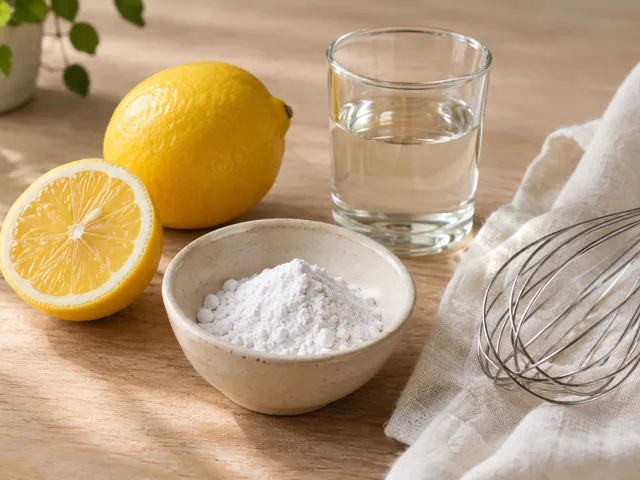
This page explains published substitution guidance and adds my reasoning about when to use it; I'm not claiming every option was run through the same batter. The three-to-one fallback is presented with its limitations. The ingredient photograph is an illustration and documents no measured rise, texture comparison, or taste test.
FAQ
How much baking powder replaces half a teaspoon of soda?
The three-to-one fallback gives 1½ teaspoons of baking powder. That is a starting substitution, not an equivalent formula. If the recipe already includes baking powder, account for that separately, and consider whether the changed acidity and amount of leavener will suit the bake.
Will my cookies taste exactly the same?
Not necessarily. Baking soda can affect more than lift, including the balance of acidic ingredients and browning. A substitute may produce an acceptable cookie without reproducing its original flavor or spread. For a result that must match, use the specified ingredient or a tested alternative formula.
Can I use yeast instead?
Yeast uses a different process and requires a formula and timing designed for it. It is not a spoon-for-spoon replacement in a batter that expects chemical leavening. Choose a yeast-based recipe if that is the leavener available instead of adding it to an unrelated cookie or cake mixture.
Should I remove buttermilk when using baking powder?
Do not remove an acidic ingredient by guesswork. Buttermilk also contributes liquid and other components, so removing it changes more than acidity. Follow a complete reformulation from the recipe author, or keep the recipe stable while accepting that the emergency substitute may change the result.
Is washing soda the same ingredient?
No. Use only food-grade baking ingredients appropriate for the recipe. A similarly named cleaning product is not a substitute for baking soda. Check the actual package identity before measuring; white powders cannot be identified reliably by appearance on the countertop.