Baking Powder Substitute: A Measured Pantry Swap
For 1 teaspoon of baking powder, use ¼ teaspoon baking soda, ½ teaspoon cream of tartar, and ¼ teaspoon cornstarch or tapioca starch. Mix evenly and use promptly once the batter is wet.
| Ingredient | Amount | Purpose |
|---|---|---|
| Baking soda | ¼ teaspoon | Alkaline leavener |
| Cream of tartar | ½ teaspoon | Acid partner |
| Cornstarch or tapioca starch | ¼ teaspoon | Completes the dry blend |
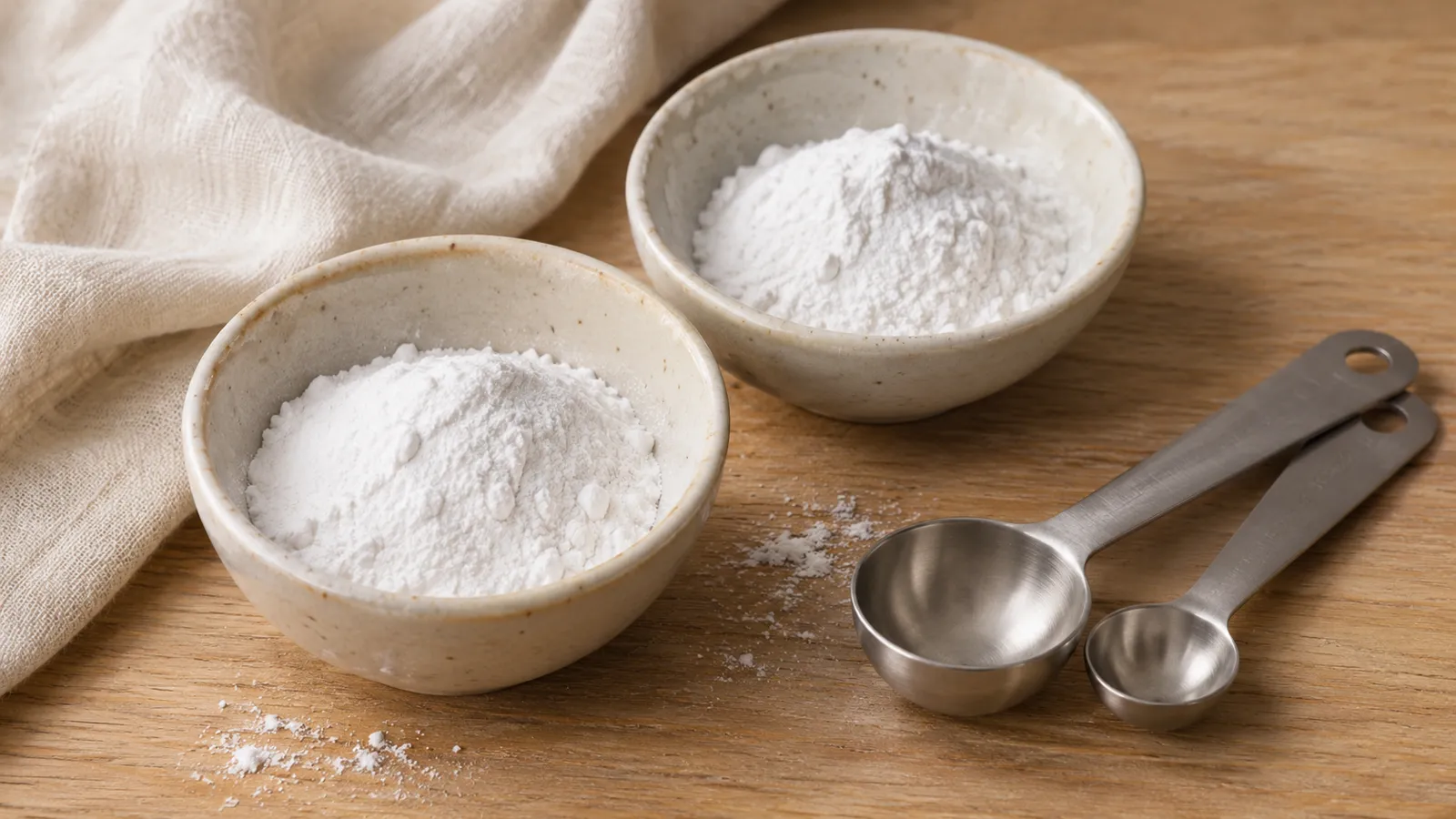
Measure a fresh batch for this bake
Make exactly what today's recipe needs and no more. The math stays visible that way, and you avoid a stored jar that someone could mistake for baking soda. Set up the pan and preheat the oven before any liquid goes in, because this acid-and-soda blend does not reproduce every commercial powder's staged reaction.
The formula above is King Arthur Baking's published substitution for a teaspoon of baking powder. Mix the measured dry ingredients evenly before they join the recipe's dry mixture. The one warning I'd underline twice: do not replace a whole teaspoon of baking powder with a whole teaspoon of baking soda. At that concentration the two are not interchangeable.
Why the acid matters
Baking soda needs an acid partner to generate carbon dioxide in a batter. Commercial baking powder packs both an alkaline component and acid components into one can, and that's its whole convenience: the recipe can use it without asking you to supply a separate acid in just the right amount.
Cream of tartar provides the acid in this dry substitution, which is why I think this version is the one worth learning. Plain baking soda alone can't reproduce the balance. And "a little lemon juice" on top of an arbitrary dose of soda is a different reformulation altogether, however sensible it sounds at the counter.
Keep that in mind as you read your ingredient list. Milk, yogurt, lemon juice, and buttermilk all pour, but in a leavened batter they aren't just interchangeable liquids. Swap one while you're also changing the leavener and you've moved several variables at once, with no way of knowing which one mattered. I'd leave the rest of the original formula alone when trying this specific dry replacement.
Worked examples without mental arithmetic
For a recipe calling for two teaspoons of baking powder, double every component: half a teaspoon of baking soda, one teaspoon of cream of tartar, and half a teaspoon of starch. Double all three, never just the soda, because the relationship between the ingredients is the point of the substitution.
For a recipe calling for half a teaspoon of baking powder, halve every component: one-eighth teaspoon baking soda, one-quarter teaspoon cream of tartar, and one-eighth teaspoon starch. If your measuring spoons can't handle those quantities reliably, I'd make the one-teaspoon blend, mix it thoroughly, and measure half the blend by volume. You'll have a little powder left over and a lot less guesswork.
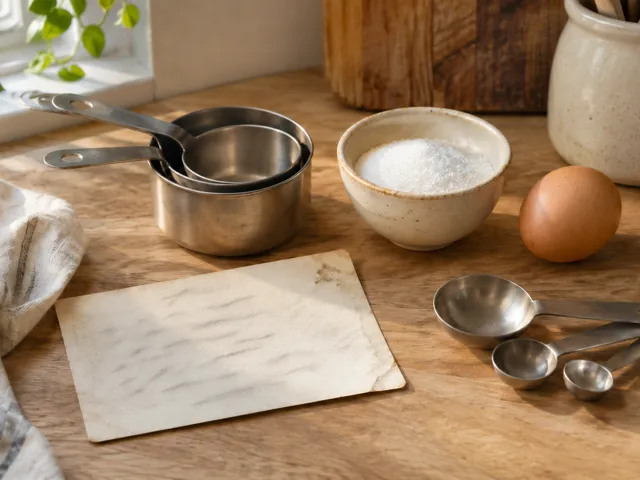
Use level measuring spoons. When the entire soda amount is only a quarter-teaspoon, a heaped spoon is a real change to the recipe and far from a small harmless variation. Set the jars side by side and check the labels before measuring, too, since the powders themselves offer no reliable visual identity check. They look alike and they aren't going to tell you which is which.
Why it may not behave like double-acting baking powder
A commercial double-acting baking powder is formulated to release gas at more than one stage, and a simple soda-and-cream-of-tartar mixture does not duplicate every commercial formulation. So my advice is plain: once the batter is wet, get moving, and leave any long wait before baking to recipes built for it.
This matters most when the recipe depends on a resting period or when several pans have to wait their turn in a small oven. If the original process deliberately holds the mixed batter, replacing its leavener may change how it performs. For a casual batch of muffins, I'd go ahead with the blend. For a celebration cake or another high-stakes bake, I'd buy the specified ingredient, because it's the more dependable choice and a can of baking powder costs less than starting the cake over.
What if you have no cream of tartar?
Some substitution charts pair baking soda with an acidic liquid, such as buttermilk or vinegar. Those options also change liquid amounts and sometimes flavor, so they're a fair route only if you follow one complete, measured substitution from a reliable source. Borrowing the soda quantity from one chart and the liquid quantity from another leaves you with a formula nobody wrote.
University extension charts do not all use exactly the same cream-of-tartar proportion as the King Arthur blend above, and I'd resist the urge to average them. The average of two complete formulas is a third formula with no one standing behind it. Choose one and keep its quantities together. This page uses one clearly attributed option so you can reproduce the decision.
If you lack the ingredients for a measured swap, I'd change the plan and make something that doesn't need baking powder at all. A short list of realistic choices is more useful than promising that any acidic item in the refrigerator can rescue any batter.
Do not add this blend to self-rising flour automatically
Self-rising flour already includes leavening and salt, so whether it can replace all-purpose flour depends on the whole recipe, not just the missing teaspoon of baking powder. Use self-rising flour and a full replacement blend together and you can end up with an unintended amount of leavener.
Write down the original formula before changing anything, and if you've already changed the flour, account for that first. When several ingredients are missing, I think the easier path is to select a recipe that matches the pantry. A chain of substitutions whose effects overlap is more work and gives you less to go on.
A substitution plan before the bowl gets wet
Read the recipe's total baking-powder quantity, calculate the replacement, and measure it into a separate dry bowl. Check the fractional teaspoons before it goes near the flour, because a quarter teaspoon and three-quarters of a teaspoon are easy to confuse when several small scoops are involved.
Then check the rest of the formula. If it also contains baking soda, keep that separately specified amount, even though your replacement already contains soda. It may be serving a different acid-balancing role, and I'd never treat a general baking-powder replacement as permission to overhaul both leaveners. Keep the recipe's separately listed soda visible on your written ingredient list so it doesn't accidentally get counted as part of the replacement.
FAQ
Can I use baking soda alone?
Not as a direct replacement. Baking soda needs an acid partner, while baking powder supplies an acid–base system. Adding a full teaspoon of soda in place of a teaspoon of powder changes the formula substantially. Use a measured complete substitution or a recipe designed for soda.
What replaces two teaspoons of baking powder?
Double every ingredient in the blend: ½ teaspoon baking soda, 1 teaspoon cream of tartar, and ½ teaspoon starch. Mix the powders evenly and use level measures. Doubling only the baking soda changes the balance and does not produce the intended replacement.
Can I mix the batter now and bake much later?
Avoid assuming this blend behaves exactly like commercial double-acting baking powder. Have the pan and oven ready before the wet and dry ingredients meet. If the original recipe deliberately rests the mixed batter, use its specified leavener or an alternative tested for that process.
Can self-rising flour solve the problem?
Sometimes a whole-recipe adjustment can use self-rising flour, but it already brings leavening and salt. Do not substitute it and add the full replacement blend without accounting for those ingredients. Follow a formula written for self-rising flour when you need a predictable result.
Why do substitution charts show different quantities?
Different sources can specify different complete blends and preparation assumptions. Do not average their figures or combine one chart’s soda with another’s acid amount. This guide identifies the King Arthur blend it uses so the quantities remain traceable and can be applied together.