Egg Substitute for Baking: Match the Function
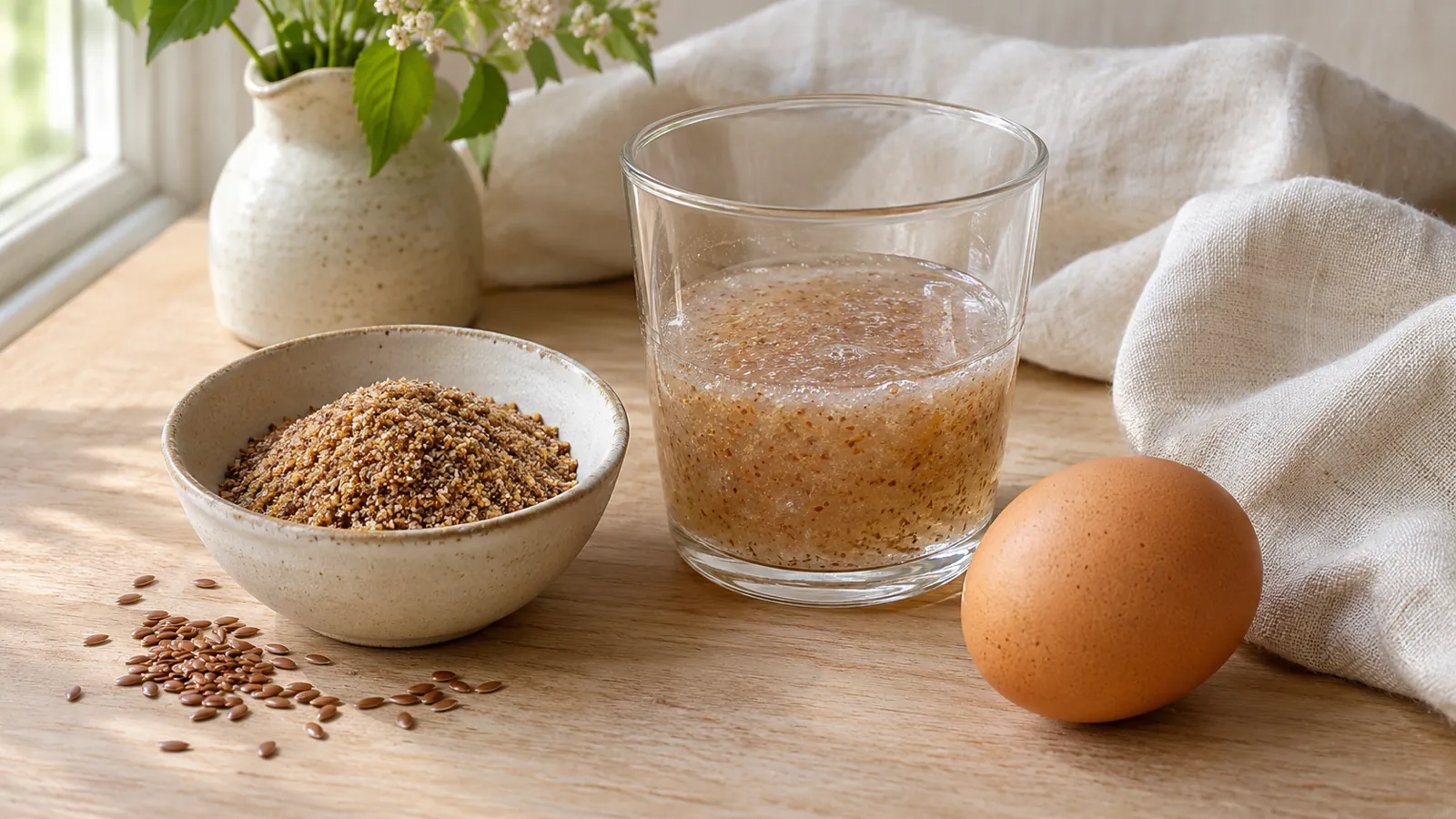
For binding in many suitable baked goods, replace one egg with 1 tablespoon ground flaxseed plus 3 tablespoons water, rested until gelled. This does not replace whipped eggs or a custard’s structure.
| Egg’s main role | Possible substitute | Do not assume |
|---|---|---|
| Binding | Flax gel in a suitable formula | It supplies the same lift |
| Moisture | Recipe-specific fruit purée or yogurt | Flavor and sweetness stay unchanged |
| Whipped structure | A purpose-built alternative recipe | Flax gel becomes egg-white foam |
| Custard setting | A complete egg-free formula | A spoon-for-spoon swap will set |
Binding is different from foaming or setting
Eggs are the overachievers of the ingredient list, which is why "what can I use instead?" has no single answer. For a muffin or a similar bake that can live with some texture in the crumb, I favor a flax mixture. For a delicate sponge or a custard, I'd change plans, because a binding gel can hold a batter together and still has nothing to offer where whipped egg foam or an egg-rich filling's set is required. So count the eggs, then read what the method does to them.
One egg can be doing several jobs
Moisture, binding, richness, structure: an egg can handle all of them at once, and I'd expect any replacement to cover fewer. Before you pick one, work out which job this particular recipe leans on hardest. A dense cookie and an airy sponge cake both list eggs, and they're asking for very different behavior.
The count gives you a clue too. Standing in for one supporting egg in a forgiving mixture is a modest request. Replacing the main structural ingredient in an egg-heavy dessert is a much taller one, and I wouldn't expect a short substitution chart to reconstruct an entire custard, this page's chart included.
Make the binding option deliberately
For the flax option, mix one tablespoon of ground flaxseed with three tablespoons of water and give it time to form a gel. King Arthur's guidance describes a five-to-ten-minute rest, so I'd stir it together first and measure everything else while it sits. Check the bag before you start, too: ground flax is what this calls for, and whole seeds scattered through a batter are a different proposition.
Expect visible and sensory differences
Flax can leave flecks and a flavor that suits some baked goods better than others. That's why I'd save it for a darker, strongly flavored cookie before risking it in a delicate pale cake, where the change has nowhere to hide. If you're baking for someone who'd mind the look, settle that question before you commit.
Judge the cooled result, since a mixture can look reassuringly thick in the bowl and still bake differently. I'd also hold portion size, pan, and oven settings steady on a first try. Change one thing and you'll know what caused the outcome. Change several and you're left guessing.
Moisture substitutes are another category
Illinois Extension lists quarter-cup portions of suitable purées among the options where eggs mainly supply moisture. Follow the recipe and think about the particular ingredient: banana announces itself in the finished bake, and sweetened applesauce can add sugar you hadn't planned on. If a bake would be happy tasting of banana, fine. If it wouldn't, I'd look elsewhere.
Keep a moisture suggestion in its lane, because it has no business standing in for whipped whites. And yogurt is still dairy, so it's the wrong answer if eggs were only the first item on someone's list of things to avoid. Read the full dietary requirement along with the missing ingredient.
One missing egg versus three missing eggs
For one egg, the binding option here is one tablespoon ground flaxseed and three tablespoons water. Doubling gives two tablespoons flaxseed and six tablespoons water. That's correct arithmetic, and it proves nothing about whether a two-egg recipe will tolerate the change. The more of the recipe's structure comes from eggs, the less a simple multiplier can tell you. If the same bake is also short on a leavener or fat, the baking powder substitute and butter substitute guides cover those separately.
So look at the method. If it asks you to beat whole eggs until thick, fold in whipped whites, or cook the eggs into a filling, I'd switch to an egg-free recipe designed for that result. If it just mixes one egg into a substantial batter, an author-approved binding substitution starts to look plausible. Given the choice, I'd rather have a successful egg-free muffin than a determined attempt at an egg-free version of a particular sponge.
Do not confuse egg-free with ready-to-eat
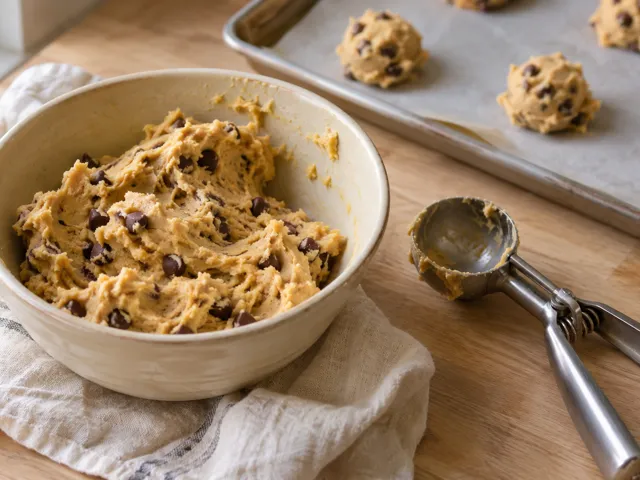
A dough made without eggs can still contain raw flour. Removing eggs does not make raw batter suitable to taste, however tempting the spoon looks. Follow the cooking instructions and the flour-safety guide, and credit the substitute with removing one ingredient, never every risk.
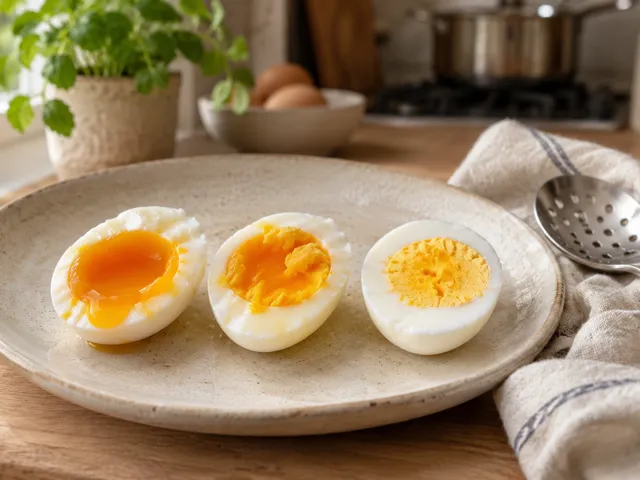
For allergy-related cooking, check the substitute and every other ingredient, including cross-contact information relevant to the person eating it. A lovely crumb proves nothing about whether the whole preparation meets a dietary requirement, and that's the test I'd put first. And if it's the whole egg you want, served on its own, no substitute will do; the boiled egg timer is the page for that.
FAQ
What is the basic flax-egg ratio?
Use one tablespoon ground flaxseed with three tablespoons water for one egg in a suitable binding application, then allow it to gel. The ratio does not establish that it will work in every recipe. The original egg’s role still determines whether this is a reasonable choice.
Can I use it in angel food cake?
Do not expect a binding gel to reproduce whipped egg-white structure. Choose an egg-free recipe developed for an appropriate result instead. A cake that relies on eggs for most of its volume needs more than a replacement with a similar wet weight.
Will banana make the result taste different?
It can. A moisture substitute brings its own flavor and composition. Follow a recipe that suits it and account for sweetness or texture changes. A quarter-cup measure describes an amount, not a guarantee that the new ingredient will be invisible in the finished bake.
Are commercial egg substitutes interchangeable?
No. Products can be intended for different tasks and use different instructions. Read the package and the recipe context before replacing a baking egg. A product designed for scrambling is not automatically the same as a dry baking replacer or a homemade flax gel.
Can I taste the egg-free dough raw?
Do not assume it is safe. Ordinary flour is also a raw ingredient that can carry harmful bacteria. Egg-free dough still needs appropriate cooking unless the complete product is specifically made and labeled for raw consumption. Removing one ingredient does not treat the others.