Is It Safe to Eat Raw Cookie Dough?
No—do not eat ordinary raw cookie dough or batter. Raw flour as well as raw eggs can carry harmful bacteria. Choose dough explicitly labeled safe to eat raw, and follow its storage and handling directions.
| Product or mixture | Eat without cooking? | What to check |
|---|---|---|
| Ordinary homemade cookie dough | No | Both flour and eggs can be raw |
| Egg-free dough made with ordinary flour | No | Removing eggs does not treat flour |
| Commercial dough explicitly labeled safe to eat raw | Follow its label | Storage, handling, and intended use |
| A baking mix or ordinary refrigerated dough | Not unless explicitly labeled for raw consumption | Cooking instructions on the package |
Choose dough made for eating raw
When tasting is the point, my recommendation is a product explicitly labeled for eating raw. That is more useful than trying to adapt ordinary baking dough through an improvised household treatment. Removing the egg addresses only one ingredient. Make the intended use clear before mixing, especially when children are helping.
Cookie dough is easy to misjudge because it looks like dessert before it reaches the oven. But appearance does not tell you whether its ingredients received a treatment that makes them suitable for eating without cooking. A dough can be egg-free, vegan, freshly mixed, and still contain raw flour.
The practical distinction is between a product intended to be cooked and a product specifically made and labeled for raw consumption. Refrigeration, attractive packaging, or a familiar brand is not a substitute for that instruction.
Why ordinary flour is still a raw ingredient
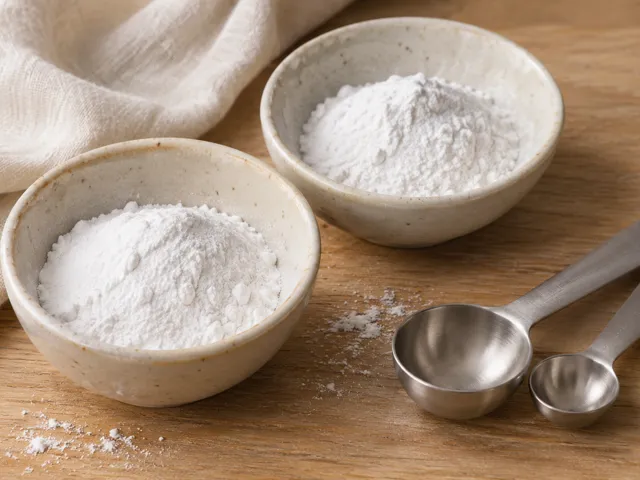
Flour is made from grain, and grain can encounter harmful bacteria before or during processing. Grinding it into a fine powder does not make it ready to eat. CDC identifies both raw flour and raw eggs as potential sources of germs in uncooked dough and batter.
This includes more than cookie dough. Cake batter, pancake batter, pizza dough, and flour-based craft mixtures can raise the same question. The absence of a raw-meat smell or an obviously spoiled appearance does not establish safety.
For planning, treat the mixing stage as food preparation, not snacking. Set out a separate ready-to-eat snack if children want something while baking. That simple change removes the repeated temptation to offer a “tiny taste” of a mixture that still needs cooking.
Do not rely on home heat-treated flour
FDA explicitly advises against trying to heat-treat flour at home to make it safe to eat raw. A household oven or microwave treatment may not kill all harmful bacteria. A temperature number from an online tutorial is not the same as a validated process for the entire batch.
That is why this guide does not give a DIY microwave schedule or a baking-tray method for making edible dough. A process can look convincing on camera without establishing that every part of the flour received an effective treatment. A picture of flour on a tray would provide even less evidence.
If you want dough intended for raw eating, choose a product explicitly labeled for that use and follow its instructions. Do not infer that a bag of ordinary flour is ready to eat because it is organic, freshly milled, gluten-free, or a different grain.
Egg-free does not mean ready-to-eat
Removing eggs addresses only one ingredient. A mixture made with milk, butter, sugar, and untreated flour still contains untreated flour. Likewise, pasteurized eggs do not change the treatment history of the flour beside them.
Read “edible cookie dough” instructions carefully. If a recipe's safety claim depends on a home flour treatment, that conflicts with the FDA advice above. Calling a mixture edible does not establish its safety; the ingredients and process must support the claim.
For a store-bought product, look for explicit wording about raw consumption. “Ready to bake” means something different from “safe to eat raw.” If the label only supplies baking directions, follow those directions rather than assuming the dough is intended as a snack.
Set up two activities instead of one confusing bowl
If you want to bake cookies and serve a dough-style treat, keep the ordinary baking dough separate from an explicitly ready-to-eat product. Use distinct utensils and dishes, and keep raw flour from being scattered into the ready-to-eat food. A different bowl is useful only if the handling is also kept separate.
I would explain the distinction before mixing: this dough goes in the oven; this other product's label permits eating it as supplied. That is clearer than deciding halfway through whether a small taste is acceptable. After working with raw flour or eggs, clean the utensils and preparation area. Do not use a ready-to-eat product's safety claim to justify adding untreated flour to it for a thicker texture.
What about cookie dough in ice cream?
Commercial cookie-dough ice cream can use dough made for that ready-to-eat purpose. That does not make ordinary homemade dough an equivalent mix-in. Do not stir untreated raw dough into finished ice cream or add raw baking mix to a milkshake.
Freezing a mixture is not the same operation as baking it or using ingredients treated for raw consumption. Think of the freezer as a storage tool, not a way to convert raw flour into a ready-to-eat ingredient.
Use the package as a decision tool
Before opening a product, read three things: whether it is intended to be cooked, how it must be stored, and whether any special handling instructions apply. Keep the package until the product is used so you can check the lot and instructions later.
If a flour or dough product is recalled, follow the recall instructions. Do not try to rescue it by applying a home treatment. Keeping the original package information makes it easier to identify whether the product is affected.
What this guide can and cannot tell you
This page explains prevention based on FDA and CDC guidance. It cannot establish whether a particular spoonful contained harmful bacteria or predict whether someone will become ill after eating it. If someone is unwell or you have an individual health concern, seek appropriate medical advice rather than trying to diagnose the situation from the dough's appearance.
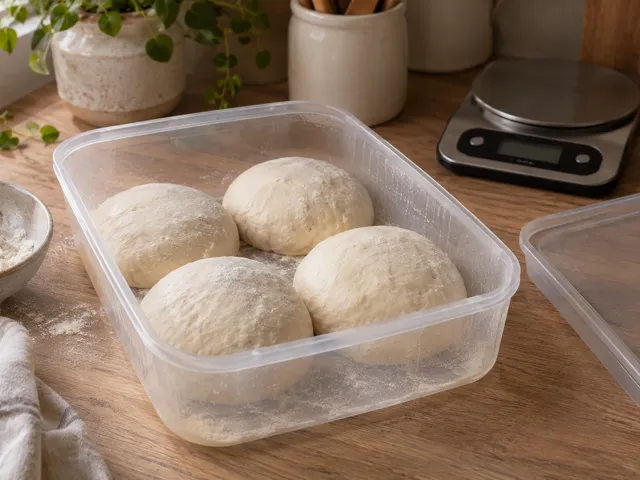
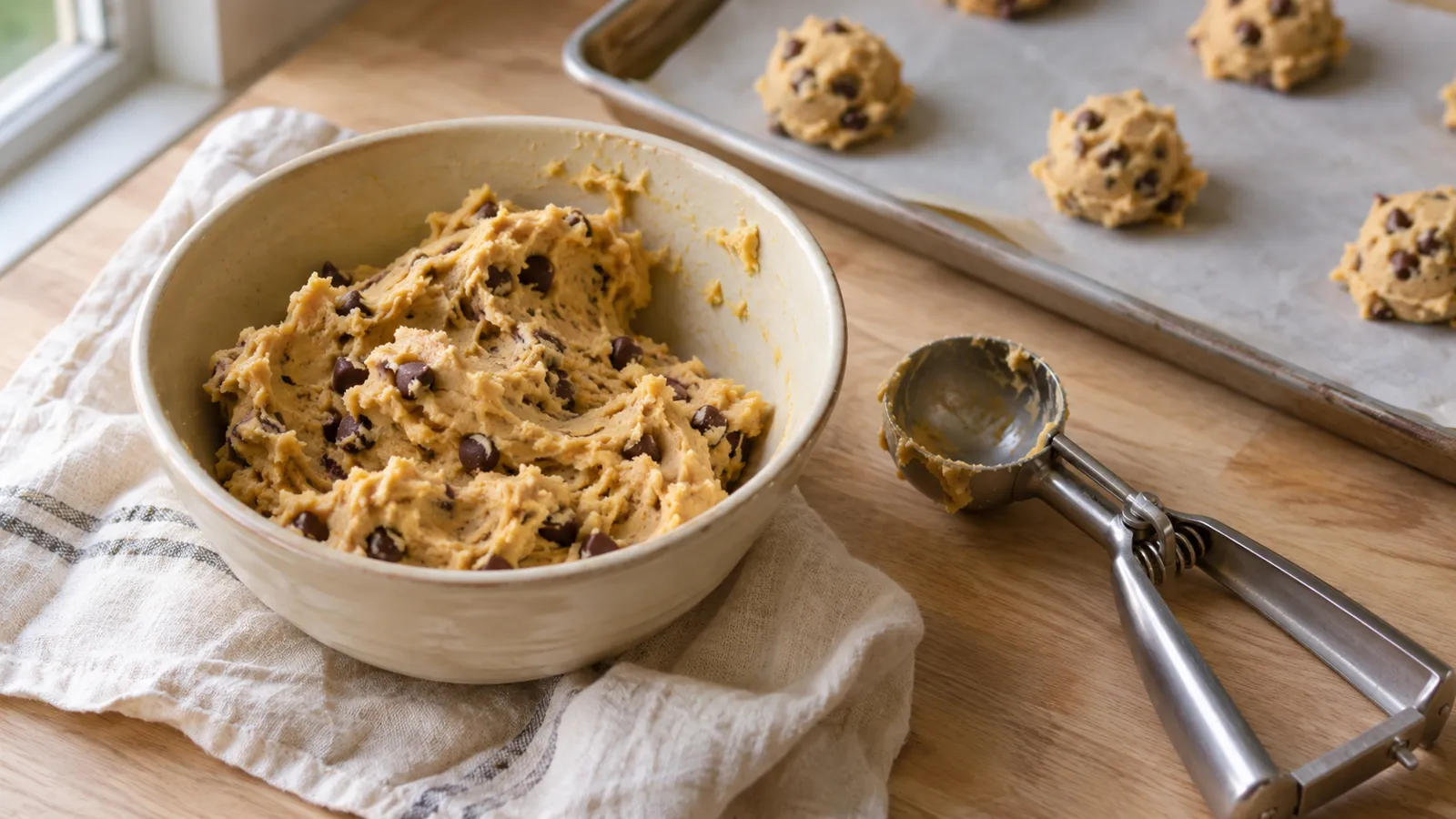
The photograph is an illustration of dough awaiting baking. It is not evidence that the pictured ingredients were treated, tested, or suitable for raw consumption.
FAQ
Is raw dough safe if it contains no eggs?
Not if it contains ordinary untreated flour. Removing eggs does not change the flour’s treatment history. Check whether the whole product is explicitly intended for raw consumption rather than treating an egg-free or vegan label as a food-safety claim. Ordinary dough still needs cooking.
Can I microwave flour to make edible dough?
FDA advises against trying to heat-treat flour at home for raw consumption because home treatment may not effectively kill all bacteria. A short online microwave method is not a validated safety process. Choose a product explicitly intended to be eaten raw and follow its instructions.
Does freezing cookie dough make it safe to eat raw?
Do not use freezing as a substitute for cooking or for ingredients made suitable for raw consumption. A frozen dough made with untreated flour is still made with untreated flour. Follow the product’s intended use and handling instructions when deciding whether it belongs in the oven.
Why can commercial cookie-dough ice cream contain dough?
Its dough can be manufactured for ready-to-eat use with appropriately treated ingredients. That is different from adding ordinary homemade raw dough to ice cream. Read product instructions and do not assume that a familiar texture or the fact it is frozen establishes equivalence.
Can I tell by the smell whether dough is safe?
No sensory check establishes whether raw flour or eggs carry harmful bacteria. A normal smell, fresh ingredients, or an attractive appearance cannot replace the required preparation. Use the label and the intended process to decide whether a product can be eaten without cooking.