How Long Are Eggs Good For?
Raw shell eggs generally keep 3–5 weeks refrigerated at 40°F (4°C) or below; hard-cooked eggs keep 1 week. FDA recommends using refrigerated eggs within 3 weeks for best quality.
| Egg form | Refrigerated storage | Freezing |
|---|---|---|
| Raw in shell | 3–5 weeks | Do not freeze in shell |
| Hard-cooked | 1 week | Poor texture after freezing |
| Separated raw whites or yolks | 2–4 days | Use an appropriate freezing method |
Label cooked eggs separately
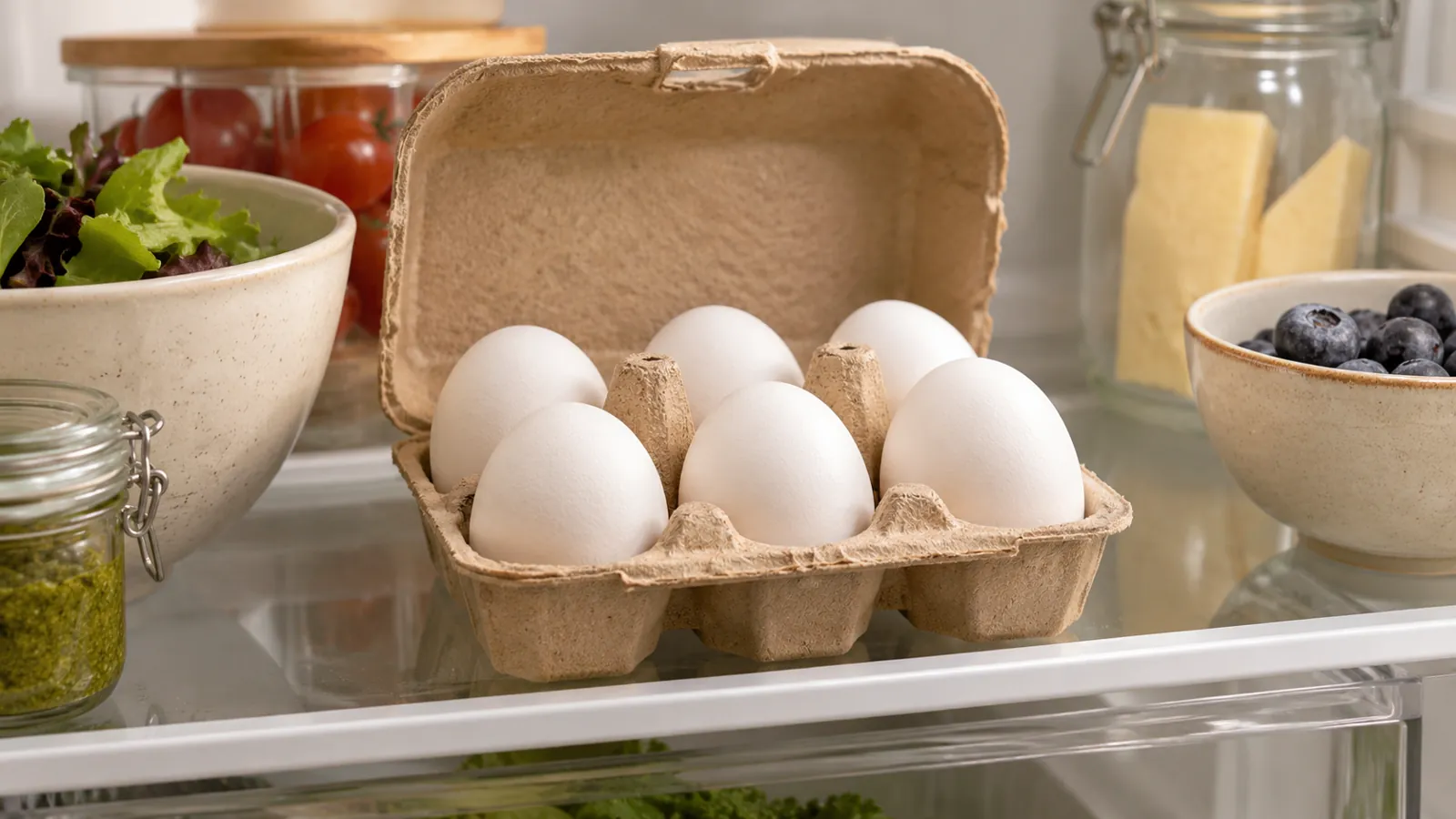
A strip of tape and a pen will do more for your eggs than any folk test. Raw shell eggs and hard-cooked eggs have different refrigerator windows, even when they came from one carton, so I'd keep the raw ones in their carton, where the package information stays available, and put a separate cooking date on the cooked batch. A float test can't supply the missing safety information.
Quality guidance and storage guidance answer different questions
The 3–5 week reference for raw shell eggs comes from the US cold-storage chart. FDA gives a shorter three-week recommendation for best quality. Neither one means every egg becomes unsafe at one exact midnight, and neither means storage conditions stop mattering.
For planning, I'd use the earlier quality target when practical, since that's where FDA puts best quality and it leaves you some slack. Keep the carton so the purchase, packing, and product information stay available. A decorative bowl of loose eggs throws away useful context and does nothing for their storage.
A floating egg is not a bacterial test
An egg can float as its internal air cell enlarges. USDA explains that this reflects an older, lower-quality egg, but doesn't determine whether it's safe. The reverse holds too: sinking is no certificate that an egg is free of harmful bacteria.
So I'd skip the bowl-of-water ritual whenever the real question is an unknown storage history. What you need to know is whether the eggs stayed refrigerated and whether the shells were intact. Buoyancy has no way of reconstructing a weekend on a warm counter, however confident the egg looks at the bottom of the bowl.
Why US storage advice may differ from what you saw abroad
This guide concerns the US refrigerated egg supply. Handling systems and washing practices vary between countries, so enjoy the sight of eggs sold unrefrigerated on your travels and leave your US store-bought eggs in the fridge. A charming market abroad is no reason to move them to the counter.
Follow the instructions and cold-chain expectations for the product you actually purchased. Store eggs in their carton inside the refrigerator, where they're protected and identifiable. And I'd trust an appliance thermometer over any assumption about what a dial number means.
Once you crack them, change the label
Separated whites and yolks don't inherit the unopened shell egg's full remaining storage window. Put them into clean covered containers, label the separation date, and use the shorter guidance for that form.
I'd write the quantity as well as the date: two whites, three yolks, or beaten whole eggs. Otherwise a future recipe turns into a guessing game about both age and amount, and a container of anonymous yolks gives you no help on either. Keep raw egg containers away from ready-to-eat ingredients and clean equipment after handling them.
Freezing works better outside the shell
Never deliberately freeze eggs in their shells. For whole eggs, FDA advises beating yolks and whites together before freezing; whites can also be frozen separately. Yolks need more attention because their texture changes, so I'd look for a dedicated preservation method written for what you plan to make.
Freeze portions you can identify and thaw in the refrigerator. A frozen raw egg portion is still raw and needs appropriate preparation. Writing “for baking” on it is a fine idea, and it does nothing to make that portion suitable to eat uncooked.
One carton, two dates to track
Suppose you buy a carton and hard-cook six of its eggs a few days later. The remaining raw eggs still belong to the raw-shell-egg guidance. The six cooked eggs now need their own cooking date and the one-week hard-cooked window. Slip them back into the familiar carton unmarked and you've made it easy to apply the wrong deadline.
That's why I'd give them a separate labeled container, or at least clearly identify the cooked portion. The carton is tidier, but the container is harder to misread. For eggs packed into a lunch, refrigeration at home is only part of the story, so plan to keep the lunch cold too. If you're still choosing the cooking method, the egg guide distinguishes the covered heat-off method from the boiling-water timer estimates.
FAQ
Does a floating egg always need to be discarded?
Floating indicates a larger air cell and an older egg, not a complete safety assessment. Do not use that observation alone to approve or reject an egg. Storage history, shell condition, and the relevant guidance matter; a sinking egg is not automatically safe either.
Are brown eggs stored differently from white eggs?
Shell color is not the basis of the refrigerated storage windows in this guide. Identify the product and its handling instructions instead. Keep eggs in their carton, maintain the recommended refrigerator temperature, and use the appropriate guidance for raw, separated, or cooked eggs.
Can I leave refrigerated eggs on the counter?
Do not use counter storage as the routine for US refrigerated eggs. Keep their cold chain intact and bring out only what you need for preparation. A travel memory of eggs displayed differently abroad does not establish that the product in your kitchen can be handled the same way.
Can I freeze leftover egg whites?
Yes, egg whites can be frozen separately using suitable packaging. Label how many whites or how much volume each portion contains and record the date. Thaw in the refrigerator and use them in an appropriate preparation; freezing does not turn raw egg into a ready-to-eat food.
Does peeling shorten the one-week hard-cooked limit?
The FDA one-week guidance covers hard-cooked eggs in the shell or peeled. Maintain clean handling and refrigeration in either case. Count from cooking, not peeling, and do not treat the shell as a reason to leave cooked eggs unrefrigerated or to extend the storage window.