Self-Rising Flour Substitute: A Measured Mix
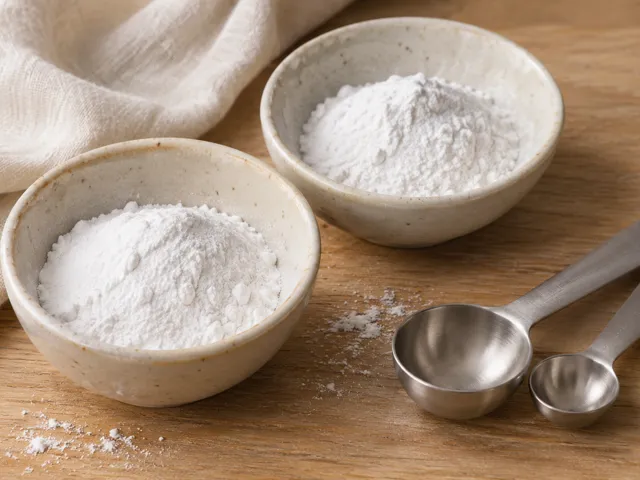
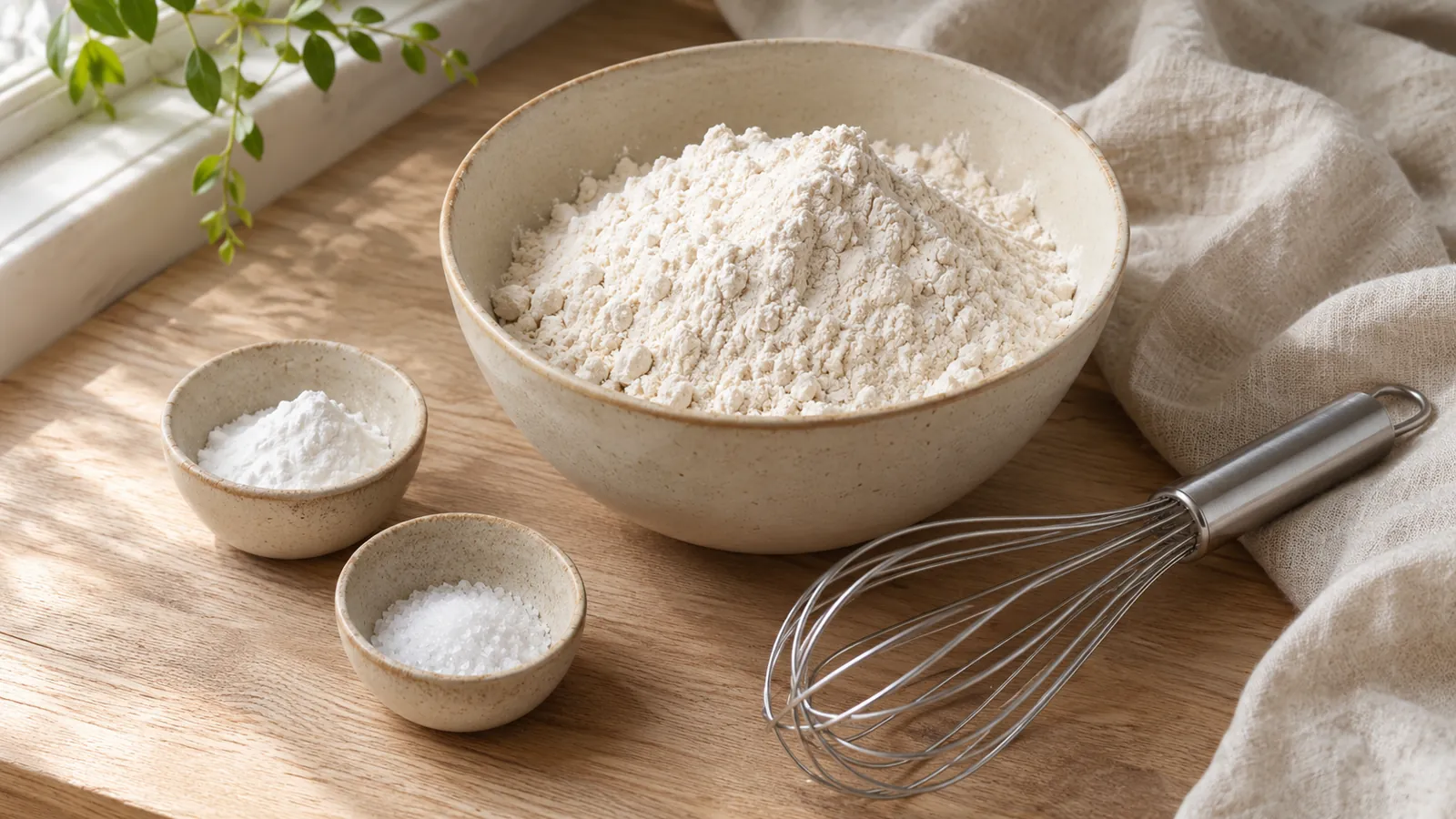
For a practical homemade blend, combine 1 cup (120 g) all-purpose flour, 1½ teaspoons baking powder, and ¼ teaspoon table salt. This follows King Arthur’s formula; it does not reproduce every commercial flour’s protein content.
| Ingredient | For one batch | For two batches |
|---|---|---|
| All-purpose flour | 1 cup / 120 g | 2 cups / 240 g |
| Baking powder | 1½ tsp | 3 tsp / 1 tbsp |
| Table salt | ¼ tsp | ½ tsp |
Replace the missing ingredient, not the whole formula
This measured blend is a useful fallback when a recipe calls for self-rising flour. My reservation is a biscuit recipe built around a named low-protein flour: adding leavener and salt cannot reproduce that flour’s characteristics. Leave a recipe that already calls for all-purpose flour and baking powder intact, or you may add leavening twice.
Use a complete formula from one source
The blend above follows one published baking formula. Other references use different salt quantities or measuring conventions. Keep the ingredients and measures from the same formula together instead of mixing individual numbers from different tables.
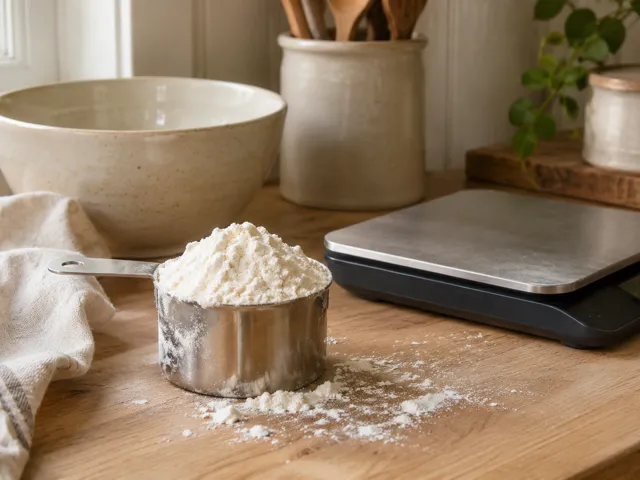
The flour weight is especially useful when scaling. A heavily scooped cup can contain more flour than a lightly filled cup. Weighing the flour helps keep the amount consistent while you measure the baking powder and table salt with level spoons.
Mix thoroughly before using the blend
Whisk the dry ingredients together until the leavener and salt are evenly dispersed. A visible pile of baking powder in one part of the bowl is not a finished flour blend. Uneven distribution can create uneven results even when the total quantities are correct.
The cited King Arthur recipe yields a one-cup replacement from the listed ingredients. Use the whole batch to replace one cup of self-rising flour; do not remove part of it by measuring another cup after mixing. For a recipe calling for a different quantity, scale every component before mixing.
Check what the recipe already contains
This substitute is for a recipe asking for self-rising flour. It is not an instruction to add baking powder and salt to every recipe that uses all-purpose flour. Some recipes already contain the leavening and seasoning they need.
If you are converting a plain-flour recipe in the other direction, review its existing baking powder, baking soda, acidic ingredients, and salt. A recipe-specific conversion is preferable to subtracting ingredients blindly. Baking soda is not interchangeable with baking powder by the spoonful.
The flour itself can still differ
Commercial self-rising flours may use wheat with a different protein content from the all-purpose flour in your pantry. The homemade blend supplies leavening and salt, but does not change the underlying flour into an identical product.
That difference can matter in biscuits or other baking where tenderness is central. Use the original brand when a recipe depends on it, or choose a recipe developed with all-purpose flour. A substitute can be practical without being indistinguishable in every finished bake.
Scale carefully and label leftovers
For twice the blend, double every ingredient, including salt. Three teaspoons equal one tablespoon, so the two-batch baking powder amount is convenient to measure. For fractional batches, calculate each quantity before starting rather than estimating part of a heaped spoon.
If you store unused blend, label it as containing baking powder and salt and note the mixing date. Keep it dry and follow the storage guidance for its ingredients. A container labeled only flour invites accidental use in a recipe that already contains leavening.
A two-batch blend and the mistake to avoid
For two batches, combine two cups (240 g) all-purpose flour, one tablespoon baking powder, and half a teaspoon table salt. Whisk well and use the whole blend in place of two cups of self-rising flour. This scales the cited formula without changing its proportions.
Now consider a recipe that asks for two cups all-purpose flour plus its own leavener and salt. It is not asking for the blend above. I would not substitute it and then guess what to remove, especially if baking soda and an acidic ingredient are also present. For yeast pizza dough, use the flour and yeast specified in the formula; the pizza calculator scales those ingredients but does not convert self-rising flour into bread flour.
FAQ
Is self-rising flour the same as all-purpose flour?
No. Self-rising flour includes leavening and salt, and its underlying flour may differ in protein content. Plain all-purpose flour alone does not supply those added ingredients. Use a complete measured blend when the recipe calls for self-rising flour.
Can I use baking soda instead of baking powder?
Not as a direct same-amount replacement. Baking soda needs an appropriate acidic balance, while baking powder is formulated differently. Changing the leavener changes the recipe. Use fresh baking powder for this particular blend.
Why do substitution charts give different salt amounts?
They may follow different formulas or product assumptions. This guide keeps the King Arthur formula intact. Choose one complete reference rather than taking the flour quantity from one chart and the salt or leavener from another.
Will homemade self-rising flour make identical biscuits?
Not necessarily. The protein content of the original flour can influence tenderness. The blend adds leavening and salt but cannot guarantee that a different all-purpose flour behaves exactly like the commercial self-rising flour specified by the recipe.
Can I use this for yeast bread?
Use a yeast-bread recipe with its specified flour. This blend introduces baking powder and salt that may not belong in that formula, and it does not replace yeast. A self-rising quick bread is a different recipe from a fermented yeast loaf.