Vanilla Extract Substitute: Flavor Comes First
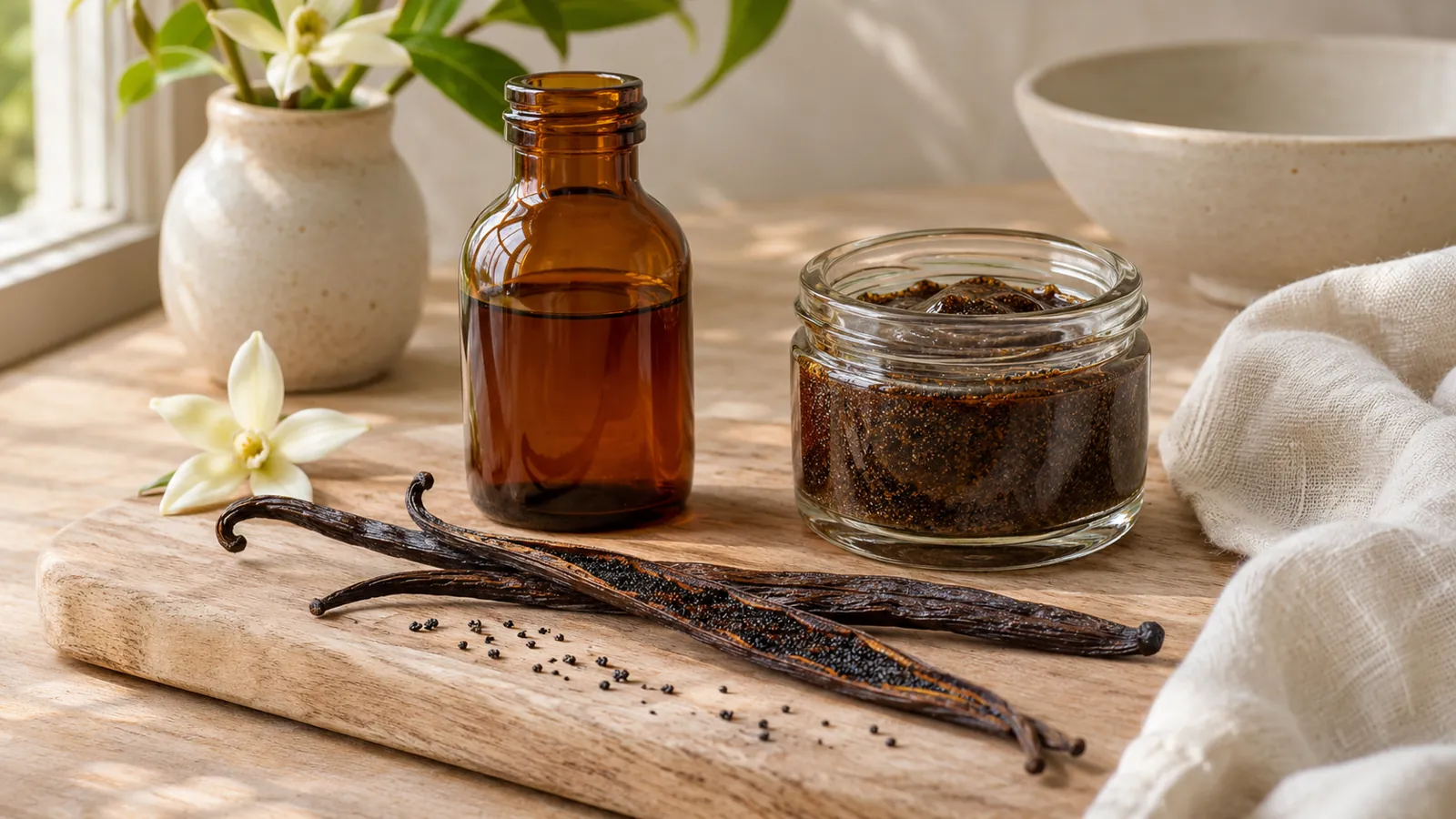
For a similar vanilla flavor, vanilla bean paste can often replace vanilla extract in the same amount; check the product directions. If vanilla is only a background flavor, omission may be better than adding an unrelated strong extract.
| Option | How to decide | Main change |
|---|---|---|
| Vanilla bean paste | Check label; often same amount | Visible seeds and product-specific sweetness |
| Vanilla bean | Use recipe or product directions | Preparation and concentration differ |
| Omit a small background amount | Reasonable in some strongly flavored bakes | Less vanilla aroma |
| Almond or another extract | Use a recipe-specific amount | A different flavor, not vanilla |
Omit a background note or change the flavor deliberately
In chocolate brownies with a small amount of vanilla, I favor omission over an equal spoonful of a strong unrelated extract. In vanilla frosting or custard, find another vanilla product or choose a different flavor deliberately. Almond extract should be a flavor decision, not a surprise caused by replacing the nearest bottle spoon for spoon.
Vanilla paste is the closest simple direction
Many vanilla bean pastes are designed for a same-amount substitution for extract, and Wilton includes that option in its substitution guidance. Check your jar because concentration and formulation can differ. Some pastes add visible seeds and contain sugar or thickening ingredients.
Measure with the same type of spoon used for the original extract quantity. Do not assume a decorative spoonful is a teaspoon. In a pale cream or frosting, decide whether the visible flecks are welcome before adding the paste.
Whole beans need a method, not just a number
A vanilla bean can provide vanilla flavor, but beans differ in size and condition. The recipe may call for scraping seeds, infusing a pod in warm liquid, or both. These are preparation steps that a quick pour of extract does not require.
Use a recipe or product instruction that explains the quantity and infusion. Remove a spent pod when directed. Do not drop a whole bean into a finished frosting and expect it to behave like a measured spoonful of extract.
Other extracts create a different dessert
Almond, mint, and citrus extracts have their own flavor identities and concentrations. They are not neutral substitutes for vanilla. A same-volume swap can dominate a recipe that originally used vanilla in the background.
Use an amount from a recipe designed for the new flavor, particularly with a strong extract. Check labels for relevant dietary restrictions. If you cannot establish a sensible quantity, omitting a small background vanilla addition is often a simpler adaptation than committing the entire batch to an overpowering flavor.
Maple syrup and honey are sweeteners first
Maple syrup or honey can add a pleasant note, but neither supplies vanilla flavor. Larger amounts also change sweetness and liquid content. They should not be treated as exact vanilla replacements merely because they are liquid and fragrant. If the same recipe is also short on another ingredient, the brown sugar substitute and butter substitute guides cover those swaps.
For a recipe already featuring maple or honey, follow its own formula. For a small vanilla omission, resist adding progressively more syrup in pursuit of an aroma it does not contain. That approach changes the batter without solving the original flavor problem.
A teaspoon of extract: three sensible routes
If your vanilla paste label permits equal substitution, one teaspoon paste replaces one teaspoon extract. Check that instruction rather than assuming every concentrated product is identical. In a pale frosting, decide whether visible seeds suit the appearance you want.
Without another vanilla product, ask whether the missing teaspoon defines the dessert. For a strongly flavored baked item, omission may be acceptable. For a vanilla-centered dessert, I would choose another complete flavor version. Maple syrup is not the middle ground between those choices: it contributes maple flavor, sweetness, and liquid, not vanilla.
FAQ
Can vanilla paste replace extract one-to-one?
Often, yes, but check the product directions. Paste formulations can differ, and some add visible seeds or sweetness. A same-amount label instruction is more useful than assuming every paste has identical strength.
Can I simply leave vanilla out?
For a small background amount in a strongly flavored recipe, omission may be acceptable, though the flavor will change. In a vanilla-centered dessert, the missing aroma is more important. Choose another vanilla product or a different flavor recipe.
Is almond extract an equal substitute?
It creates a different flavor and can be much more assertive. Do not assume an equal amount will taste balanced. Use a recipe-specific quantity for almond flavor, and check the product label for ingredients relevant to dietary needs.
Can maple syrup supply vanilla flavor?
No. It supplies maple flavor, sweetness, and liquid. It may suit an intentional adaptation, but adding more does not recreate vanilla. A formula designed for maple is a better starting point if that is the flavor you want.
Will a vanilla bean work in a finished frosting?
A whole bean is not a pour-in replacement for extract. Use a frosting recipe or product instruction that specifies how much scraped seed to add. If the method instead calls for infusing a pod in warm liquid, that preparation needs to happen before the frosting is finished.