Molasses Substitute: Ratios and Flavor Limits
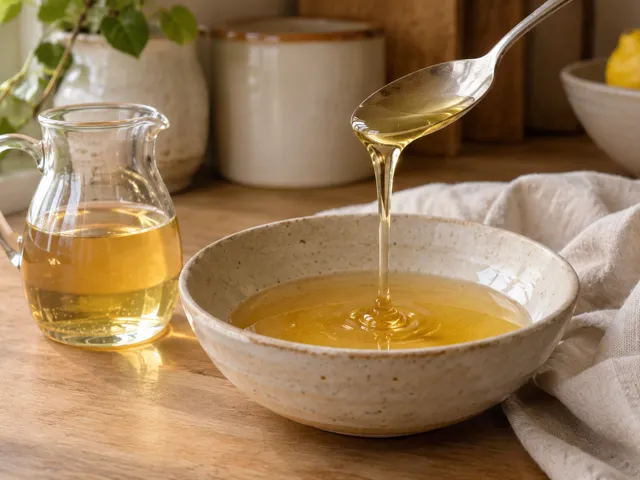
Honey, cane syrup, sorghum syrup, or dark corn syrup can generally replace molasses 1:1, according to King Arthur Baking. They will change flavor and color; blackstrap molasses is not a neutral substitute for ordinary baking molasses.
| Alternative | Starting amount for 1 cup | Main change |
|---|---|---|
| Honey | 1 cup | Lighter, honey-forward flavor |
| Sorghum or cane syrup | 1 cup | Different regional syrup character |
| Dark corn syrup | 1 cup | Milder molasses direction |
| Blackstrap molasses | Use only when specified | Much stronger, more bitter character |
Ask whether molasses defines the dish
Molasses can be a background note or the whole personality of a dish. A small amount in a flexible glaze is one problem, and a gingerbread built around molasses is quite another. So I'd start by deciding how much identity you're willing to change. If the flavor is the reason you chose the dish, even a successful replacement may produce something you didn't actually want.
An equal-volume exchange is convenient, and that's about all it promises. Color, sweetness, bitterness, and the way the sweetener interacts with other ingredients can all shift. I'd serve the result as a variation and skip the claim that nobody will notice.
Choose dark corn syrup for a milder baking swap
The King Arthur molasses guide lists honey, cane syrup, sorghum, and dark corn syrup as general one-for-one possibilities. Pick among them for the finished flavor you want, because the darkest bottle has no special claim to the job.
For a spice cookie, I'd choose dark corn syrup when the goal is a milder result with no strong floral flavor. For a ham glaze, honey makes more sense, provided honey flavor is welcome. Sorghum syrup suits a deliberately sorghum-flavored glaze or biscuit topping, and cane syrup brings its own sugarcane character. What honey won't do is reproduce the dark roasted flavor of molasses, so I'd only choose it if I were happy to lose that.
Light and dark are both ordinary molasses
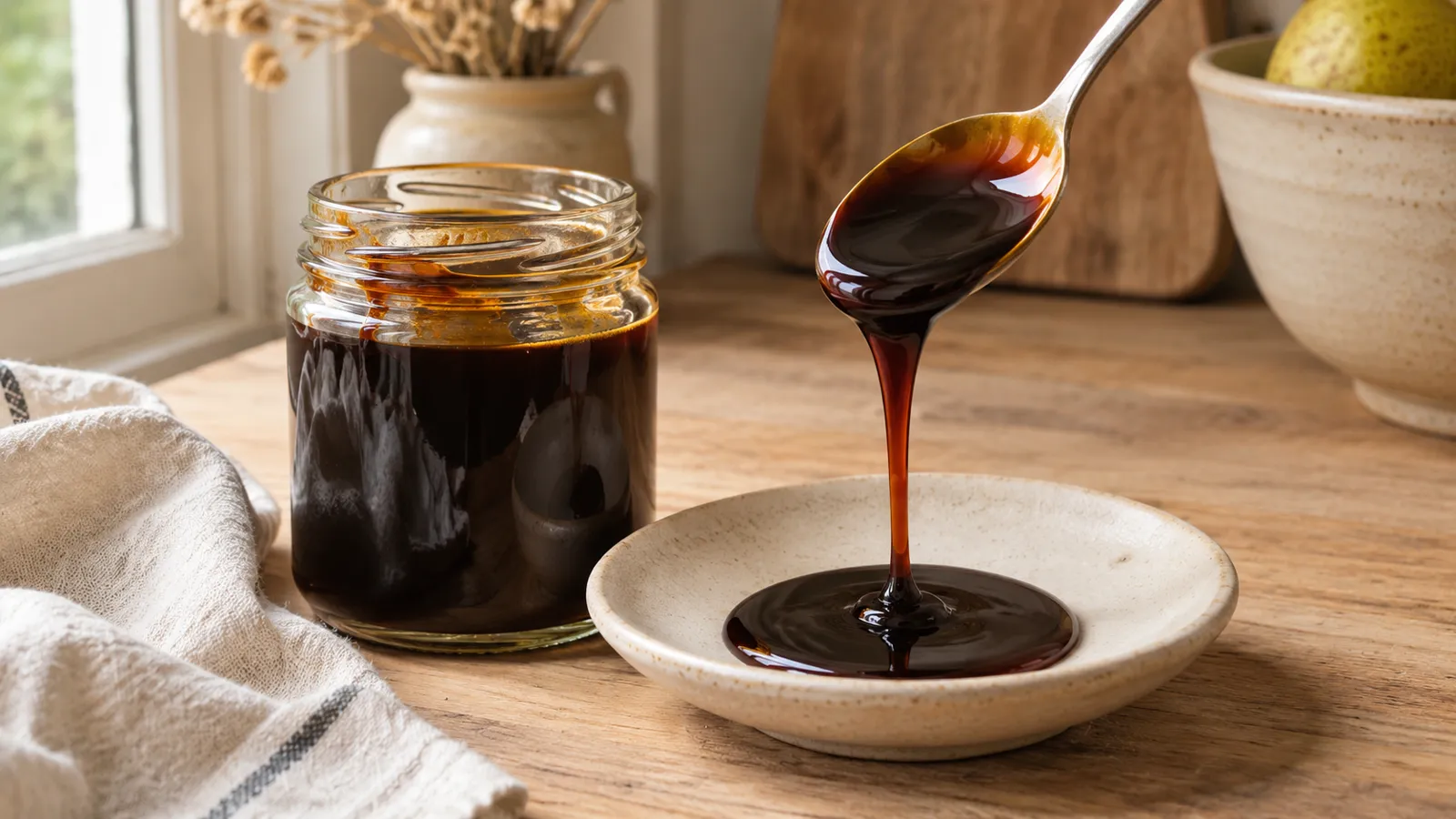
Light molasses has a gentler flavor; dark molasses is more assertive and darker. Those options let you adjust how loudly the ingredient announces itself. Blackstrap is a separate, much more bitter option. If a baking recipe simply says molasses, read any product guidance before grabbing the strongest bottle on the shelf.
A barbecue sauce or baked-bean preparation may welcome a stronger molasses character than a lightly spiced cookie does, so think about the other bitter or roasted ingredients already present. On a first attempt at an unfamiliar bake, I'd stay at the lighter end and save dark molasses for a dish whose intended character is robust.
Blackstrap is not merely darker molasses
Blackstrap has a more intense, bitter character than ordinary baking molasses. That dark appearance tempts you to treat it as the strongest version of the same ingredient, but more intensity is only useful if the dish wants it, and blackstrap can dominate a preparation meant to be sweet and gently spiced.
Use blackstrap when the formula calls for it. If it's all you have and the dish depends heavily on regular molasses, I'd change the dish before trying to compensate with extra sugar. Piling on sweetness won't automatically remove bitterness or restore the intended balance. You'd just end up with something sweet and bitter.
Do not adjust leavening by guesswork
Some baked formulas use molasses as part of their acid balance. Swapping a sweetener and then improvising extra baking soda just stacks a second structural change on top of the first. When the amount of molasses is substantial or the bake is delicate, I'd follow a supported variation and leave the soda where the recipe put it.
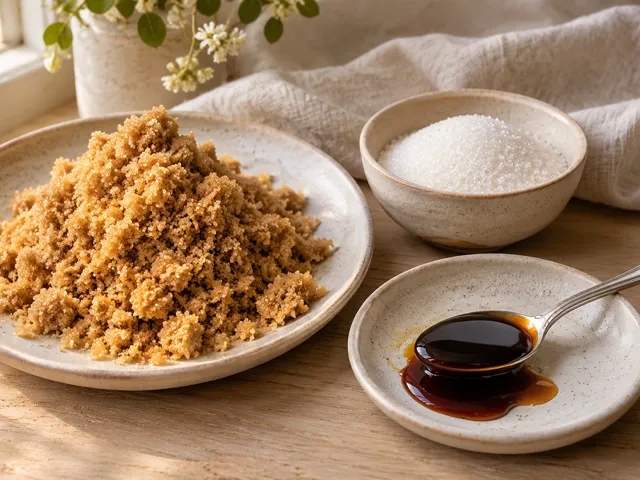
The brown sugar guide addresses molasses in a different role: adding character to granulated sugar. That doesn't make dry brown sugar a universal volume replacement for liquid molasses. For another liquid sweetener, see corn syrup substitutions. I'd keep the liquid and dry ingredient balances separate and not choose by color alone.
In practice, replacing ¼ cup molasses in a glaze means starting with ¼ cup of the chosen syrup, then judging the glaze on the food it will coat. In gingerbread where molasses is a major ingredient, I'd keep ordinary baking molasses because its flavor is the point. A pale honey variation may be enjoyable, and it's also a different cake, which is fine as long as you meant to bake one.
FAQ
What is the easiest molasses substitute?
For a compatible preparation, an equal volume of honey or dark corn syrup is often the simplest pantry option. Expect a changed flavor and color. If molasses is central to the dish, I would choose a formula developed for the syrup you have rather than promise an indistinguishable result.
Can I use blackstrap in gingerbread?
Only if the formula calls for it or explicitly permits it. Blackstrap has a much stronger, more bitter character, and a large amount can dominate the finished bake. Adding sugar to compensate does not automatically reproduce the flavor or balance of ordinary baking molasses.
Can brown sugar replace liquid molasses directly?
Not as a universal equal-volume replacement. Brown sugar is a dry ingredient with a different moisture contribution. A method that substitutes it needs to account for that change. Use a complete supported formula rather than replacing a cup of syrup with a cup of sugar and guessing at added liquid.
Will honey give the same dark color?
No. Honey generally changes both the flavor direction and the appearance compared with molasses. That may be welcome in a variation, but it will not preserve the original identity of a molasses-heavy bake. Choose based on the finished result you want, not only on what is available.
Should I add more baking soda after switching syrups?
Do not make an automatic leavening adjustment. The appropriate balance depends on the whole formula, including other acidic ingredients. A syrup replacement plus an improvised soda change can affect rise and flavor. Follow a variation that accounts for the substitute when the recipe depends on molasses chemistry.