How Long Does Salmon Last in the Fridge?
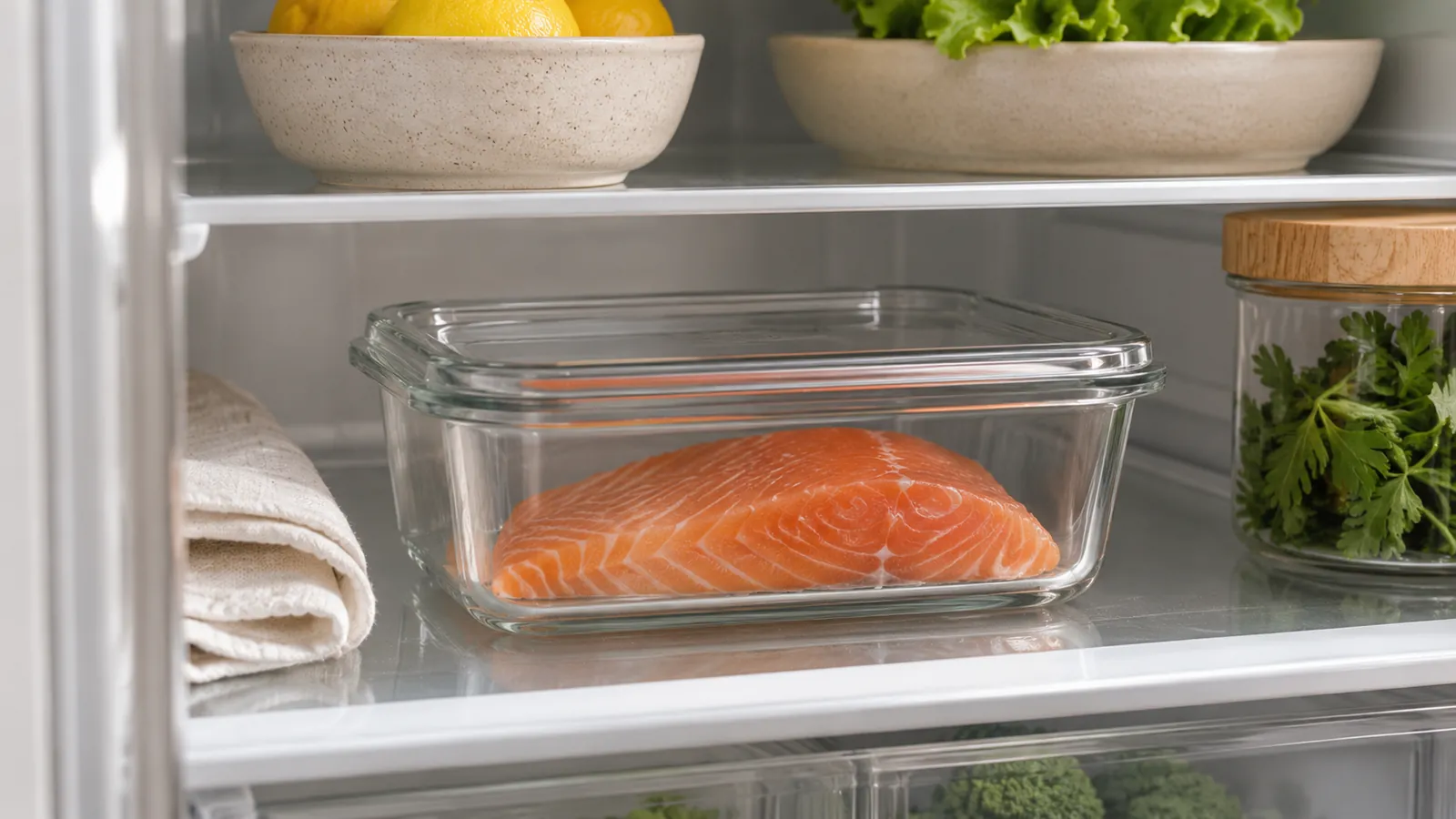
Plan to cook or freeze raw salmon within 1–2 days at 40°F (4°C) or below. Properly chilled cooked salmon keeps 3–4 days. Smoked products need their own label instructions.
| Salmon | Refrigerated plan | Important distinction |
|---|---|---|
| Raw fillet | Cook or freeze within 1–2 days | Keep cold from purchase |
| Cooked | 3–4 days | Cool promptly |
| Smoked or cured | Follow its label | Not the same as a fresh raw fillet |
Schedule fresh fish early in the week
I favor placing fresh salmon before pantry-based dinners in a weekly plan because its refrigerated window is short. If the fish meal becomes uncertain, freeze it promptly while it is still suitable. Read any package thawing instructions at that stage, too, so the next meal has a workable plan.
Buy with a cooking day in mind
FDA advises refrigerating seafood if it will be used within two days and freezing it otherwise. A fish dinner planned for late in the week is therefore a reason to freeze the fresh purchase early, not to keep a raw fillet waiting until the meal fits your schedule.
Transport matters too. Make seafood an item you collect near the end of shopping and keep it cold on the way home. A beautiful fillet cannot tell you how warm the grocery bag became during a long trip.
Store it so a leak stays contained
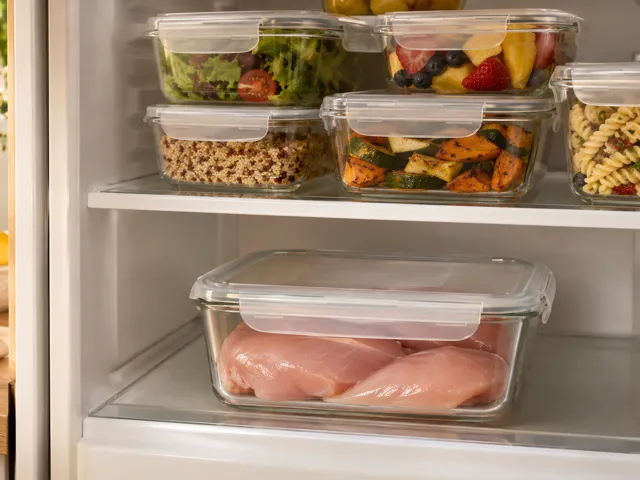
Keep raw salmon covered in suitable packaging or a leakproof container on a low refrigerator shelf. Separate it from cooked food and produce that will be eaten without further cooking. A tray makes an accidental leak easier to contain and clean.
Use a refrigerator thermometer rather than assuming the control dial proves the temperature. If seafood came with specific storage directions, keep them with the package. Removing every label for a tidier refrigerator can also remove the instructions you need.
Vacuum-packed fish requires label attention
Read the thawing directions on vacuum-packed frozen fish before thawing it. Some products instruct you to remove the fish from reduced-oxygen packaging before refrigerator thawing. Follow that direction; do not assume a sealed pouch is always the safest thawing environment.
The relevant issue is the packaging and process, not simply whether the fish still feels cold. If the instructions are unclear, obtain product-specific guidance rather than borrowing a method from an unrelated frozen food.
Color and smell are limited clues
An off odor, unusual slime, or other spoilage signs are reasons to reject fish. Their absence cannot establish safety or extend the storage window. Different salmon can naturally vary in color, so a brighter orange picture is not a freshness standard.
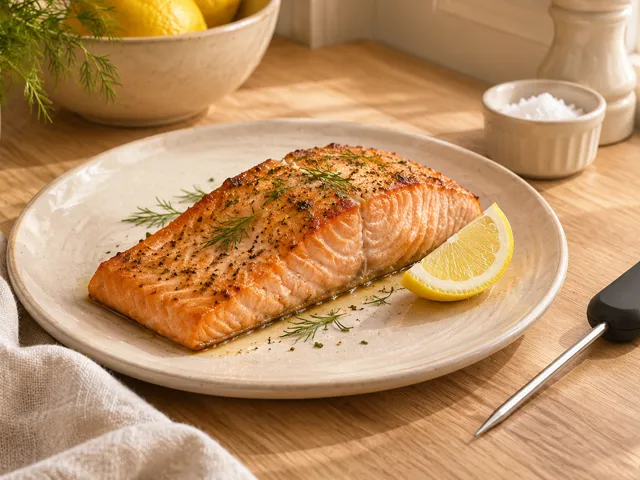
The white substance sometimes visible on cooked salmon is also not a storage clock. A cooking appearance does not tell you the raw fillet's handling history. Keep visual quality observations separate from time-and-temperature decisions.
Moving fish from Friday to Sunday is a storage decision
If you buy salmon on Friday for that evening, then postpone the meal, check the actual elapsed time and cold storage rather than relying only on the weekday names. Sunday can be near or beyond the upper end of a one-to-two-day window depending on the purchase and cooking times. I would freeze promptly when the postponement is known, not wait for the fish to reach the edge of the window.
For a frozen vacuum-packed portion, check whether the label requires removing it from its packaging before thawing. Do that at the specified stage, rather than thawing it sealed and opening it just before cooking. After cooking, label leftovers separately and apply the cooked-food window. The salmon temperature guide covers the cooking check; it cannot reconstruct the earlier storage history.
Smoked salmon is a different product
Hot-smoked, cold-smoked, shelf-stable, and refrigerated products do not all have the same instructions. Read the label for unopened storage, after-opening use, and refrigeration. Do not substitute the raw-fillet table for a manufacturer's specific guidance.
People at higher risk from foodborne illness may need additional precautions with refrigerated smoked seafood. Follow the relevant FDA advice for the person eating it. This is a reason to identify the product precisely rather than treating every orange slice as interchangeable salmon.
FAQ
Is raw salmon safe after three days?
This guide uses the conservative 1–2 day home plan supported by USDA seafood guidance and FDA’s within-two-days advice. Do not extend it just because the fish looks normal. Follow specific instructions and freeze earlier when you know the cooking day is uncertain.
Can I thaw it inside the vacuum pouch?
Read the label first. Some vacuum-packed fish must be removed from that packaging before refrigerator thawing. Follow the product’s instructions instead of assuming a sealed bag is always preferable. Packaging conditions can be part of the food-safety process, not just a convenience.
Does cooking reset an unsafe raw fillet?
No. Start with fish that was stored safely. Properly cooked and promptly chilled salmon has a leftover window, but cooking is not a dependable correction for an unsafe raw storage history. If that history is unknown, a thermometer reading cannot reconstruct it.
Can I use the same limit for smoked salmon?
Not automatically. Smoked and cured products have specific unopened and after-opening instructions. Identify the exact product, read its label, and consider any additional guidance for vulnerable consumers. A general fresh-fillet table cannot cover every commercial smoked-seafood process.
Does bright orange mean fresher?
No. Salmon color varies and is not a safety test. Use purchase or thawing dates, refrigeration history, and product instructions. Reject obvious spoilage, but do not interpret the absence of an unpleasant appearance as permission to extend the recommended storage time.