How Long Does Ground Beef Last in the Fridge?
Raw ground beef lasts 1–2 days in the refrigerator at 40°F (4°C) or below; cooked ground beef lasts 3–4 days. Freeze raw beef you will not cook in time, and do not use its color or smell alone to judge safety.
| What you have | Fridge: 40°F (4°C) or below | Freezer: 0°F (−18°C) |
|---|---|---|
| Raw ground beef | 1–2 days | 3–4 months for best quality |
| Cooked ground beef | 3–4 days | 2–6 months for cooked meat leftovers; quality varies with the dish |
Give ground beef a place in the meal plan
Before buying a large pack, assign it to a specific meal. That is my preferred approach to its short refrigerator window. If the plan changes, freeze suitable portions promptly while the history is still clear. Bright red color is not a reason to extend the storage time.
Those freezer ranges describe quality, not a point at which continuously frozen beef suddenly becomes unsafe. The refrigerator limits assume the meat stayed cold during transport and storage. Neither column rescues beef that spent too long warm.
The useful question at 6 p.m. is not simply “Does this look okay?” It is “When did this go into my fridge, and has it stayed cold?” Put that information on the package when you unpack groceries. A plain date is more useful than a mental note that you bought it “earlier this week.”
Should you cook it, freeze it, or throw it away?
Cook it when you are still inside the refrigerated storage window, the cold chain is known, and the meat has no signs of spoilage. Cook ground beef to an internal temperature of 160°F (71°C), checked with a food thermometer. Browning the outside is not a temperature measurement. Whole cuts follow different targets, listed in the steak temperature chart.
Freeze it when the beef is still safely stored but dinner plans have changed. Make this decision early. Freezing on the day you shop leaves less to remember than trying to squeeze another meal out of the refrigerator window.
Discard it when it has exceeded the safe storage window, has an off smell or sticky/slimy texture, or its temperature history is uncertain. Do not taste a small piece to investigate. Cooking is a preparation step, not a reliable way to reverse poor storage.
Why a red surface and a gray center can coexist
Oxygen changes the color of meat pigments. Ground beef exposed to air can look bright red, while the less-exposed center can look darker or grayish. Color alone does not tell you how long the meat has been stored or whether harmful bacteria are present.
That cuts both ways: a gray center is not automatically a reason to panic, and a bright red surface is not permission to ignore the date. Use the storage history first. An unpleasant smell or a tacky surface is a reason to discard the meat, but the absence of those signs does not certify it as safe.
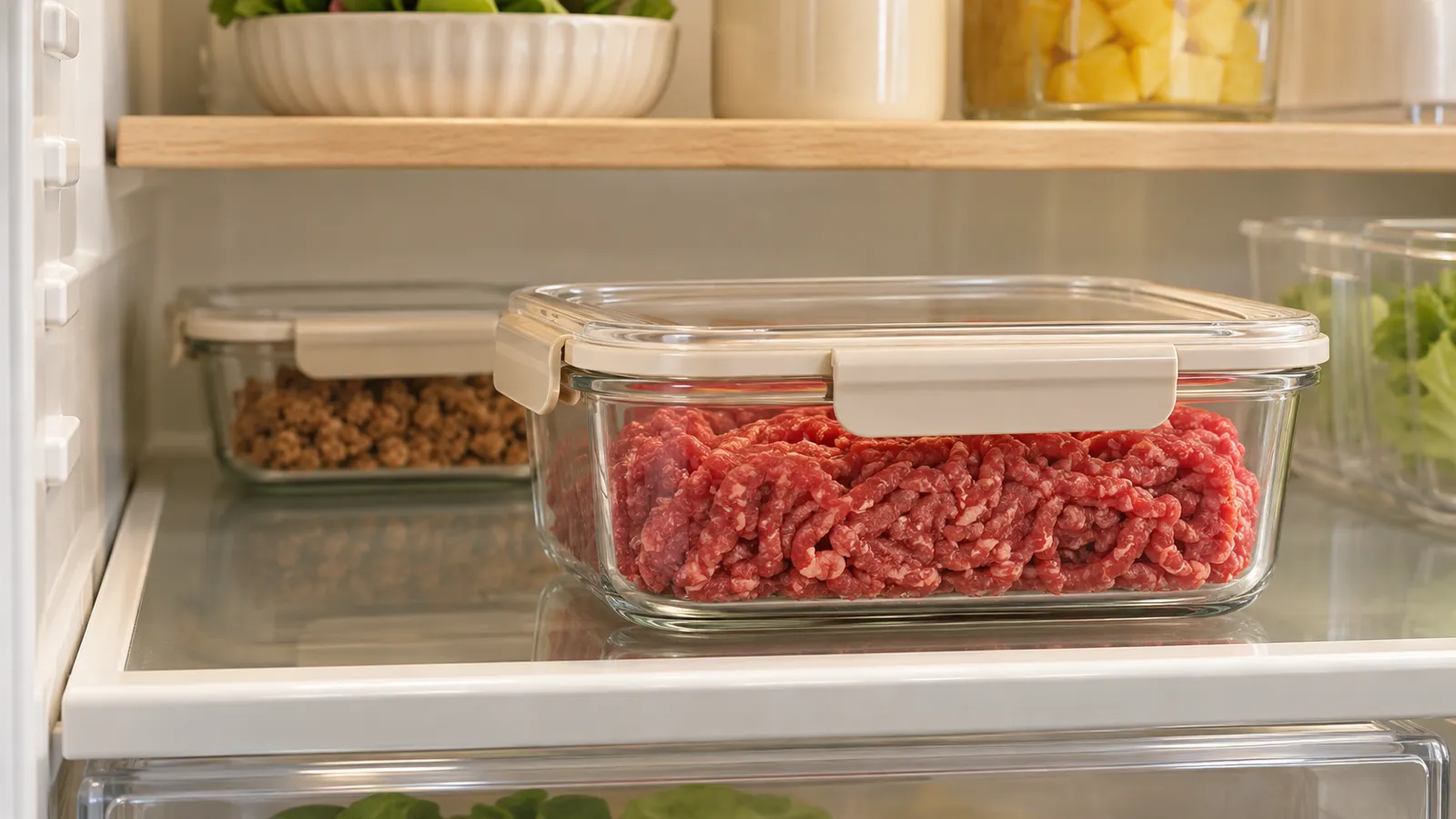
For the same reason, photographs of “good beef versus bad beef” make poor safety tests. Lighting changes color, packaging changes oxygen exposure, and a photograph cannot show bacteria. The image on this page illustrates storage; it cannot diagnose your package.
Where should ground beef go in the refrigerator?
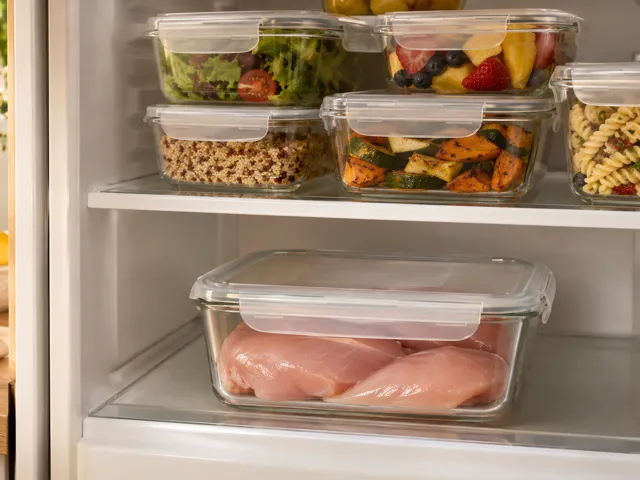
Keep the package in a leakproof tray or closed container on a low shelf, away from ready-to-eat food. The tray has a practical job: if the wrapping leaks, you can clean one container instead of discovering meat juices beneath salad greens.
Use an appliance thermometer to check the refrigerator itself. A dial set to “3” or “medium” is not a temperature reading. If one shelf regularly freezes vegetables while another feels warm, investigate the actual temperatures instead of assuming the entire appliance behaves alike.
Keep handling simple. Leave meat in suitable packaging for short storage, wash your hands after touching it, and clean any surfaces or utensils that contacted raw beef. Do not wash raw ground beef in the sink; rinsing does not make it safer and can spread contamination around the work area.
How to freeze portions you will actually use
Decide what one meal needs before packaging. If you normally use a pound at a time, a single enormous frozen block creates unnecessary thawing and portioning work. Separate the meat into useful quantities, use freezer-rated wrapping or bags, and remove excess air without spreading raw juices.
Flatten bags enough to stack them neatly, then label the contents, quantity, and freezing date. Keep raw and cooked portions clearly distinguished. A bag marked only “beef” is easy to misread several weeks later.
Freeze before the refrigerated storage window runs out. Freezer burn is a quality issue caused by moisture loss; it is not the same thing as bacterial spoilage. However, finding dry patches on a package does not tell you whether that package stayed frozen during a power outage.
What changes after thawing?
Thawing in the refrigerator keeps the meat cold while it softens. For ground beef thawed this way, USDA guidance allows another 1–2 days before cooking. A tray beneath the package still matters. Do not thaw it on the countertop while you are at work.
Cold-water and microwave thawing have different handling requirements: cook immediately afterward. For cold-water thawing, use leakproof packaging, keep the meat submerged in cold water, and change the water every 30 minutes. Follow your microwave's instructions rather than guessing a defrost setting from the package weight alone.
If you are deciding what to do with several portions, choose a method before you start. Refrigerator thawing offers scheduling flexibility; microwave thawing fits a meal you are ready to cook now. Moving between methods because you forgot dinner is where storage histories become hard to track.
Does cooking give you a new storage window?
Properly cooking safely stored raw beef produces a cooked leftover with its own refrigerated window. It does not make expired or temperature-abused raw meat acceptable. After cooking, divide leftovers into shallow containers and refrigerate promptly rather than leaving a full pan on the stove until bedtime.
For perishable food, the general limit outside refrigeration is two hours, or one hour when the surrounding temperature is above 90°F (32°C). Think about the entire meal: preparation, serving, and clearing the table can all add to the time food spends warm.
Reheat leftovers to 165°F (74°C). Portioning also helps here: warm only the amount you plan to eat, and keep the rest cold. If the cooked beef is in a mixed dish, check the needs of the whole dish rather than treating the meat as its only ingredient.
A family pack does not need one shared fate
Imagine a two-pound pack intended for two one-pound meals. If tonight's portion is within the safe storage window and has remained cold, cook it; promptly freeze the other portion if the second meal is several days away. Label the frozen package with its contents and freezing date. The arithmetic is simple, but it keeps the unused half from spending extra days in the refrigerator by default.
If you discover the whole pack after its recommended refrigerated window, dividing it into smaller bags does not solve the problem. Nor does adding it to a sauce and simmering it longer. This guide uses official storage and handling guidance; the portioning advice is an editorial way to apply it, not a claim of a storage experiment performed for this article.
FAQ
Can I keep raw ground beef for five days if it is unopened?
Do not assume an unopened package changes the ordinary 1–2 day home-storage guidance. A seal does not tell you the full temperature history. Follow specific product handling instructions where supplied, and freeze ordinary fresh ground beef early if you cannot cook it within the recommended window.
Is gray ground beef always spoiled?
No. A less oxygen-exposed center can look grayish while the surface looks red. But color cannot establish safety in either direction. Check when you bought or thawed the beef and whether it stayed refrigerated. Discard meat with spoilage signs or an unsafe or unknown storage history.
Does the sell-by date replace the fridge storage limit?
No. A sell-by date is not a record of how the package was handled after purchase. Record your own purchase or thawing date, maintain proper refrigeration, and use the applicable home-storage guidance. A future printed date cannot compensate for meat left warm or stored too long.
Can I freeze cooked ground beef?
Yes, when it was cooked and cooled safely. Divide it into useful portions, package it for the freezer, and label it as cooked. That distinction makes later meal planning easier and prevents confusion with a similarly shaped bag of raw beef. Freezing does not fix unsafe handling before storage.
Can I refreeze ground beef thawed in the fridge?
USDA allows refreezing beef thawed safely in the refrigerator, although texture and moisture can suffer. Keep within the refrigerated handling limits. If you thawed it using cold water or the microwave, cook it before freezing it again. The method matters more than whether a few ice crystals remain.
Sources
- FoodSafety.gov — Cold Food Storage Chart
- USDA FSIS — How do you store ground beef at home?
- USDA FSIS — Ground Beef and Food Safety
- USDA FSIS — Can you tell if meat is safely done by its color?
- USDA FSIS — How long does it take for beef to thaw?
- USDA FSIS — Can meat or poultry be safely thawed and then refrozen?