Turkey Internal Temperature: Where to Check
Turkey must reach 165°F (74°C) in the thickest breast and the innermost thigh and wing. Check every location with a food thermometer; a brown exterior or pink interior cannot establish safety.
| Check | Target | Watch for |
|---|---|---|
| Thickest breast | 165°F (74°C) | Keep the probe off bone |
| Innermost thigh and wing | 165°F (74°C) | Check both sides if uneven |
| Stuffing inside the bird | 165°F (74°C) | Measure the center separately |
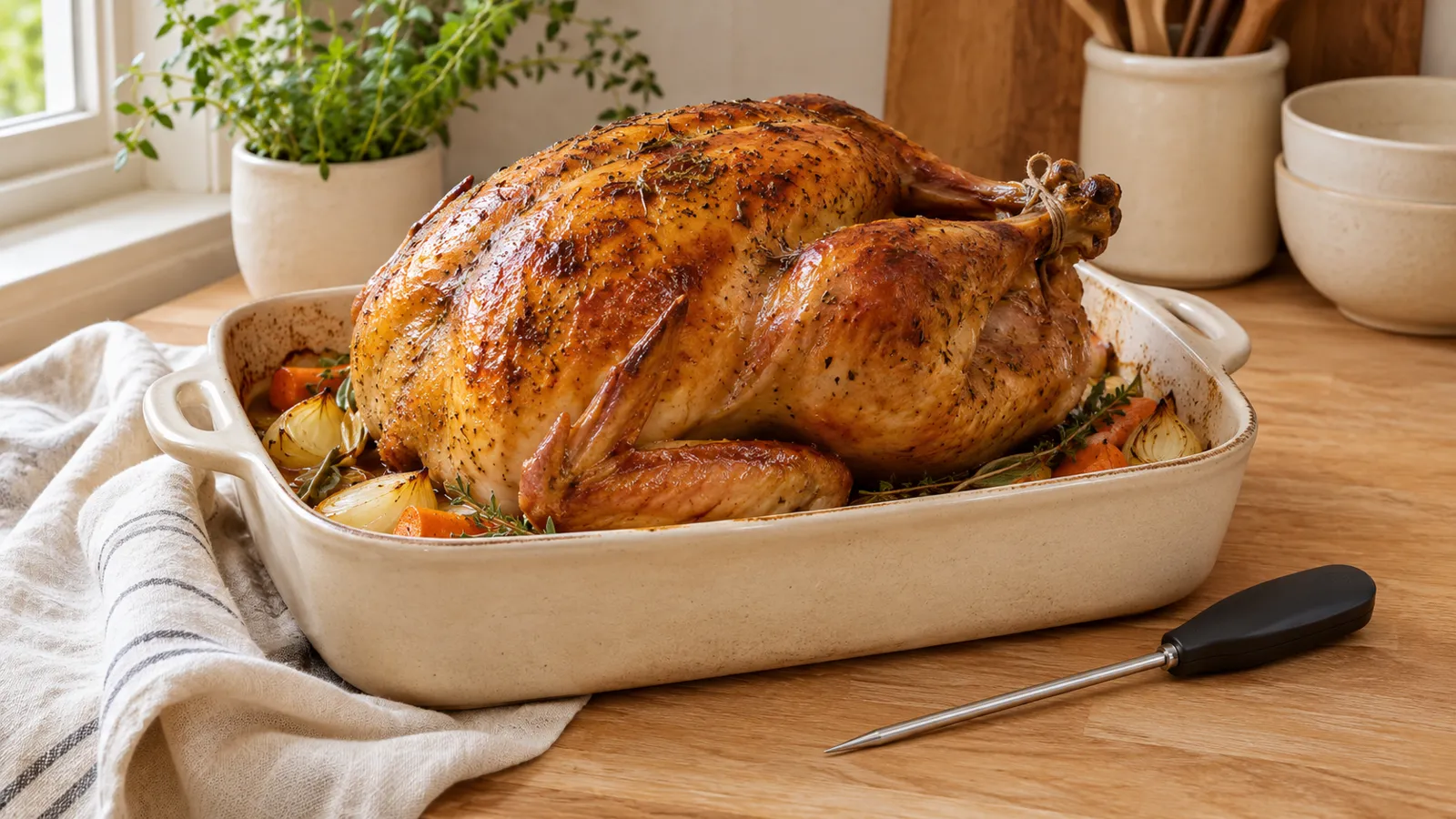
The lowest reading decides
My recommendation is to make a small checklist of the places you need to measure before opening the oven. A whole turkey is awkward to handle, and it is easy to check the convenient breast twice while missing the thigh. Record each location mentally or on paper. The attractive reading is not the one that matters; the coolest underdone area is.
A thermometer measures a particular spot, not the whole bird. Slide its sensing area into the thickest meat, following the instrument’s insertion-depth instructions. Avoid touching bone or pushing into the empty cavity. Let the reading settle before moving the probe. If a result seems unexpectedly high, check a nearby position.
Make three separate checks before carving
- Breast: approach the thickest bulge from the side if that helps place the sensing tip in the middle of the muscle.
- Thigh: locate the inner thigh where the leg meets the body. Aim into meat beside the joint, keeping the probe away from the bone.
- Wing: check the innermost fleshy section where the wing joins the body, rather than the thin tip.
Move the probe slightly and let each reading stabilize. A sudden jump can mean the tip moved into a different material or out of the meat. Check the instrument's manual: some probes sense only near the tip, while others require a longer section to be inserted.
For a stuffed turkey, CDC advises waiting 20 minutes after removal from the oven before taking out the stuffing and carving. That wait comes after both the meat and stuffing have reached 165°F. Set out a clean carving board and serving utensils during the rest; the platter that held the raw bird needs washing before it handles cooked meat.
What if the breast finishes first?
Keep cooking until every required location reaches the safe temperature. You can shield a well-browned breast loosely with foil while the rest finishes, but shielding is a way to manage the exterior, not permission to stop early. Take another reading after further cooking rather than assuming a fixed number of extra minutes will solve it.
For a future meal, consider cooking the breast and legs separately if controlling their individual texture matters more than presenting a whole bird. That changes the serving style, but it gives you a clearer decision for each piece. It does not change the minimum temperature for turkey.
Stuffing needs its own measurement
The CDC recommends cooking stuffing separately for a simpler safety check. Inside a bird, stuffing can lag behind the meat. Reaching the target in the breast does not establish that the center of the stuffing is ready.
I would choose a separate baking dish when serving a holiday crowd. It removes one hidden cold spot and lets you manage the side dish without repeatedly handling the turkey. Follow the stuffing preparation’s instructions and check its center as well.
Resting is not a rescue plan
Do not remove an under-temperature turkey on the assumption that carryover heat will supply a guaranteed increase. The amount of further heating depends on size, oven conditions, and where you measure. Resting after safe cooking can fit your carving plan; it is not a substitute for the required readings.
Use the turkey calculator to organize portions and approximate timing, and the thawing guide to prepare the bird. Keep those planning estimates separate from the thermometer’s final decision.
FAQ
Is turkey done at 160°F?
For the straightforward household method in this guide, no: check for 165°F in all required locations before removing the turkey from the heat. Lower-temperature cooking depends on controlled time and temperature conditions. A guessed rest on the counter does not establish those conditions.
Can cooked turkey still look pink?
Yes, color alone does not tell you whether turkey is safely cooked. Use the thermometer readings from the breast, thigh, and wing. If the meat is pink and you have not checked those locations, measure them rather than deciding from the appearance of a sliced piece.
Where do I insert the thermometer in a turkey breast?
Place the sensing area in the thickest meat, away from bone. On a smaller breast, a sideways approach may make it easier to reach the center. Check more than one spot if the shape is uneven, and follow your thermometer’s instructions for insertion depth.
Can I trust the pop-up timer?
Use it as a reminder to check, not as your only measurement. A pop-up device does not give you separate readings for the thickest breast, thigh, wing, and stuffing. An instant-read thermometer lets you check those locations and investigate an unexpectedly low or high result.
Does a larger turkey need a higher internal temperature?
No. Size affects how long the bird takes to heat, rather than changing the household safety target. A larger turkey can also cook unevenly. Allow enough planning time, but make the final decision from measurements in the required places instead of increasing the target because the bird is heavy.