How Long Does Leftover Turkey Last in the Fridge?
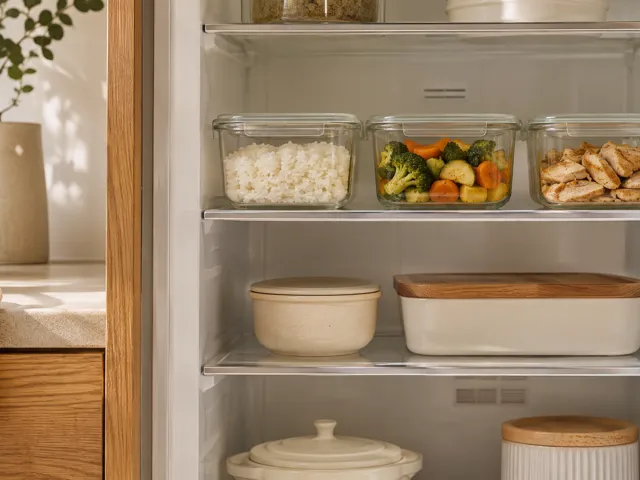
Cooked leftover turkey lasts 3–4 days in the refrigerator at 40°F (4°C) or below. Freeze portions you will not use in that window, and reheat saved turkey to 165°F (74°C). This is not the storage rule for raw turkey.
| Turkey condition | Storage decision | Important distinction |
|---|---|---|
| Cooked leftovers | 3–4 days refrigerated | Count from original cooking |
| Cooked, frozen | 2–6 months for best quality | Pack in meal-sized portions |
| Raw turkey | 1–2 days refrigerated | Use the raw-poultry guidance |
Count from the meal, not from the container
The day after a big turkey dinner, everyone has a theory about how old the leftovers are. A fresh storage box gives turkey no fresh start, so write the cooking date on the label and work from that history, whatever the theories say.
Freeze the portions meant for later meals on the first day, rather than waiting to see whether they get eaten. That can feel premature with a fridge full of sandwiches ahead of you. I think it's worth it: it settles the question while the history is clear, and it spares you a refrigerator full of containers whose dates everyone remembers differently.
A Thursday-to-Monday example
For turkey cooked on Thursday, Sunday is three days later and Monday is four. I'd treat Sunday as the planned finish date and Monday as the outer end of the usual 3–4-day window, assuming prompt refrigeration at 40°F (4°C) or below throughout. A turkey left on the table too long doesn't qualify for that window at all. Refrigerate within two hours, or within one hour when the surrounding temperature is above 90°F (32°C).
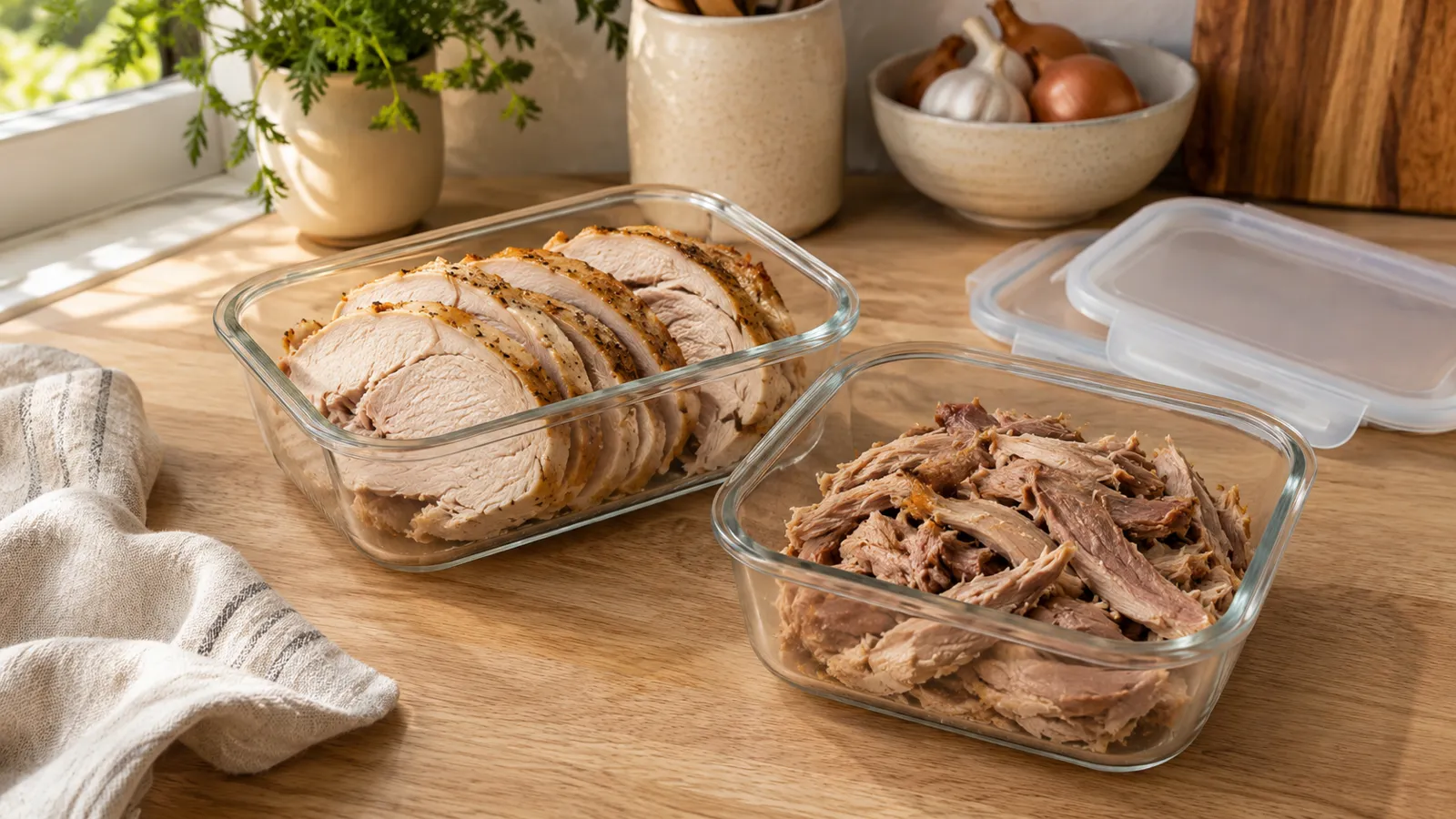
Divide the meat while it's still manageable. Put the next meal's portion in the refrigerator and package later portions for the freezer. I'd also keep gravy separate when possible, since that lets you take out sandwich meat without thawing sauce and makes each container easier to heat evenly.
Get the meat off a large carcass
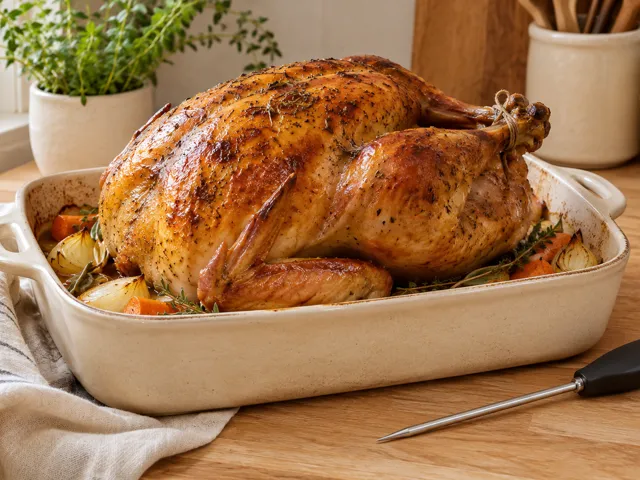
Cut the cooked turkey into smaller portions and use shallow containers for prompt refrigeration. A large bird holds heat differently from a small serving. I'd sort out the storage before dinner if you can, because a full refrigerator is a terrible excuse for leaving the turkey on the counter, and it's the one everybody reaches for.
The CDC’s holiday turkey guidance covers carving, chilling, and using cooked turkey within the refrigerated window. Store stuffing separately. A cavity full of stuffing complicates both cooling and the later decision about what to reheat, and I'd rather have two simple containers than one complicated bird.
Freeze the portions you actually want
Package sliced meat for sandwiches separately from chunks intended for a hot dish. Remove excess air from suitable freezer bags, label them, and avoid building one thick block that forces you to thaw everything at once. Thin slices can dry during reheating, so I'd keep those apart from the chunks headed for soup.
A little suitable cooking liquid may help the serving texture when the meat is later heated, but it never replaces safe handling. Don't pour questionable gravy over good turkey to avoid waste. Each part of the meal needs a reliable storage history, and the gravy has to earn its own.
Thaw the portion, not the whole stash
Thaw frozen turkey in the refrigerator in a covered container. This is where those thin packages start paying you back, since they're so much easier to plan around than a dense block. You can also reheat safely frozen leftovers without thawing, allowing more cooking time and checking the center. For microwave reheating, cover with a vented microwave-safe cover, rearrange the pieces, and check several areas so a hot outside can't conceal a cold middle.
When making soup, add only the turkey you expect to eat within its remaining refrigerated window. Turning Thursday's meat into Sunday's soup doesn't make it newly cooked meat for storage purposes, tempting as the idea is. Label the finished container with that original turkey date.
Reheating does not erase earlier handling
When reheating, reach 165°F throughout, checking dense or overlapping portions. The turkey temperature guide concerns cooking the original bird; leftover reheating is a separate stage. Heat only what you plan to serve when practical.
A normal smell can't prove turkey is safe. Discard meat with spoilage signs, and also discard meat held outside safe conditions even when it looks ordinary. For the wider rules that also apply to gravy and sides, see leftover food storage. Given the choice, I'd take a small, clearly dated stash over every last scrap saved with no realistic plan to use it. By the third sandwich, I suspect you'll agree.
FAQ
Can I eat turkey after a week in the fridge?
That is beyond the three-to-four-day recommendation for cooked leftovers. Do not rely on a normal smell or plan to reheat it extra hard. For future meals, freeze the portions you will not use promptly while their handling history and storage dates are still clear.
Can cooked turkey be frozen?
Yes, if it was cooked and handled safely. Divide it into useful portions and protect it from freezer air. Freezing is a way to preserve safely handled food for later, not a way to rescue turkey that has already spent too long refrigerated or on the table.
Does turkey soup get a new storage clock?
Do not use a new preparation to disguise the age of the turkey it contains. Keep the ingredient’s earlier storage in mind and use the dish promptly or freeze it appropriately. Adding vegetables or broth does not make the original turkey newly cooked for storage planning purposes.
Can I eat leftover turkey cold?
Safely cooked, promptly refrigerated turkey can be used cold within its storage window. Reheating is not required merely because it is a leftover. If you do reheat it, reach the appropriate temperature; if the original storage was unsafe, serving it hot does not reliably fix the problem.
What if I do not remember when it was cooked?
If you cannot establish that it remains within the safe refrigerated period, discard it. A container with no date leaves a gap that smell cannot reliably fill. Next time, label the original cooking date and separate freezer portions early instead of relying on memory after a busy holiday.