Vegetable Oil Substitute: Baking and Cooking
Use canola oil 1:1 for vegetable oil in ordinary baking where a neutral liquid oil is wanted. Other suitable neutral oils can work too; butter, applesauce, and strongly flavored oils change more than the name on the bottle.
| Alternative | Starting proportion | Best use and limitation |
|---|---|---|
| Canola oil | 1:1 by volume | Neutral liquid-oil baking |
| Suitable refined neutral oil | 1:1 in compatible uses | Check intended heat application |
| Olive oil | 1:1 in a compatible bake | Flavor may be noticeable |
| Unsweetened applesauce, for part of the oil in baking | For 1 cup oil: ½ cup oil + ½ cup applesauce | Less richness; texture changes |
Vegetable oil describes a category
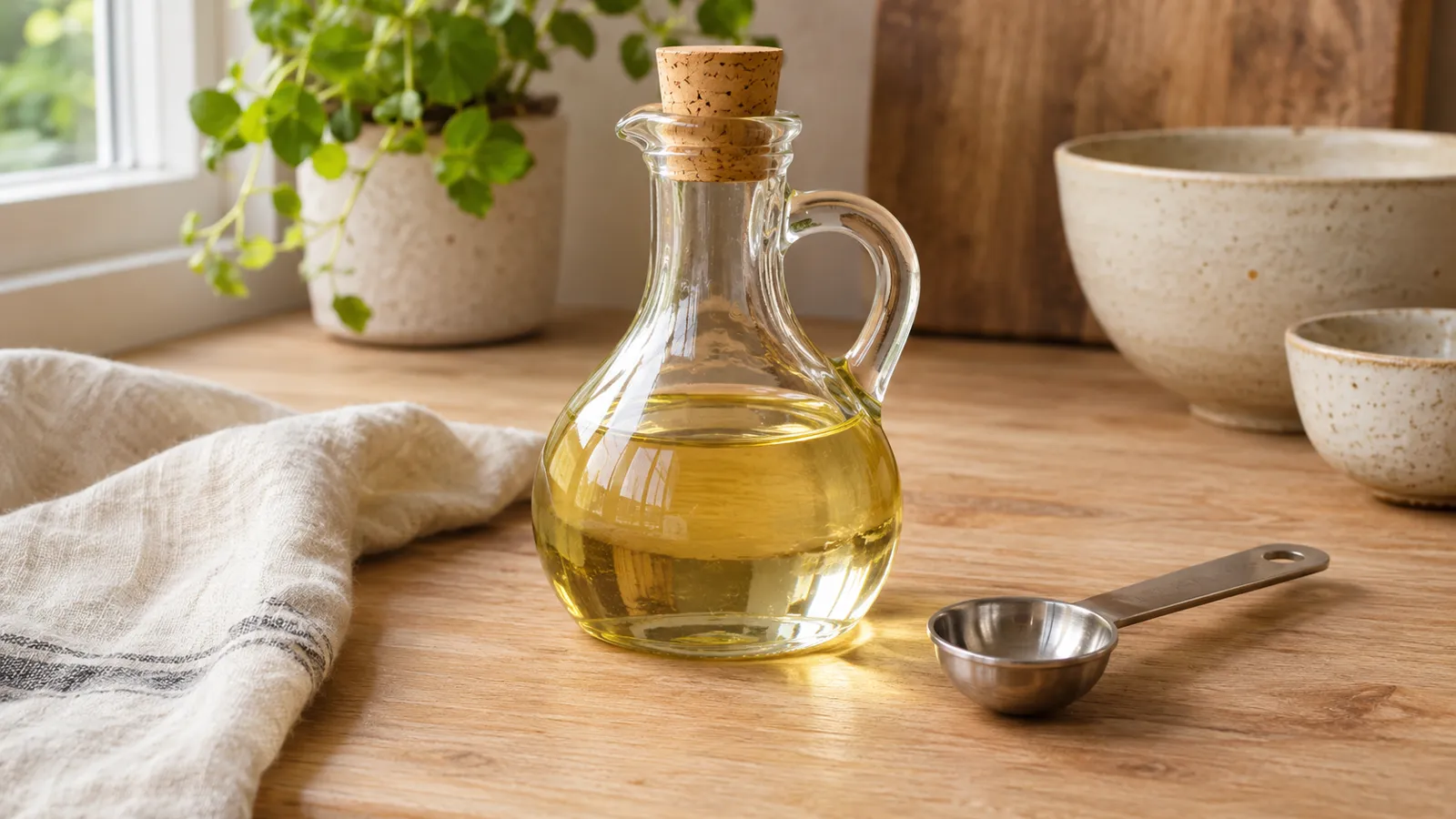
A bottle labeled vegetable oil commonly holds a neutral plant oil or blend, and canola is also a plant oil. That makes this a gentler swap than replacing fat with fruit puree, far less dramatic than replacing fat with fruit puree. If a particular source ingredient or allergy matters, read both labels.
I'd start with another neutral liquid oil suitable for the same use. If the preparation calls for half a cup, use half a cup of canola. That keeps the liquid-fat role reasonably close and spares you the water and milk solids that come with butter.
Match flavor to the bake
Olive oil can be welcome in a cake whose flavor suits it, but a strongly flavored oil can still show through, so ask whether the finished food is lightly flavored or already has assertive ingredients. I'd rather choose a deliberate olive-oil preparation than hope a peppery oil goes unnoticed in a delicate cake.
A toasted finishing oil is the bottle I'd leave alone, however liquid it is, because its character can dominate the whole batch. A smaller quantity of a suitable neutral oil from the pantry beats an expensive aromatic oil that solves the measurement and changes the dessert.
Choose by the food you are making
For an oil-based muffin or banana bread, canola gets my vote because the flavor stays in the background. The partial applesauce option makes more sense when you welcome a softer, fruit-moistened result and still have some oil available. It's no rescue for an empty bottle, since half the original amount remains in that adjustment.
For roasted vegetables, pick an oil intended for roasting and whose flavor you actually want on the vegetables. Applesauce cannot coat the tray or carry heat like oil, and I'd keep it far from the sheet pan. For a vinaigrette, olive oil may be a welcome flavor change, while a strongly toasted sesame oil would take the whole dressing somewhere else. Let the dish make those calls, and leave the baking ratio out of it.
Butter is not pure liquid oil
Butter contributes water and milk solids as well as fat. Melted butter may work in a compatible formula, but its composition differs from vegetable oil, and it firms as it cools, which can change how a baked product feels at serving temperature. For that reason, I'd only go there in a recipe that supports it.
When texture matters, use a supported butter variation. The butter substitution guide explains the reverse problem: replacing butter requires understanding its job. An oil-based batter and a method that creams solid butter with sugar are two separate techniques, and I'd keep them that way.
Applesauce is an adaptation, not another oil
Illinois Extension gives a partial replacement: for 1 cup oil, use ½ cup oil and ½ cup applesauce. For a batter needing ½ cup oil, that becomes ¼ cup oil plus ¼ cup applesauce. Use unsweetened applesauce if you'd rather skip extra added sugar. You keep some fat in the batter and gain fruit moisture, and I'd go in expecting less richness and a changed crumb.
For frying or high-heat cooking, choose an oil intended for that application and follow product guidance. A baking substitution has no place in a deep fryer. The oil manufacturer's FAQ is useful product context, while the whole cooking method still matters.
If you're also replacing dairy, the buttermilk guide can help isolate that decision. I'd keep major changes to a minimum, because switching oil, eggs, and dairy together makes it difficult to predict the final structure from the original recipe.
FAQ
Can I use canola instead of vegetable oil?
Yes, an equal measured amount is a practical substitution in ordinary baking that calls for a neutral liquid oil. Read the labels if the source ingredient matters. For a specialized cooking application, confirm that the replacement oil is intended for the heat and method involved.
Will olive oil change the flavor?
It can, especially when the oil is strongly flavored and the bake is otherwise delicate. That can be pleasant in an appropriate preparation. I would choose a formula that welcomes olive oil when its character is noticeable, rather than treating every olive oil as a neutral substitute.
What if I only have butter?
Butter adds water and milk solids, and it firms as the food cools. If the recipe already offers a melted-butter option, use that amount. Otherwise, an oil-free butter-based bake is a clearer choice than guessing: a batter mixed with liquid oil does not automatically use the same method as creamed butter and sugar.
Can applesauce replace all the oil?
The practical option here replaces half: for 1 cup oil, use ½ cup oil and ½ cup unsweetened applesauce, following Illinois Extension. It changes richness and texture, so it suits a flexible batter better than an attempt to preserve an exact original crumb. It does not apply to frying or roasting.
Can I use the baking substitute for deep frying?
Check the replacement oil’s intended use and the frying method separately. A liquid ingredient that works in cake batter is not necessarily suitable for a fryer, and butter or fruit puree certainly does not do the same job. Keep the cooking application attached to the substitution advice.