Can You Eat Sprouted Potatoes? When to Discard
Discard potatoes that are strongly sprouted, extensively green, shriveled, or rotten. Health Canada advises cutting away small sprouted or damaged areas and peeling otherwise sound potatoes; ordinary cooking does not reliably remove their glycoalkaloid toxins.
| Potato condition | Action | Reason |
|---|---|---|
| Firm with a small localized sprout | Remove sprout and surrounding eye generously; peel | Reduce exposure; inspect the rest |
| Extensive green areas or heavy sprouting | Discard the potato | Do not rely on trimming alone |
| Rotten, shriveled, or bitter | Discard | Cooking is not a rescue |
Inspect the whole potato
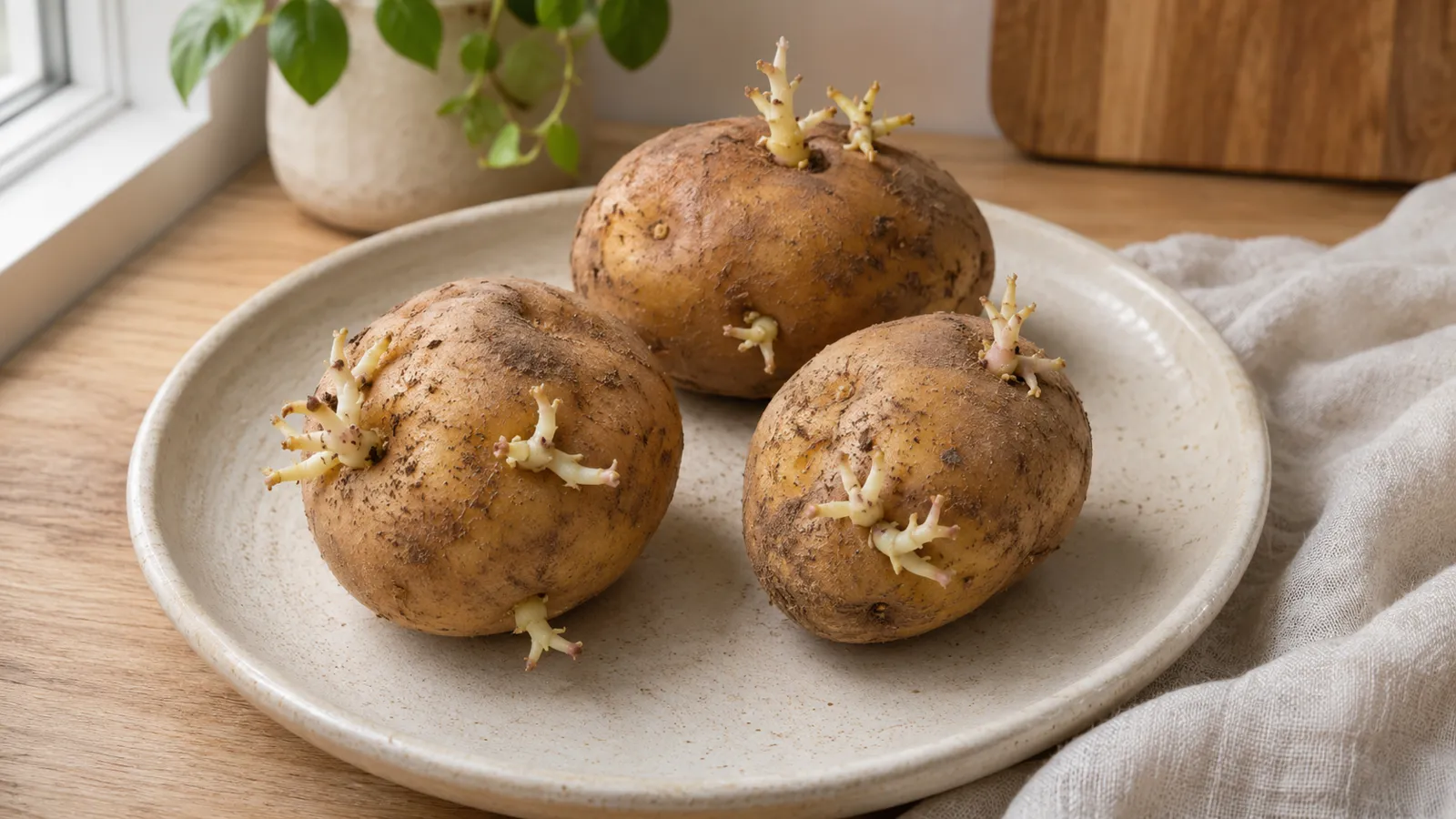
One sprout gets all the attention, but the rest of the potato matters too. Check firmness, green areas, damage, and deterioration together. A firm potato with one small eye beginning to grow is a different case from a soft potato with several long sprouts. That second one I'd replace. Carving it down in the hope that enough cutting makes it sound is a lot of knife work for a bad bet.
The Health Canada guidance distinguishes removing localized affected areas from discarding severely affected potatoes. It offers no visual test that measures the remaining toxin concentration in your particular potato, and I wouldn't trust anyone who claims to have one.
Understand what green color tells you
Green areas are a warning sign associated with light exposure and potentially elevated glycoalkaloids. The green color itself is no toxin meter, and its absence can't prove that a badly sprouted or damaged potato is suitable to eat.
That's why I'd avoid rules like counting sprouts or setting a universal acceptable sprout length. Those shortcuts sound precise while ignoring the condition of the rest of the potato. For a doubtful potato, I'd take replacement over trying to calculate safety from a photograph. It's a potato, and I think that settles it.
Cooking does not solve the problem
Health Canada states that ordinary baking, boiling, frying, and microwaving do not significantly reduce glycoalkaloid levels. So keep questionable potatoes away from the longer boil or the hotter oven, because neither one is a detoxification step. The BfR also advises against eating green and strongly germinating potatoes.
Never taste a raw piece to test it. If a prepared potato tastes bitter or causes a burning sensation, stop eating it and discard it. A lack of bitterness is no reason to ignore obvious deterioration you noticed before cooking, and I'd go by what you saw at the cutting board.
Buy and store for the way you cook
Keep raw potatoes in a cool, dark, dry place with suitable ventilation. Inspect the bag periodically and remove deteriorating potatoes. A large bargain bag stops being economical if you rarely cook potatoes and keep finding a sprouting pile at the back of the cupboard.
When storage space is warm or bright, I'd choose a smaller purchase. Keep potatoes where inspection is easy rather than burying them under other groceries, since a potato out of sight is a potato nobody checks. Once you have sound potatoes, the baking guide and boiling guide cover cooking decisions. Neither method changes the decision to discard an unsuitable raw potato, and that's the one I'd hold firm on.
FAQ
Can I just snap off the sprouts?
For a firm, otherwise sound potato with a small localized sprout, remove the sprout and the surrounding eye generously and peel it. Snapping off the visible tip alone is not the same thing. If the potato is heavily sprouted, green, shriveled, or deteriorated, discard it.
Does boiling remove solanine?
Do not rely on boiling as a way to make a questionable potato suitable to eat. Health Canada says ordinary cooking methods do not significantly reduce glycoalkaloid levels. Inspect and select sound potatoes before cooking rather than adding extra time to compensate for sprouts or extensive greening.
Can a photo prove a potato is safe?
No. A photo can reveal obvious green areas, sprouts, or decay, but it cannot measure toxin levels or establish the full storage history. Use the conservative discard guidance for severe changes. If you cannot confidently identify an otherwise sound potato, choose a replacement.
Is a soft sprouted potato worth saving?
I would discard a potato that is shriveled or substantially softened and sprouted. That combination gives you more than an isolated eye to remove. Trimming away a large amount does not create a reliable measurement of what remains, and cooking is not a dependable toxin-removal method.
Should children eat the skin of questionable potatoes?
Do not serve questionable potatoes to anyone. BfR specifically advises peeled potatoes for small children. Start with fresh, sound potatoes, remove unsuitable ones before cooking, and do not treat a child’s smaller portion as a reason that a visibly deteriorated potato is acceptable.