How Long to Boil Potatoes: Check the Center
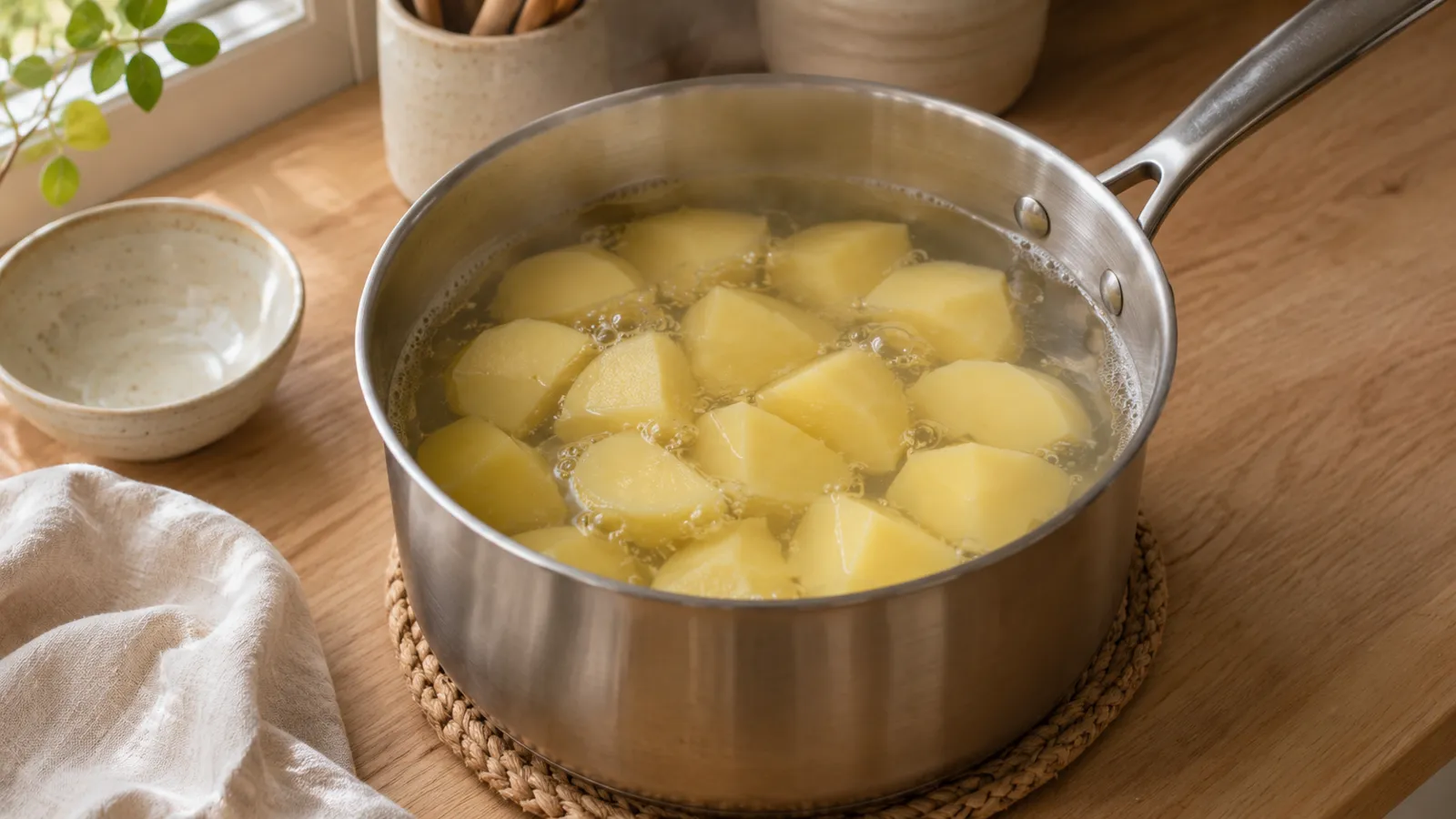
Boil 2–3-inch potato chunks for about 15–20 minutes, counting once the water boils. For a boiling-water start, small whole potatoes take roughly 10–15 minutes and medium to large whole potatoes 20–40 minutes. Check the center with a fork or thin knife.
| Potato preparation | Timing approach | Endpoint |
|---|---|---|
| Even pieces for mash | 15–20 minutes for 2–3-inch chunks | Soft through the center |
| Small whole potatoes, boiling-water start | 10–15 minutes | Tender through the center |
| Medium to large whole potatoes, boiling-water start | 20–40 minutes | No firm core |
Start with the dish you want
I would cut potatoes before boiling them for mash because even pieces make the result easier to judge. A huge potato and a small one can share a pot without sharing a finish time. Trying to average their cooking times leaves you choosing between a firm center and pieces that have already disintegrated.
For potato salad, the goal changes. You want pieces that accept a fork but survive folding with the dressing. For mash, a stubborn center is a bigger problem than a little softness around the edges. Decide on that endpoint before you put the pot on the stove.
When does the timer start?
Timing descriptions are often less precise than they look. Some include heating the water, and some begin once it simmers. The starting temperature, amount of water, and burner power all affect the first part. Here, begin counting once the water boils, then maintain a controlled simmer. Idaho Potato Commission gives 15–20 minutes for roughly 2–3-inch chunks; smaller pieces can be ready sooner.
The Idaho Potato Commission recommends similar-size pieces and a cold-water start for even cooking. As the water heats, the centers have time to warm without the outside immediately taking the full force of boiling water.
Whole potatoes need their own schedule
The University of the District of Columbia potato guide gives 10–15 minutes for small whole potatoes and 20–40 minutes for medium to large whole potatoes. Those estimates use a boiling-water start. Keep that distinction attached to the numbers: they do not include bringing a cold pot up to temperature. Idaho's chunk method is the easier choice for mash; whole small potatoes suit a side dish where intact skins and shape matter.
For a mixed bag, sort the potatoes before heating. Cook similarly sized ones together, or remove the small potatoes as they become tender. If the large ones are not needed whole, cutting them is more useful than waiting while the small ones split. A large russet is particularly awkward to cook whole for mash because its outside can break down before the middle softens.
Pick the potato for the finish
Russets suit a fluffy mash; waxier red potatoes hold their shape better in a salad. A tender red potato may still feel cohesive rather than crumble when pressed. Judge against the intended dish instead of boiling every variety until it falls apart. For mash, drain thoroughly before adding dairy so that cooking water does not dilute the finished texture.
Test a large piece, then another
Lift a piece carefully onto a plate or support it with a spoon. Push a thin knife or fork toward its center. A tool sliding through the edge alone can miss a firm core. Check one of the larger pieces, then another from a different part of the pot.
If you need to sample texture, cool the piece enough to avoid a burn. Do not judge solely from the water becoming cloudy: released starch tells you something about the potato and handling, but it does not demonstrate that every center is soft.
Avoid a violent boil and a wet finish
Keep enough movement to cook the potatoes without battering them. Rough boiling can break their outsides while the centers remain behind. Once they reach the texture you need, drain them rather than leaving them submerged while you organize everything else. Excess water is especially inconvenient when you want a fluffy mash.
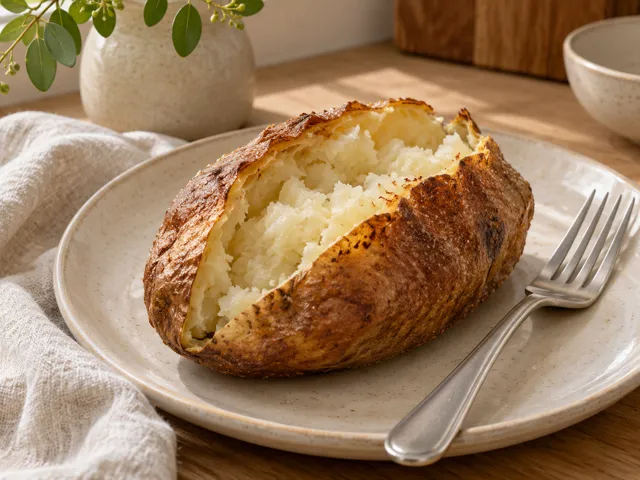
If you prefer a dry, fluffy interior with a skin you can fill, the baked potato guide describes a different route. For surplus mash, see leftover storage; boiling time is a cooking decision, not a storage rule.
FAQ
Should I peel potatoes before boiling?
Peel them if your final dish needs a smooth texture without skins. Leaving clean skins on can suit a rustic mash or salad. The more important timing factor is keeping the pieces reasonably even, rather than mixing tiny peeled cubes with large unpeeled potatoes in the same pot.
Can I boil potatoes whole?
Yes, but a large whole potato takes longer to soften through its center than cut pieces. Check the thickest part instead of relying on softness near the skin. For mash, I would choose even chunks unless keeping the potatoes whole serves a specific purpose in the dish.
Why are the outside edges falling apart?
The outside may be cooking ahead of the center, especially with uneven pieces or vigorous boiling. Turn down excessive bubbling and check the largest pieces. Removing pieces that are already ready is more useful than continuing to cook the entire batch until every piece has the same appearance.
Do different potatoes cook identically?
No. Variety, size, age, and intended use all matter. A floury potato that breaks down readily can be useful for mash and frustrating for a salad. Choose a variety suited to the dish, then use a center check rather than expecting its name to guarantee an exact finish time.
Can I use the same timing for sweet potatoes?
Do not assume the same timing applies. Sweet potatoes vary greatly in shape and size, and whole ones can be substantially thicker than cut white potatoes. Use guidance for the specific preparation and check tenderness. The shared principle is testing the center, rather than transferring an exact timer setting.