How Long to Steam Broccoli: 3–5 Minutes
Begin checking fresh broccoli florets after 3–5 minutes of steaming. Aim for a fork to enter the stalk with the resistance you prefer; large florets and thick stems may need longer than a small, evenly cut batch.
| Broccoli form | First check | What to assess |
|---|---|---|
| Small, even fresh florets | 3–5 minutes | Fork enters stalk |
| Thick stalk pieces | Prepare smaller; allow more time if needed | Center is not woody |
| Frozen broccoli | Follow the package | Hot through, desired tenderness |
Time the steam, not the cold pot
A broccoli timer has one job, and it can't do that job if you start it over cold water. I'd wait until steam is actively surrounding the broccoli before counting anything. Until then you're timing your stove: burner power, pan size, and the amount of water can change the warm-up enough to overwhelm an estimate this short.
Illinois Extension suggests three to four minutes, while Montana State's guidance gives four to five. For small florets I'd side with the early end and start checking there, because a short extra cook is easy to manage and restoring firmness to broccoli that has gone soft is a much harder assignment.
Give the stems a fair chance
The thick stem and the delicate flower buds have different cooking needs, and I think the stem deserves better than the trash. Trim the tough outer stalk material and cut the usable stem into smaller pieces. You get to use more of the vegetable, and you avoid a large dense chunk sitting in the center of an otherwise tender batch.
Choose reasonably even florets. A basket of tiny crumbs and enormous branches will produce mixed results however carefully you watch the clock, so I'd treat this as a knife problem first and a timing problem second. A little attention at the cutting board buys more than a very precise timer afterward.
Keep the broccoli above the water
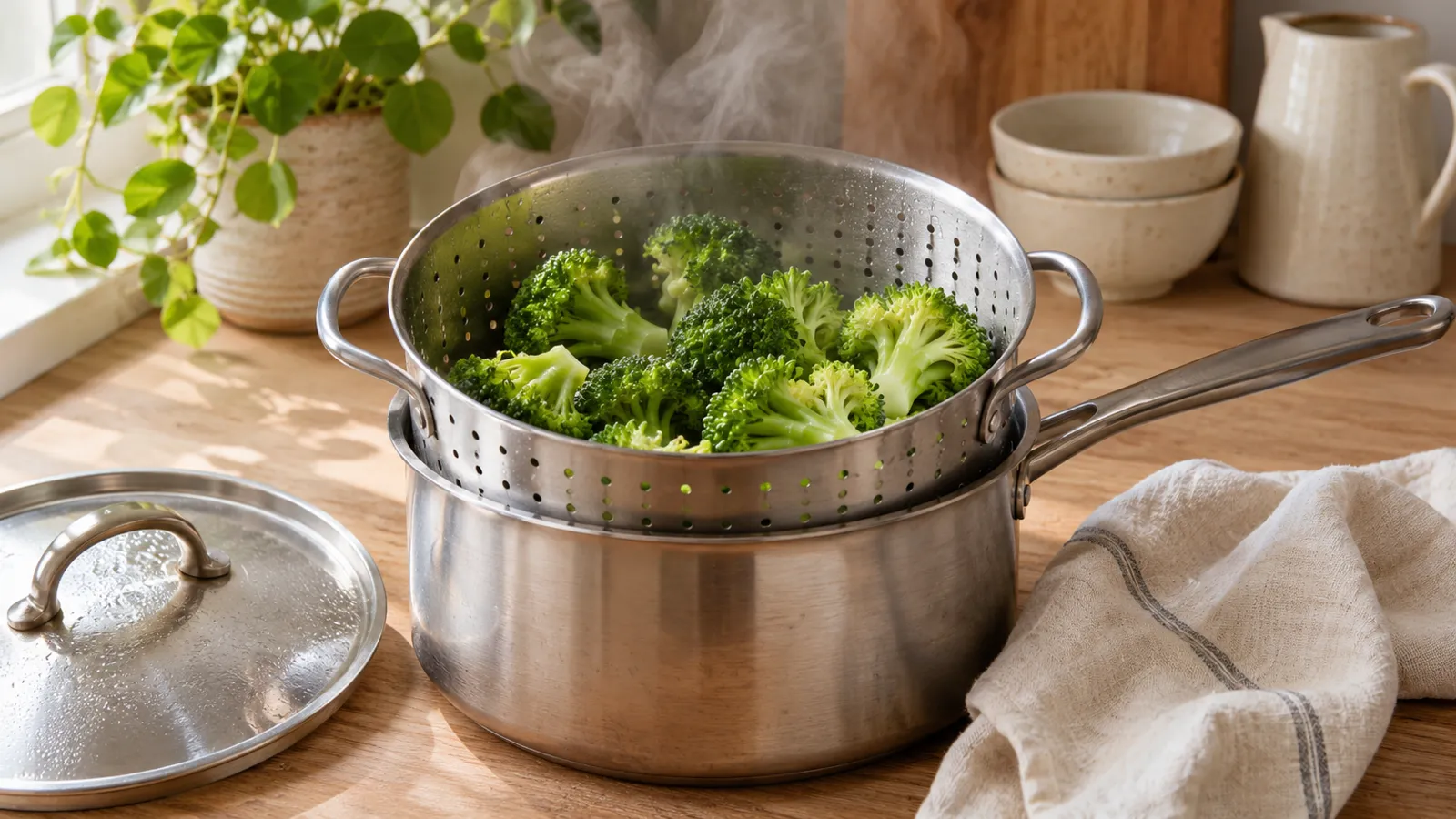
In a steamer basket, the vegetable should sit above the boiling water rather than bathing in it; otherwise you're boiling broccoli with extra equipment. Use enough water for the cooking period without bringing the level through the basket, and check your equipment's instructions if the insert is unusually shallow.
Keep the lid on while cooking, and open it carefully when you check, because trapped steam can burn. Direct the opening away from your face and hands. I'd allow myself one purposeful look: every curious lift lets heat escape, and one real check tells you more than several quick glances at the color.
Check a stalk, then decide how it will be served
A fork test on a thicker stalk is the check I trust here. Bright green buds can sit right above a firm stem, so color alone won't settle it. For broccoli going straight to the table, I'd stop at tender with a little resistance, which leaves it some backbone next to whatever else is on the plate. For a later cooked dish, account for the additional cooking it will receive.
Move ready broccoli out of the hot basket rather than leaving it covered over steaming water, which is how a good batch goes soft after you've stopped paying attention. Drain any collected water before adding a sauce. If you are choosing a thickener, the cornstarch substitution guide explains the options. For cooked broccoli kept for another meal, use the leftover guide.
FAQ
Can I steam broccoli without a basket?
You can use a suitable pan method with a small amount of water, but that is not exactly the same setup as a basket above the water. Follow instructions for your method and check the stalk. Avoid improvising an unstable plate or support over boiling water.
Why did my broccoli turn mushy?
It may have cooked longer than its size required or stayed over steam after the burner was turned off. Small florets soften quickly. Check earlier next time and move the finished vegetable out of the hot, covered pan instead of treating the timer as the end of all heating.
Should frozen broccoli use the same time?
Not automatically. Frozen pieces differ in size and may be prepared for a particular microwave or stovetop method. Follow the package and check the texture. A frozen block in a crowded basket does not behave like a loose layer of small fresh florets.
Can I eat the thick stalk?
The usable stalk can be cooked, but trim away tough material and cut it into pieces appropriate for the method. Smaller stalk pieces are easier to finish alongside florets. If a piece remains woody after cooking, extra minutes may not solve the underlying toughness as well as better trimming.
When should I add sauce?
For the clearest control over texture, steam the broccoli first, drain it, and then add the sauce. Water left clinging to the vegetable can dilute a carefully adjusted coating. If the sauce itself requires further cooking with the broccoli, take that additional heating into account before steaming it completely soft.