How Long to Boil Corn on the Cob
For fresh, husked corn on the cob, 5–6 minutes in boiling water is a useful starting point from Iowa State Extension. Check tenderness before serving. Frozen corn, unusually large ears, and a crowded pot need their own instructions.
| Corn or setup | Timing approach | Check |
|---|---|---|
| Fresh, husked ears | Start with 5–6 minutes boiling | Kernel tenderness |
| Frozen corn on the cob | Follow the package | Do not assume fresh-corn time |
| Crowded pot | Cook smaller batches if needed | Water returns to a boil |
| Already cooked corn | Use a reheating method | Avoid treating it as raw corn |
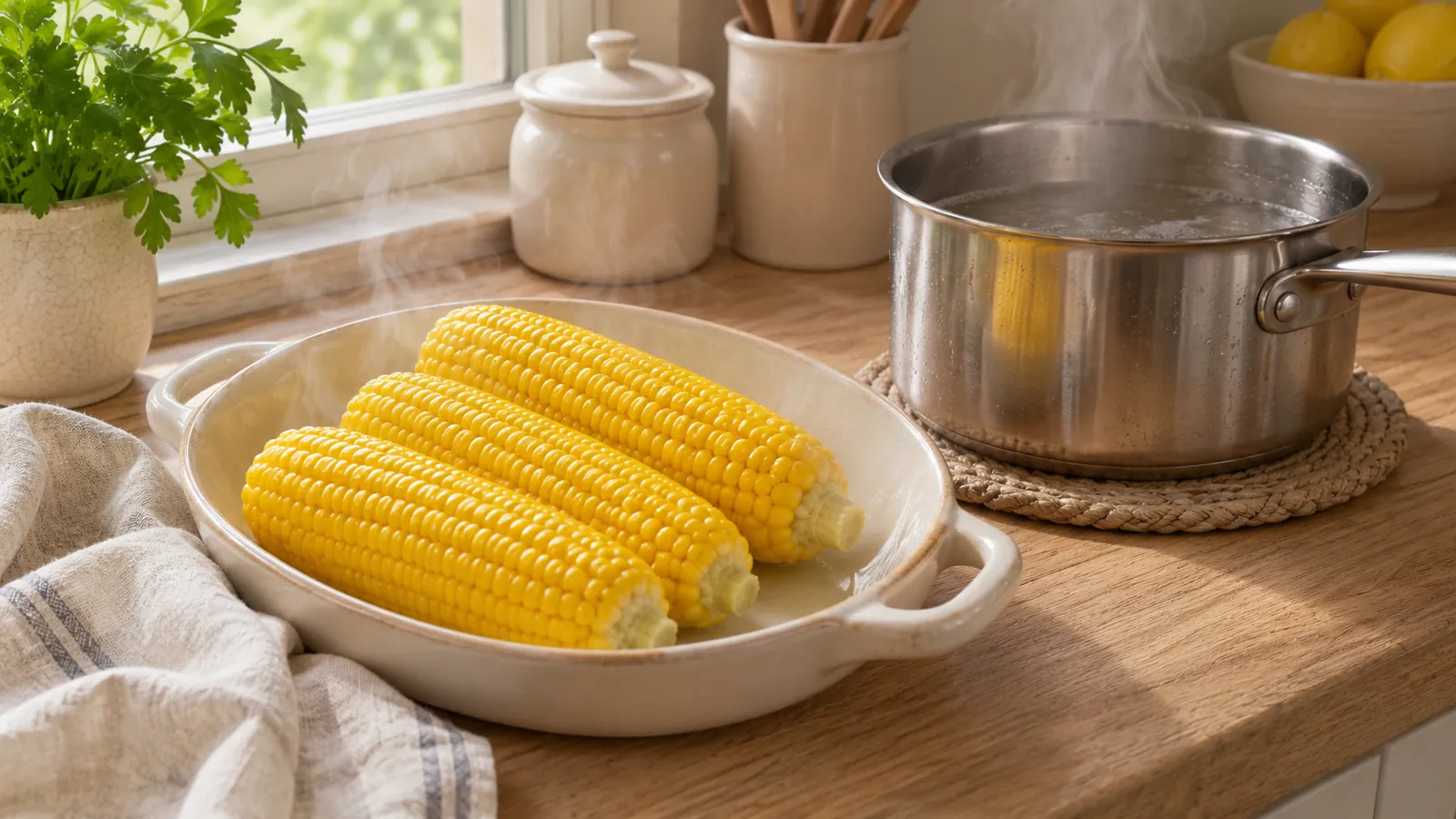
Check tenderness instead of extending the boil
The temptation with corn is to leave it in a little longer, just in case. For fresh husked corn, I favor the short Extension timing range followed by a taste of a cooled sample, because that way the batch in front of you decides when it's finished. Frozen ears start from a different place: follow their package directions and leave the fresh-corn number behind.
Start with fresh corn and a clear method
This timing is for fresh ears with the husks and silk removed, and that's all it's for. Corn wrapped in its husk on a grill, loose kernels in a skillet, and a frozen bag of corn all expose the food to heat differently, so I'd give each one its own instructions.
Choose ears with plump kernels and prepare them close to cooking time. Remove the silk, trim the stalk end, and rinse under cool running water. Do all of that before the pot boils. It keeps the cooking step straightforward, and chasing stray silk next to a boiling pot is a poor use of anyone's evening.
Use a pot that fits the batch
Choose a pot large enough for the ears and enough water to cook them without packing them tightly. Leave room at the top so adding the corn doesn't push boiling water over the rim. If the ears don't fit comfortably, you've got two ways out. I'd use fewer at a time when you want whole ears on the table, and cut them to fit when the small pot is what you've got and people are hungry.
Lower the corn carefully with suitable utensils. Adding a large amount of cold food can interrupt the boil, so watch what the water is doing. Starting a timer and walking away while the pot struggles to recover is the one bit of multitasking I'd skip here.
Use five to six minutes as a first check
For the Iowa State Extension method, bring a roomy pot of water to a boil, add the husked ears, and boil for five to six minutes. Then check a cooled kernel for tenderness. I'd read that strictly as boiling time, since holding fresh corn in slowly warming water for five minutes is a different instruction that nobody here gave you.
Older corn, different varieties, and personal texture preferences can affect the result. If the kernels stay firmer than you want, cook a little longer and check again. By all means note what worked for that batch, and stop short of turning one good pot into a universal exact number.
Frozen corn needs package-specific directions
Frozen ears and frozen loose kernels are different products, and the package may specify cooking from frozen, a particular amount of water, or a different time. I trust those directions over any analogy with fresh ears, whether you're thawing or boiling.
One thing to keep straight if you're putting up corn for later: don't use this fresh-corn timing as a blanching schedule for home freezing. Blanching has its own preparation and timing requirements. A guide for serving dinner and a preservation method solve different problems, even though both involve boiling water, so I'd go looking for a preservation source for that job.
When adding the corn stops the boil
A practical check: watch whether adding the ears stops the boil. If it does, separate the recovery period from time actually spent boiling. A packed pot of cold ears may recover much more slowly than a few ears in a roomy pot, so use smaller batches when needed and avoid treating those starting conditions as identical.
When the pot is too crowded, my fix is a smaller batch, since an arbitrary long extension to the time only papers over the problem. Keep enough space to avoid overflow and transfer the ears with suitable tongs. Let a kernel cool before assessing tenderness, unless a burned tongue is part of the plan. If it needs longer, continue and check again. The initial range exists to give you a sensible first check, and it leaves you free to adjust.
Use leftovers deliberately
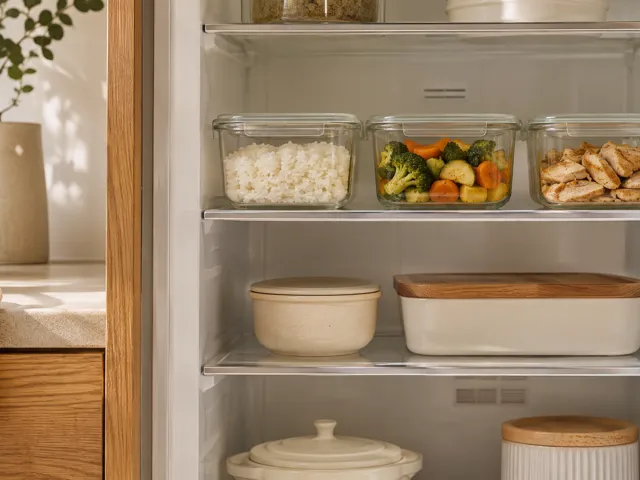
Refrigerate leftover cooked corn promptly in a suitable covered container. For the next meal, I'd decide between whole ears and kernels before reheating, since cutting kernels from a stable ear on a board is easier than trying to manage a hot, slippery one.
Keep the original cooking date with the leftovers. Reheating doesn't begin a new storage period, however fresh the corn may seem coming back out of the pot. The linked leftovers guide explains the general storage and reheating framework for cooked foods.
FAQ
Does fresh corn need twenty minutes of boiling?
The cited extension starting method uses five to six minutes. Check tenderness and adjust to the actual batch rather than automatically using a much longer time. Size, freshness, and the cooking setup can change the result.
When should I start the timer?
Add the husked corn to boiling water and count five to six minutes of boiling as the first checking range. If the water stops boiling when you add the ears, distinguish that recovery time from actual boiling time. Check a cooled kernel for tenderness rather than treating the alarm as proof that every batch is ready.
Can I use these minutes for frozen corn?
Follow the frozen product’s package instructions. Frozen ears, loose kernels, and fresh ears are not interchangeable timing cases. The starting state and the manufacturer’s preparation method matter more than a general corn label.
Is this also the blanching time for freezing corn?
No. Blanching for preservation is a separate process with its own validated preparation and timing. Use a home-preservation source for that task. A dinner-cooking estimate should not be repurposed as a freezing or canning instruction.
Can I boil a large batch in a small saucepan?
Avoid packing the pan so tightly that the ears fit poorly or the water cannot circulate. Use a larger suitable pot or smaller batches, leaving room to prevent overflow. Check tenderness rather than assuming the same timing works in every setup.