How Long to Bake Sweet Potatoes at 400°F
Whole sweet potatoes commonly take 40–50 minutes at 400°F (204°C), according to Clemson Extension; larger ones may need longer. Check that a thin knife reaches the center easily instead of relying on the timer alone.
| Preparation | Published timing guide | Final check |
|---|---|---|
| Whole, oven at 400°F | 40–50 minutes | Knife enters center easily |
| Whole, boiling | 30–45 minutes | Tender through the thickest part |
| One 8-ounce sweet potato, microwave | 4–6 minutes on high | Check center; appliance matters |
Choose by thickness, not just weight
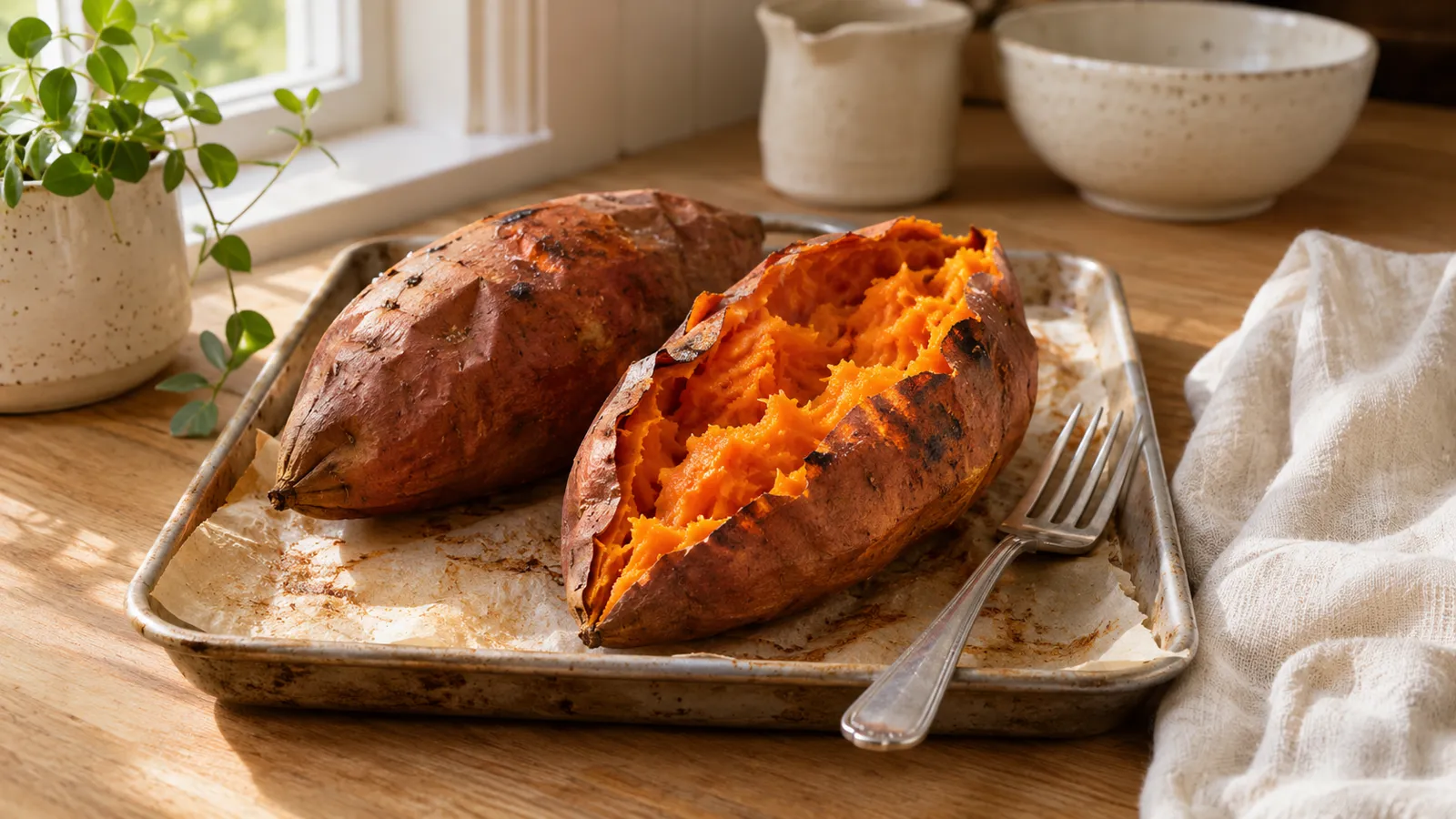
Two sweet potatoes can weigh the same and cook differently. A long, slender one gives heat a shorter route to the center than a round, thick one. My recommendation is to choose similarly shaped potatoes for a shared serving time. If you have a mixed bag, expect to remove the smaller or slimmer ones first.
The times in the table come from Clemson Extension’s preparation guidance. They are estimates for the stated preparation, not interchangeable promises. A microwave number does not describe an oven bake, and a whole-potato number does not describe small cubes.
Look beyond a soft skin
A sweet potato can look wrinkled while the thickest center still resists a knife. Insert a thin utensil into that central area carefully. If it meets a definite hard section, continue cooking and check again. Check each potato rather than treating the softest one as a sample that represents the whole tray.
Sticky juices on the baking sheet are another imperfect clue. They can tell you the potato is releasing moisture and sugars, but they do not show the texture of the center. A rimmed tray catches those juices and makes cleanup easier than letting them drip onto the oven floor.
Foil changes the exterior
For a whole sweet potato with a less damp exterior, I would leave it unwrapped. Wrapping holds moisture close to the skin and changes the experience when you open it. That may be acceptable for a very soft side dish, but it should be a deliberate choice.
Do not crowd the tray with unrelated foods and expect the original estimate to remain exact. A casserole beside the potatoes, a frequently opened oven, or a heavily loaded rack can affect the conditions. Keep checking tenderness rather than repeatedly increasing the temperature to catch up with a schedule.
When boiling makes more sense
Boiling can suit a preparation where you plan to mash the flesh and do not need a roasted exterior. Drain thoroughly so you are not solving excess water with extra ingredients later. Baking is my preference when the potato itself will be split and served as the main structure on the plate.
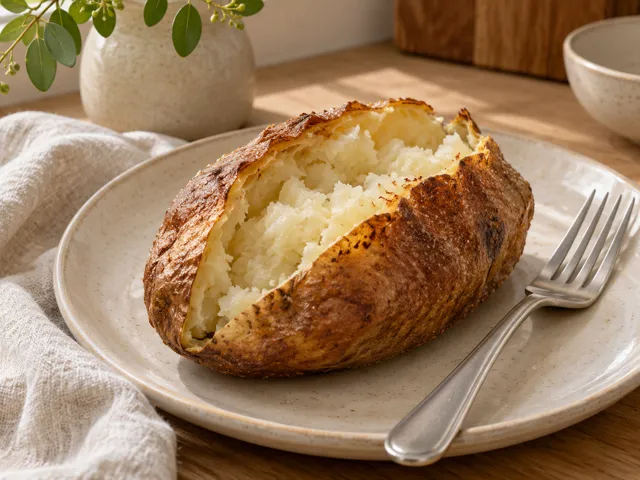
For ordinary russets, use the white potato baking guide rather than assuming every potato behaves alike. Keep surplus cooked portions under the leftover storage rules; a whole vegetable stops being a pantry item once it has been cooked.
FAQ
Can I bake sweet potatoes at a different temperature?
Yes, but the timing changes, and this guide’s published oven estimate is specifically for 400°F. If another dish determines the oven setting, allow flexibility and check the center. I would avoid presenting a precise conversion for an unusually large potato without checking how it actually cooks.
Do I need to pierce the skin?
Pierce whole sweet potatoes before baking or microwaving, as the preparation guidance describes. Use a fork carefully and place the potatoes on an appropriate tray or microwave-safe dish. Piercing does not replace the final center check, and it does not make every size cook at the same speed.
Why is one sweet potato still hard?
Shape, thickness, and position in the oven can leave one potato behind the others. Check its center rather than cooking the entire tray until that last one softens. Removing finished potatoes individually gives you more control over their texture and avoids unnecessarily drying the smaller ones.
Are oven and microwave sweet potatoes the same?
Both can soften the flesh, but they do not create the same exterior. The microwave is useful when speed matters, while an oven better suits a roasted presentation. Compare the actual cooking method and serving goal rather than judging one option solely by how much shorter its timer looks.
Should I cut sweet potatoes to save time?
Cut pieces can cook sooner, but they become a different preparation with more exposed surfaces. Choose that route for pieces you intend to serve as pieces. If the plan is a whole split sweet potato, cutting it first changes the presentation as well as the cooking time.