How Long to Bake Chicken Thighs at 350°F
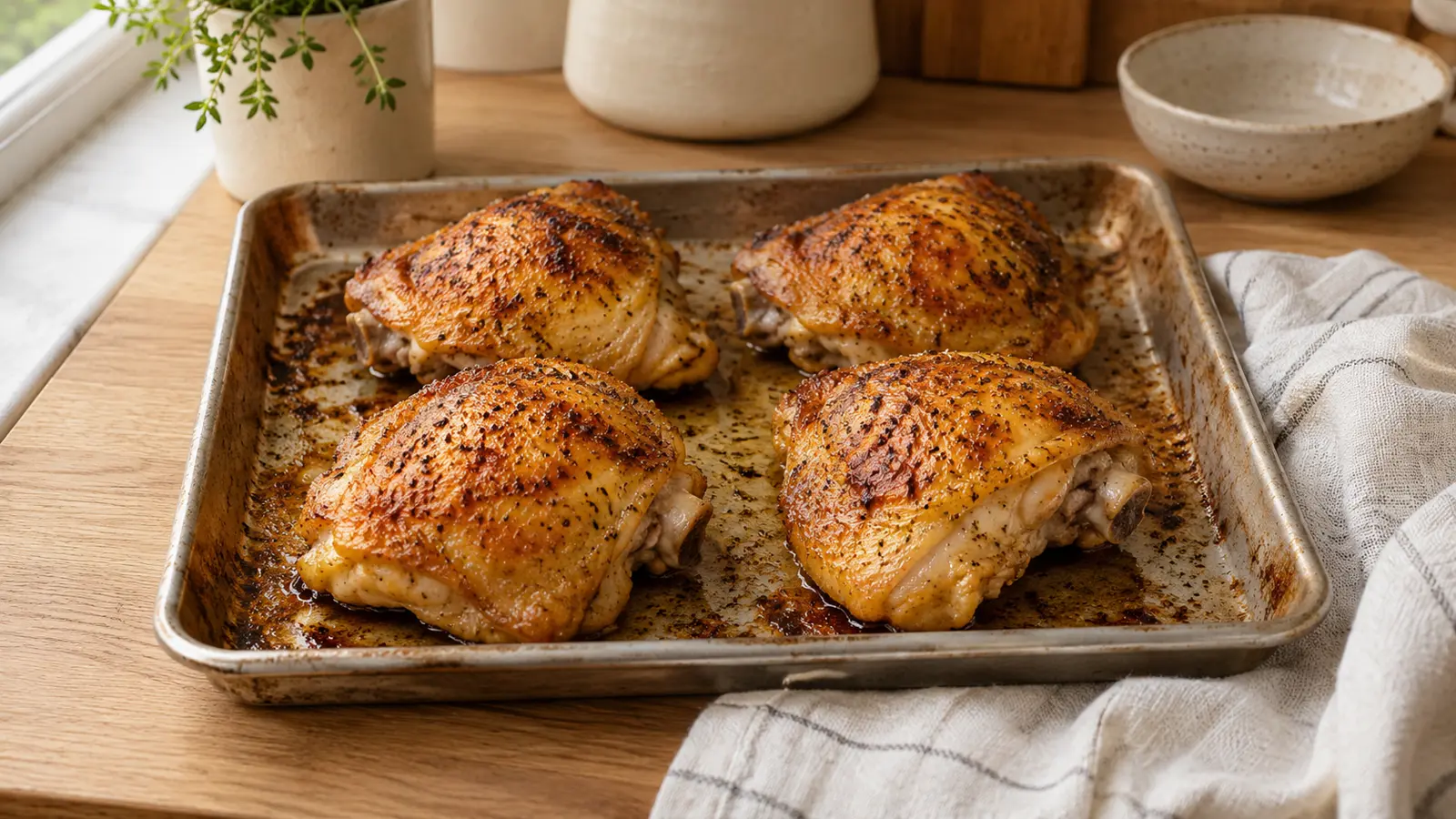
USDA’s planning chart gives 40–50 minutes at 350°F (177°C) for 4–8-ounce chicken thighs. Measure the thickest meat for at least 165°F (74°C); size, bone, and arrangement can change when each piece reaches that point.
| Preparation | Planning reference | Finish check |
|---|---|---|
| Thighs, 4–8 oz (113–227 g) | 40–50 min at 350°F | At least 165°F in thickest meat |
| Smaller boneless pieces | May finish sooner | Check each piece |
| Crowded or unusually large pieces | May take longer | Do not judge from skin color |
Use a range that matches the method
A baking time means very little without an oven setting and a description of the meat attached to it. This guide uses the USDA chicken cooking estimates reproduced by the American Meat Science Association as a planning reference, and I'd read them that way: useful for knowing when to get the thermometer out, and no basis for turning forty minutes into a universal answer for every tray of thighs.
My advice is to pick one oven method and keep its assumptions together. Bump the oven hotter while holding on to the original check schedule and you can end up reacting too late. Convection, a covered dish, and a crowded pan also change the situation, so I'd treat any of those as a new method and let the thermometer settle it.
Arrange pieces so you can check them
A single accessible layer makes it easier to measure the meat and pull the pieces that finish first, and on a busy weeknight that's the layout I'd want. Overlapping thighs create sheltered areas that don't heat like exposed surfaces. If you're cooking several trays for a crowd, expect some variation and resist assuming one sample represents the whole oven.
Bone-in, skin-on thighs and unfolded boneless thighs have different shapes, and the boneless ones are the sneakier of the two: a folded flap can create a surprisingly thick center. Lay pieces consistently if the preparation allows it, and note the thickest ones before the pan goes into the oven, since those are the ones I'd measure first.
Measure the meat, not the bone
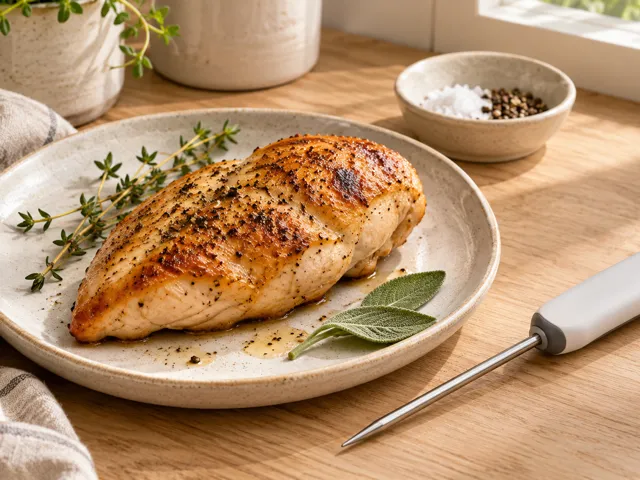
Insert the thermometer into the thickest part without contacting bone or the hot pan. For thinner boneless pieces, a sideways insertion can help keep the sensing area in the meat. Check several thighs, including the larger ones and any in a more crowded area. I'd much rather take a few extra readings than trust the one thigh that was easiest to reach.
Follow the chicken temperature guidance for the minimum. Brown skin, a loose bone, or clear-looking juices don't establish that temperature, however appetizing they are. Clean the probe after contact with undercooked poultry before using it on food ready to eat.
Safety and preferred texture are separate decisions
Some people prefer dark meat cooked beyond the minimum for a softer texture. That's a culinary preference, and it only comes into play after the safety requirement is met. If you want it, I'd make that choice on purpose, thermometer in hand, and avoid leaving the whole tray in simply because the timer hasn't yet reached its upper limit.
For better browning, pat skin dry with disposable paper towels before seasoning, arrange it facing up, and leave space around the pieces. A wet sauce poured over the skin and a tightly covered dish both work against a crisp surface, so if crisp is the goal, I'd leave out both. If you're using a broiler finish, use a broiler-safe pan and watch continuously; a sugary glaze can burn quickly, and this is a bad time to go answer the door. For remaining portions, the cooked chicken storage guide covers the next decision. The cooking chart doesn't tell you how long dinner can remain on the table.
FAQ
How do I arrange boneless thighs for even cooking?
Unfold them into a consistent thickness and keep them in one layer. A tucked flap can create a thick center that cooks more slowly than the exposed edges. Check each thick section with a thermometer and remove pieces as they reach 165°F; the table’s general range is not a required minimum cooking time.
When should I add a sticky glaze?
Use the glaze’s timing instructions, usually keeping a high-sugar coating for the later part of cooking rather than letting it darken throughout a long bake. Measure the meat separately. If the glaze is browning too quickly, shield the surface while the center finishes; glaze color is not a doneness test.
Why is chicken pink near the bone?
Color near the bone can persist even after poultry is cooked, and color alone cannot establish safety. Take a reading in the thickest meat away from the bone. If you did not measure before serving, do not use the appearance of juices or skin as a substitute now.
Should I cover the baking dish?
That depends on the preparation and whether you want a moist covered result or a drier, browned exterior. Covering changes the cooking environment, so follow a method designed for it. Whichever approach you choose, keep the final thermometer check and do not judge the center from the surface.
Can I remove chicken below 165°F and let it rest?
For this household guide, reach 165°F before removing the chicken from the heat. Resting does not supply a guaranteed temperature increase. The amount of carryover varies with size and cooking conditions, so it should not be assigned the job of correcting an under-temperature thigh.