Tomato Paste Substitute: Concentration Comes First
For a flexible soup or sauce, use about 3 tablespoons tomato sauce for 1 tablespoon tomato paste, following Food Network Kitchen’s substitution. Reduce the sauce first for a paste-browning step, or hold back optional broth in a soup.
| Alternative | Starting amount for 1 tbsp paste | Main adjustment |
|---|---|---|
| Tomato sauce | About 3 tbsp | Reduce other liquid or concentrate |
| Tomato puree | Add gradually; concentration varies | Usually thicker than sauce, thinner than paste |
| Canned tomatoes | Drain and concentrate as needed | Texture and moisture change substantially |
| Ketchup | Not a neutral replacement | Adds sweetness, vinegar, and seasoning |
Decide whether you need body or a hint of tomato
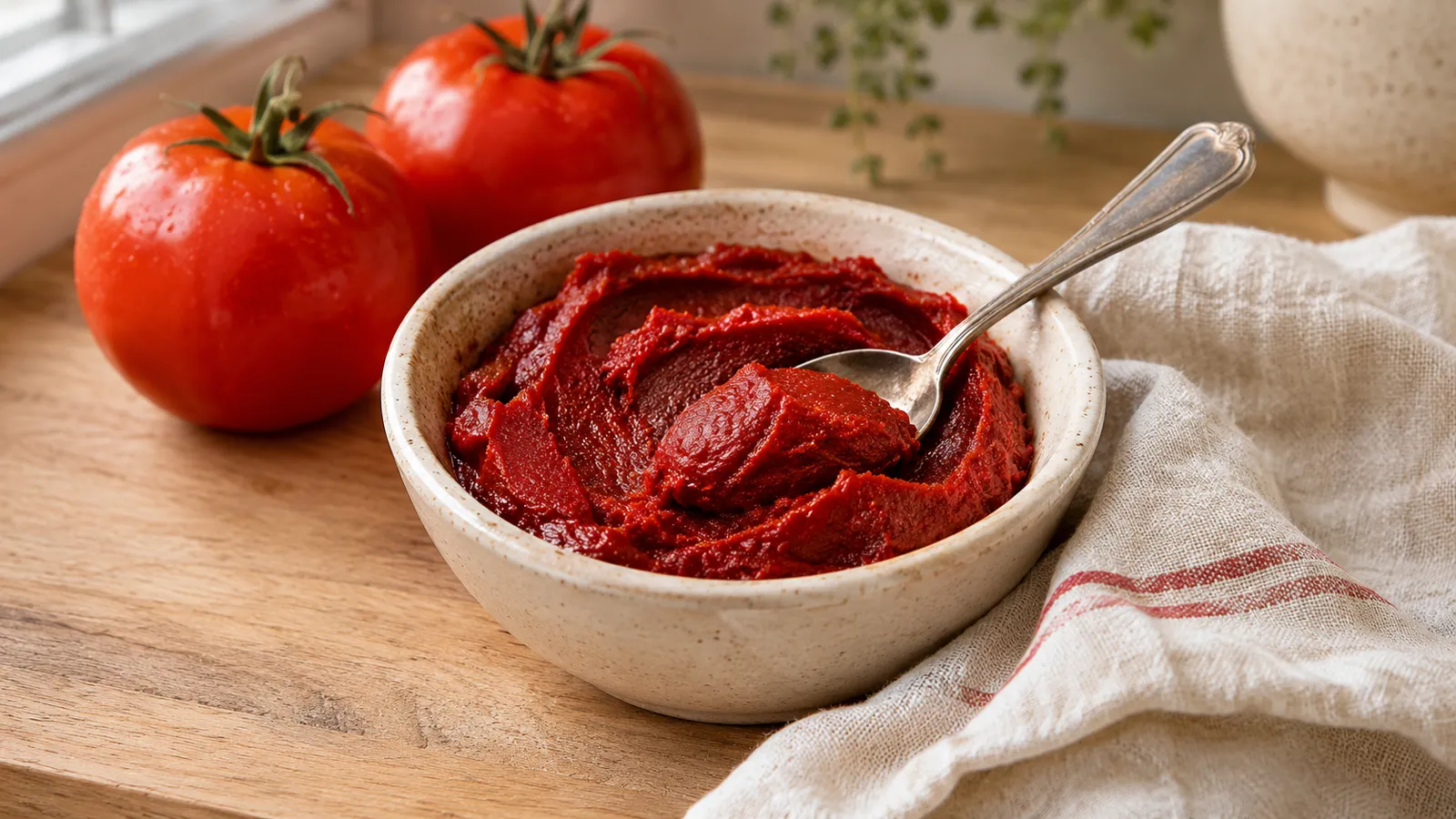
Ask what the paste is there to do. A spoonful in a large pot of soup is easy to replace; paste used as a concentrated base for browning is a harder ask. In soup, extra sauce can slip right into the liquid. In a dry skillet, it can interrupt the whole method, and that's the case I'd plan around.
Food Network Kitchen recommends three tablespoons sauce or puree per tablespoon paste. I'd pick a plain product so the original seasoning stays the way the recipe intended.
Reduce the sauce before a browning step
Put the measured sauce in a small pan before it goes anywhere near the main dish. Simmer uncovered, stirring and scraping the bottom, until it forms a thick mound and no longer flows back immediately across a spatula track. Use moderate heat and pay closer attention as the water evaporates. Stop if it begins to catch, because scorching and concentrating tomato flavor are two very different outcomes.
For soup, that separate reduction may be unnecessary, and I'd happily skip it: add the sauce where the paste was intended, hold back some optional broth, then assess the finished body. For a skillet method that browns paste with aromatics, reduce separately first so the extra water does not steam the aromatics. You still may miss the exact intensity of commercial paste, but I'd take that in exchange for keeping the cooking sequence intact.
Say a stew calls for 2 tablespoons paste. Under the published ratio, you'd start with 6 tablespoons sauce, which is ¼ cup more product volume than the paste. Hold back that amount of optional broth at first, then loosen the stew only if it needs it. Think of this as volume planning, with no chemical measurement of tomato solids behind it.
Account for the extra liquid
Replacing one tablespoon with three adds two tablespoons of product volume. That leaves the exact water difference unknown, but it explains why the dish may come out looser. Hold back some optional liquid when the preparation allows, and judge the consistency as it cooks.
This flexible-sauce approach has limits, and I'd honor them. Never subtract liquid blindly from a tightly balanced baking formula or a preservation recipe. I'd save the trick for a stew, where the final body can be adjusted, and stay away from anything that depends on exact ingredient proportions.
Puree and canned tomatoes need their own judgment
The Hunt's puree description places its texture between paste and crushed tomatoes. Helpful context, but hardly a universal conversion across brands, so I'd add it gradually and look at the actual product instead of copying the sauce ratio on autopilot.
Canned tomatoes bring pieces, juice, and sometimes seeds or skins into the decision. Draining or blending can alter the texture, while concentration changes the moisture, and those are separate adjustments. I wouldn't promise you that a quick stir turns diced tomatoes into a smooth, dense paste. Diced tomatoes have other plans.
Ketchup changes the flavor direction
Ketchup can bring sweetness, acidity, and seasoning along with the tomato. It may suit a deliberately sweet glaze, but in a savory dish meant to taste of tomatoes and aromatics I'd leave it in the fridge. What it saves you at the start, you can end up spending on flavor correction later.
For a sauce that needs extra savory seasoning, the Worcestershire guide addresses a different role. For a thickener, see cornstarch alternatives, keeping in mind that starch adds body without recreating concentrated tomato flavor.
If you're forever needing a small amount of paste, I'd buy a package format that fits that use and follow its opened-storage directions. It beats making the same unnecessary substitution every time a large opened can gets inconvenient.
FAQ
Can tomato sauce replace tomato paste?
Yes in a flexible soup or sauce: use roughly three tablespoons sauce per tablespoon paste, and account for the extra liquid. For a method that browns paste with aromatics, concentrate the sauce in a separate pan first. Keep stirring as it thickens so the tomato does not scorch.
Can I use ketchup instead?
Only when its sweetness, vinegar, and seasoning fit the finished dish. Ketchup is not a neutral concentrated tomato product. I would avoid it in a sauce where the tomato base should remain savory and restrained, and choose a preparation designed around ketchup when its flavor is welcome.
Should I simmer sauce until it becomes paste?
You can concentrate a suitable sauce for a flexible cooking use, but watch the texture and seasoning as water evaporates. Salt and other flavors become more concentrated too. Do not promise an exact result from an arbitrary cooking time, because starting sauce consistency and pan conditions vary.
Is tomato puree the same as paste?
No. Product names and concentrations vary, but puree is generally less concentrated than paste. Read the label and inspect the consistency. Use it gradually in a flexible dish rather than assuming equal spoonfuls provide the same tomato solids, moisture, and thickening effect.
Can I use this ratio in home canning?
No. This is a flavor and consistency guide for ordinary cooking, not a preservation formula. Home-canned tomato preparations need a research-tested recipe with its specified ingredients and proportions. Do not alter concentration, acidity, or liquid quantities on the basis of a casual kitchen substitution.